A monopoly win isn't always good — what happens when one species takes over
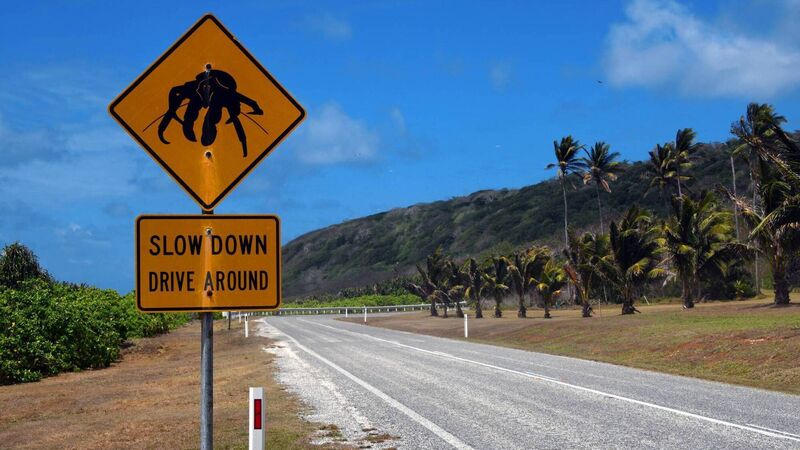
Christmas Island: during the annual red crab migration, millions of crabs emerge at the same time, halting road traffic and covering the ground in a thick carpet of crabs
Islands are nature’s laboratories — small, isolated, and prone to evolutionary experiments that would never be allowed on the mainland.
Remove a few predators, limit the competition, and suddenly one species can find itself running the entire neighbourhood. Around the world there are islands effectively governed by crabs, mice, snakes, penguins, and rabbits. These places are often amusing and even occasionally alarming. They show what happens when ecological balance tips and a single organism becomes just a little too successful.
Few places demonstrate the power of one species more vividly than Christmas Island in the Indian Ocean. Each year roughly 50 million red land crabs march from the forest to the coast to breed. Roads close, crab bridges are installed and human schedules politely rearrange themselves around crustacean priorities. The crabs are not just a spectacle; they are ecological engineers. By devouring leaf litter and seedlings, they shape the structure of the rainforest and recycle nutrients through the soil. For decades, their dominance helped keep the island’s ecosystem in healthy order.
Then an invasive species arrived... the yellow crazy ant. And began killing crabs in huge numbers, and the absence of the island’s chief gardener quickly showed. Leaf litter accumulated, invasive plants spread, and the forest started to change character. The lesson was clear, even a 'good' monopoly leaves an ecosystem dangerously dependent on one player.
Not all dominant species are quite so benevolent. On the remote South Atlantic islands of Gough and Marion, ordinary house mice have evolved into unlikely tyrants.
With no natural predators, they have grown unusually large and developed an appetite for seabird chicks. Albatrosses and petrels, which evolved without land-based threats, have little defence.
The environmental consequences are stark. Declining bird populations mean less nutrient-rich guano returning from sea to land, which in turn alters soils and vegetation. A small, introduced mammal has managed to disrupt an entire ecological system.
Large-scale eradication programmes are being planned, but these islands remain sobering reminders that dominance achieved by accident can be extraordinarily hard to reverse.
Some single-species islands feel less like ecosystems and more like nightmares. Ilha da Queimada Grande off Brazil, better known as Snake Island, is home to one of the densest concentrations of venomous snakes on Earth. The critically endangered golden lancehead viper has the place almost entirely to itself. With no mammals to hunt, the snakes adapted to prey on migratory birds, evolving fast-acting venom to stop meals flying away. The result is an ecosystem streamlined around a single predator. Humans are banned for good reason, and the island functions as a vivid example of how isolation can produce extreme, and slightly unnerving, ecological specialisation.
Not every dominant species is quite so intimidating. Zavodovski Island near Antarctica hosts around a million chinstrap penguins on a tiny volcanic outcrop. Their sheer numbers dictate everything from soil chemistry and vegetation patterns, to even the colour of local streams, which are heavily enriched by guano. The entire island operates on a penguin-driven economy.
Macquarie Island south of Australia offers an even clearer warning. Introduced rabbits once multiplied to more than 100,000, stripping hillsides bare and triggering landslides. Only after a massive eradication effort did the island begin to recover. Dominance, as it turns out, can be incredibly destructive — even when it comes with whiskers and floppy ears.
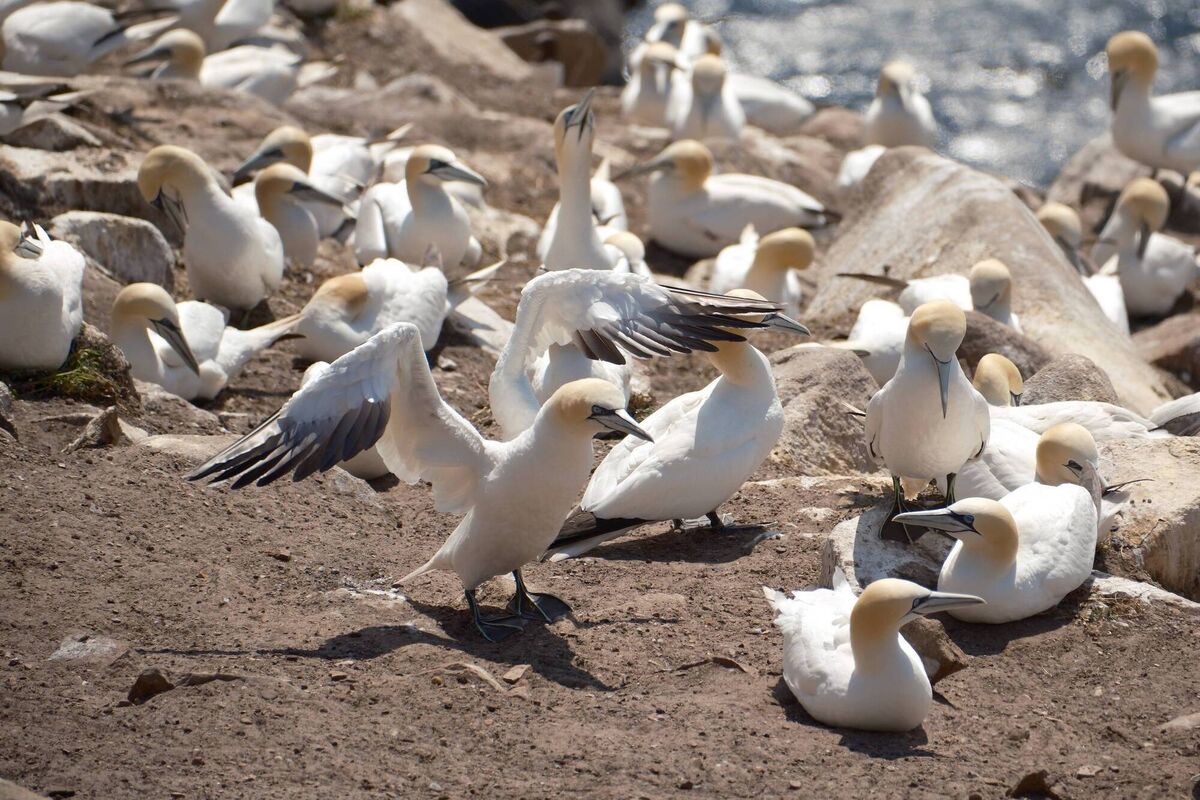
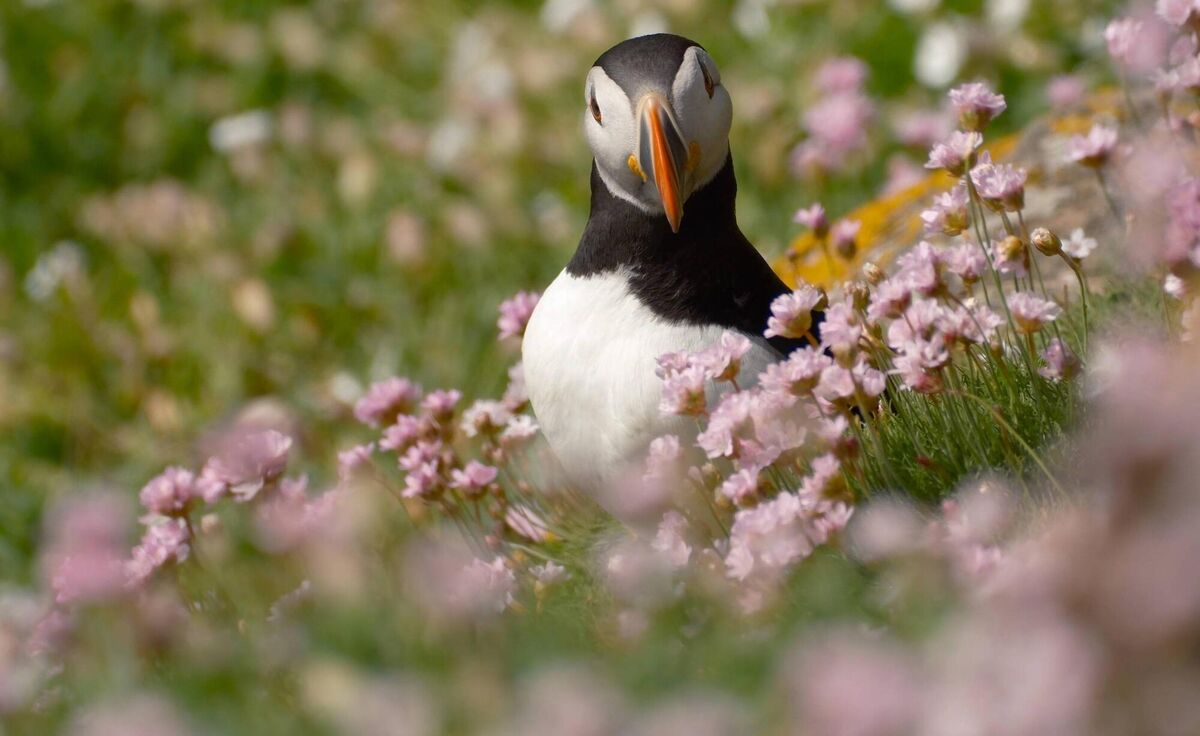
Ireland may lack tropical reptiles and Antarctic penguin cities, but it has its own versions of single-species rule. The Saltee Islands off Wexford and Rathlin Island off Antrim become seabird capitals each summer. Tens of thousands of gannets, guillemots and puffins dominate the cliffs so completely that the islands’ soils, plants, and even their distinctive aroma are largely products of bird life.
Further west, the Inishkea Islands in Mayo host one of Ireland’s largest grey seal colonies. During breeding season seals outnumber people by a comfortable margin, trampling vegetation and reshaping dunes simply by going about their blubbery business.
And then there is Lambay near Dublin, where a population of introduced wallabies has become an unexpected ecological force on the island. They are hardly the only species present, but they influence grazing patterns in ways no native Irish animal ever did.
What unites all these islands is a simple ecological principle: systems dominated by one species are inherently fragile. Biodiversity provides resilience. When many species share the roles of pollination, grazing, predation and decomposition, ecosystems can absorb shocks. When a single species does most of the work, any change such as disease, climate shifts, or a new invasive arrival, can cause rapid collapse.
Islands offer us manageable, bite-sized versions of global ecological truths. They show how quickly balance can tip, how easily power can concentrate, and how vulnerable such systems become as a result.
It is hard not to notice the parallel with our own species. Humans now dominate most corners of the planet in much the same way that mice rule Gough Island or crabs command Christmas Island. The scale is larger, but the principle is similar.
While single-species islands are fascinating places to visit and even better places to learn from. They remind us that nature functions best as a community effort.
And that any species which starts to believe it owns the entire island should probably brace itself for a few unexpected consequences.
CONNECT WITH US TODAY



Be the first to know the latest news and updates