Why are Irish communities seeing more flooding and several 'one-in-100-year' floods?
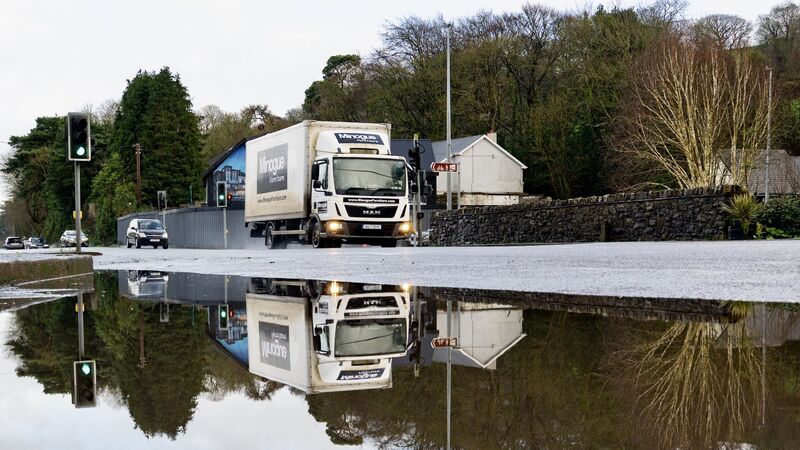
Wet driving conditions on the Rochestown Road in Cork. Picture: Chani Anderson
Right now, across Ireland, rivers are full to the brim and fields have become temporary lakes. Roads disappear under brown water. Businesses in small towns spend days sweeping out premises, only to watch the next band of rain undo the effort overnight.
For many communities this is not a single dramatic event but a slow, exhausting siege by water that simply will not stop falling. Whenever flooding happens, the same question follows: Is this climate change?
No individual flood can be blamed solely on climate change. Ireland has always had wet winters and periods of high river flows. But the broader picture is increasingly clear. Climate change is making the conditions that lead to flooding, particularly prolonged, persistent rainfall, more likely.
It is easy to imagine floods as the result of violent storm. Those do occur, but in Ireland many of our worst floods come from something quieter and more relentless, which is weeks of steady rain.
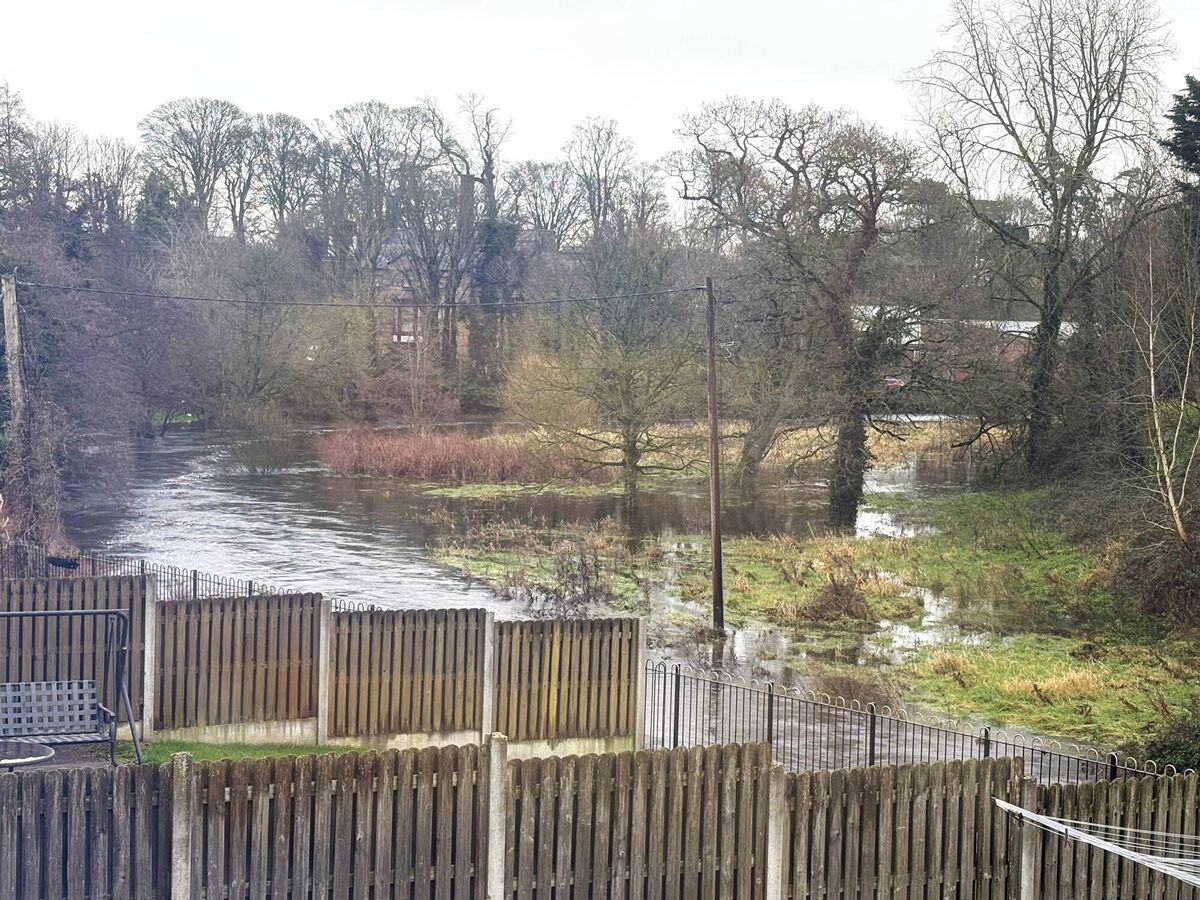
When soils are already saturated and rivers have no opportunity to fall back to normal levels, even modest additional rainfall can push catchments past their limits. Drains overflow, groundwater rises, and small streams become torrents.
This is exactly the pattern unfolding in Ireland in early February. It’s not a single storm, but a succession of wet systems arriving from the Atlantic, day after day.
This type of flooding is especially difficult to manage because there is no dramatic trigger, no obvious moment when things suddenly 'go wrong'. The land simply reaches a point where it cannot absorb or move any more water. Climate science tells us that this scenario is becoming more common.
The link between global warming and heavier rainfall is one of the most robust findings in climate research. A warmer atmosphere can hold more moisture, roughly 7% more for every degree Celsius of temperature increase. That extra moisture has to come down somewhere. For Ireland, positioned on the western edge of Europe, this means weather systems crossing the Atlantic now have the capacity to carry more water than they once did.
Observational records from Met Éireann already show a trend toward wetter winters and an increase in very wet months.
International climate assessments consistently project that north-west Europe will experience higher overall winter rainfall in the decades ahead, with more frequent extended wet periods.
In other words, the kind of weather pattern causing today’s flooding is expected to become increasingly normal rather than exceptional. This is not a distant future problem. It is already happening.
Discussions about flooding often refer to the idea of a one-in-100-year event. The phrase sounds reassuringly rare, but it is widely misunderstood.
A one-in-100-year flood does not mean a flood that happens once a century. It means a flood with a 1% chance of occurring in any given year. Two such floods can occur in back-to-back years, or several can occur in a single decade.
Crucially, those probabilities are based on past climate conditions. As rainfall patterns change, the statistics change too. What planners once classified as a one-in-100-year flood may now be significantly more likely. The benchmarks used to design bridges, culverts and flood defences are slowly being overtaken by a shifting climate.
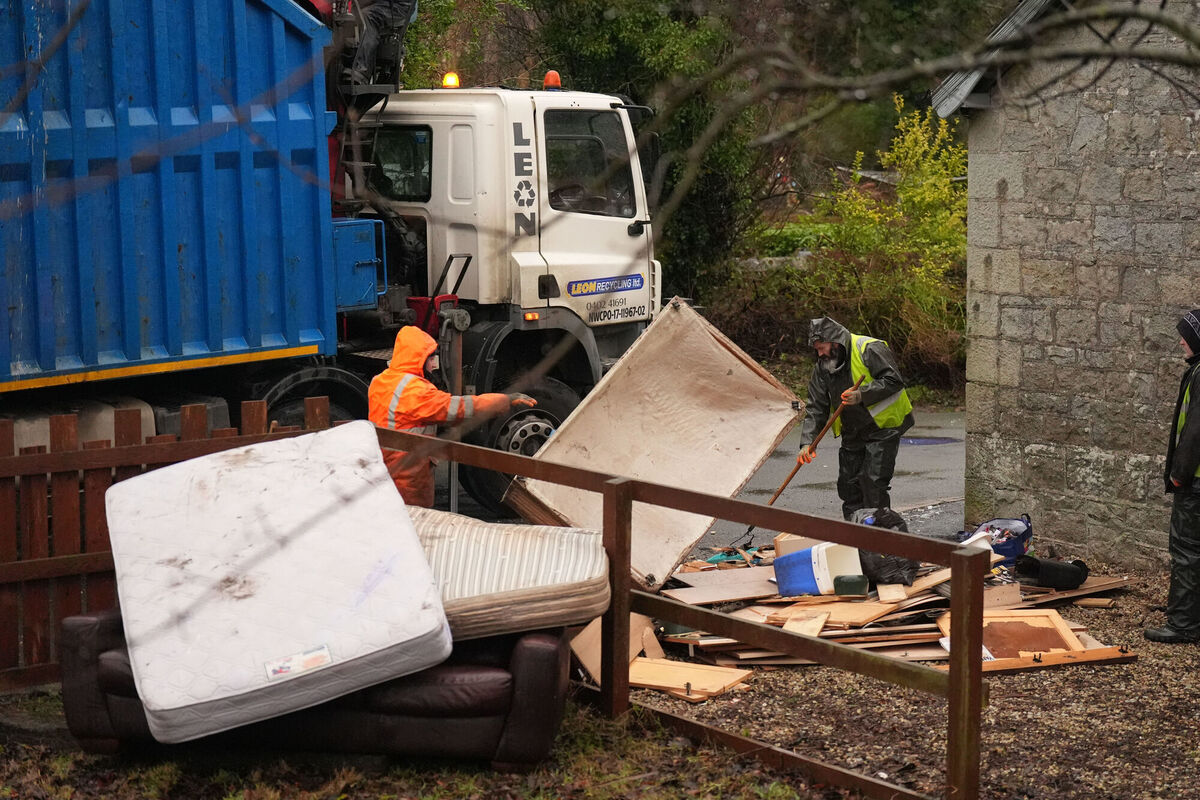
Looking ahead, the message from climate science is consistent. Ireland is likely to experience wetter winters overall, more frequent prolonged rainfall, higher river flows during winter months, and increased pressure on drainage systems. None of this means that every year will be a disaster, but it does mean that the risk of serious flooding is set to rise.
The baseline has shifted. This creates a stark choice. Ireland can either plan proactively for a wetter future or continue lurching from one expensive emergency to the next.
The first priority is to accept that the climate of the past is no longer a reliable guide. Flood maps, engineering standards and planning rules must be updated using forward-looking climate projections, not historical averages.
Designing infrastructure based on yesterday’s rainfall is a recipe for tomorrow’s failure.
Equally important is where we choose to build. The simplest and most cost-effective flood defence is to avoid constructing homes and critical services in areas known to flood. Yet development pressure continues to push into vulnerable locations.
Stronger planning enforcement and clearer national guidance are essential to break this cycle.
Existing towns and cities also need urgent attention. Much of Ireland’s drainage network was built for a different time. Modern rainfall patterns routinely overwhelm systems that were never designed for such prolonged volumes of water.
Upgrading drains, creating additional storage for stormwater, and using permeable surfaces in new developments can all help reduce pressure when weeks of rain arrive. Structural flood defences will remain necessary for many communities.
Flood relief schemes can protect homes that are already in harm’s way. But these projects must be designed for future conditions and delivered far more quickly than current planning processes allow.
Alongside engineered solutions, Ireland needs to make far better use of natural ones. Restored wetlands, healthy peatlands, reconnected floodplains and native woodlands can all slow the movement of water through catchments. These nature-based approaches cannot prevent every flood, but they can help reduce peak river levels and provide vital breathing space during long wet spells. But engineered flood defences will be needed.
Flooding in Ireland is not going away. In a warming world, the atmosphere above the Atlantic will continue to hold more moisture, and our winters are likely to become steadily wetter. The events unfolding right now are not freak anomalies. They are part of a broader trend toward a more water-logged climate.
The challenge is to recognise that reality and respond intelligently. But with better planning, smarter infrastructure and a renewed respect for how landscapes manage water, Ireland can become more resilient. No magic wands required, just action.
CLIMATE & SUSTAINABILITY HUB
CONNECT WITH US TODAY



Be the first to know the latest news and updates