Ambitious tree-planting project targets small, half-forgotten spaces
The 100 Million Trees project uses the Japanese miyawaki method of tree-growing where thousands of trees can be planted close together in relatively small spaces
Ambitious tree-planting project targets small, half-forgotten spaces

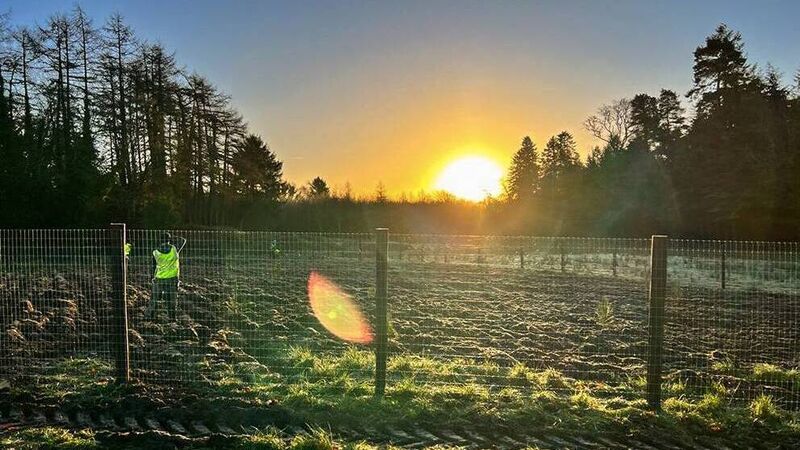
Sunrise on the grounds of Glenstal Abbey in County Limerick, Ireland. Picture: 100 Million Trees Project
A 32-county campaign is underway to get people to plant an ambitious 100 million trees, with farmers, schools, communities, local authorities and owners of waste land being urged to take part.

The trees and professional planting services are being provided free of charge by a not-for-profit organisation, 100 Million Trees, run by siblings, Richard, David, and Tina Mulcahy.

“This is not about producing timber. What we’re doing is empowering people to do something for the environment. We see this as an opportunity to get people to do something to combat climate change, increase biodiversity and create carbon sinks,” Richard explained.

The Japanese Miyawaki method of tree-growing, under which thousands of trees can be planted close together in relatively small spaces, is being used. Dense planting leads to much faster growth.

Ireland is one of the least forested countries in Europe: only 11% of land here is tree-covered compared to the European average of 38%. More support is needed from local authorities and farmers, according to the Mulcahys.

Councils generally have derelict sites and land lying idle notes Richard Mulcahy: “We’re really hoping local authorities will start taking this on board, giving us sites and we will come along and plant for them.”

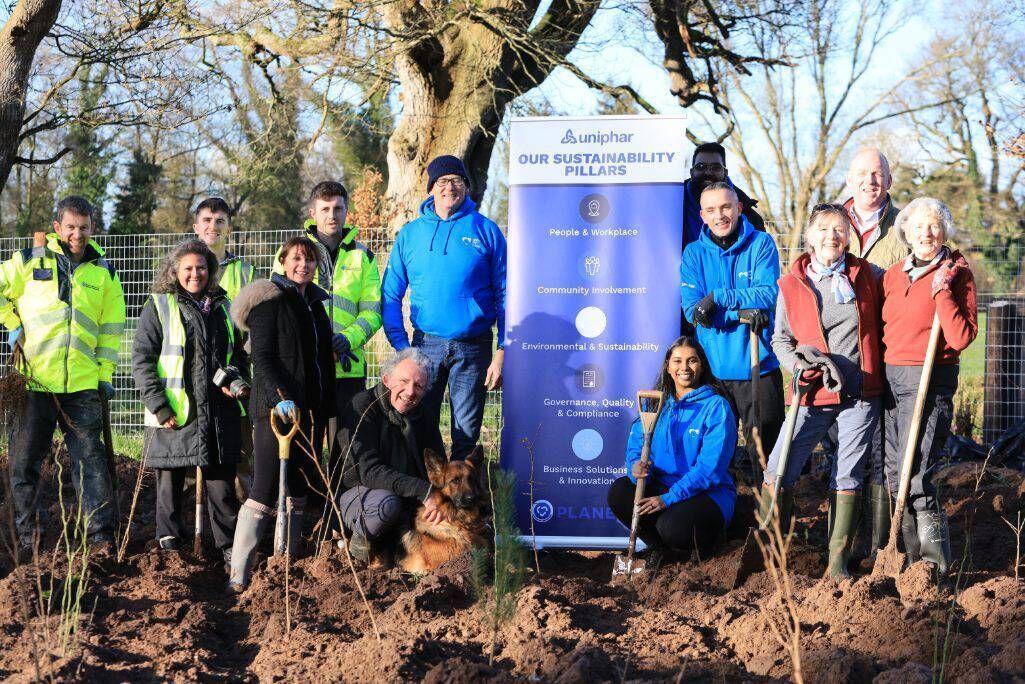
The 100 Million Trees Project at Glenstal Abbey. Volunteers planting the trees include Louise Hederman, Pru Rudd, Olga Fitzpatrick and Uniphar volunteers Keristena Grewan, David Culligan and Alan Malone, the team from Irish Forestry Services and Maisie the dog. Picture: Bailey & Blake

Some farmers are already involved, and more are being urged to take this opportunity to get further planting done. If every farmer devoted only a quarter of an acre, it would have a major impact.

Around 800,000 native trees, like oak, birch and hazel, have already been planted and it’s hoped to raise the number to one million this year.

The Mulcahys describe the project as a natural response to our biodiversity crisis. More than half of our native plant species are in decline, pollinating bees are disappearing, and butterfly numbers have dropped by half. Trees, they emphasise, are vital for wildlife. They create shelter for birds, insects and other creatures, help nurture healthy soil, and hold water in land, thereby protecting areas from erosion and flooding.

Schools are embracing the project and more than 500,000 saplings have been planted by children, with more being added each year. If the project hits its 100 million target, the trees combined could take in about 2.5% of Ireland’s carbon emissions.

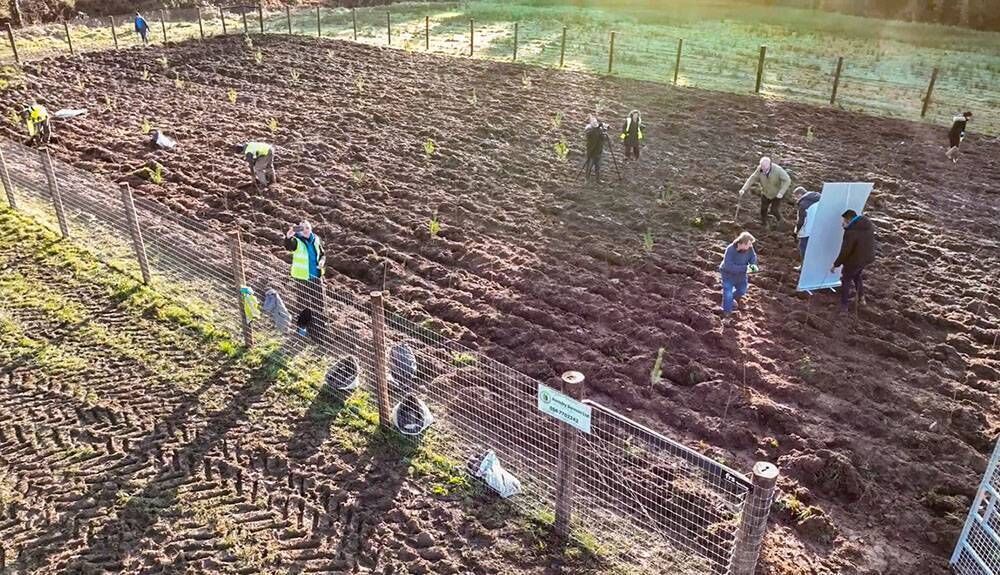
A team of volunteers from the 100 Million Trees Project, including co-founders David Mulcahy and Richard Mulcahy, plant the quarter of an acre site at Glenstal Abbey in County Limerick, Ireland. Picture: 100 Million Trees Project

What’s really striking about the project is that it’s not about large tracts of land, but usually about small, half-forgotten spaces of, maybe, less than a half-acre.

A patchwork of habitats that once thrived here is being stitched back. Children, being the future custodians of the environment, will have the pleasure of seeing these tiny forests growing up with them, and the return of wildlife that rely on trees.

More in this section

Revoiced

Newsletter

Sign up to the best reads of the week from irishexaminer.com selected just for you.

Cookie Policy Privacy Policy Brand Safety FAQ Help Contact Us Terms and Conditions

© Examiner Echo Group Limited