Sky Matters: February's big space event is NASA’s Artemis II mission

Artemis II crew [NASA astronauts Reid Wiseman, Victor Glover, and Christina Koch, along with CSA (Canadian Space Agency) astronaut Jeremy Hansen] in front of an Orion simulator on January 23 at NASA’s Johnson Space Center in Houston. Picture: NASA/Robert Markowitz
During January many of us were fortunate enough to experience another round of aurora — those wonderful green and red curtains of light that accompany explosions from the surface of the sun.
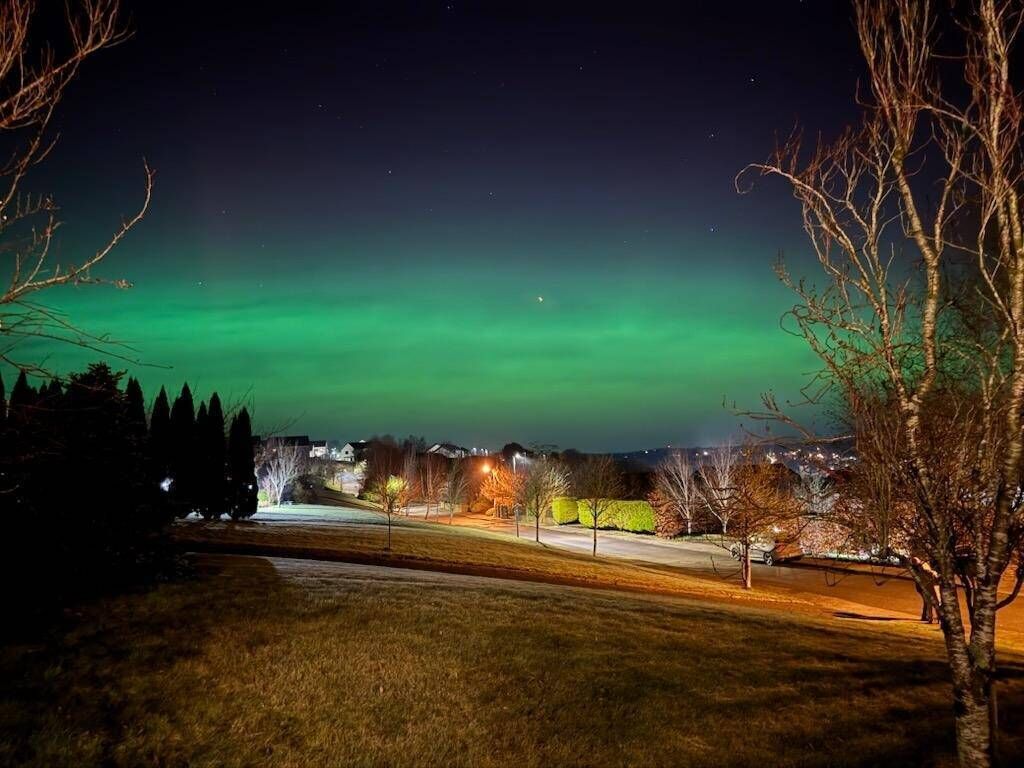
As we are still near the maximum of the Sun’s 11-year cycle of activity, we might reasonably anticipate further auroral activity throughout 2026. Currently it is not possible to predict when auroral activity that is bright enough to seen from Irish latitudes will take place — we get maybe 10 – 20 hours notice. This is because it takes that long for the particles from the sun responsible for the aurora to reach earth.
Solar explosions, referred to in scientific parlance as coronal mass ejections, have been a common feature of the sun. When it was a young star, some 3.5 billion years ago, it would have likely been much more active.
The early earth would have been bathed in more frequent rounds of strong aurorae, possibly even on a daily basis. And these aurora may have affected how our atmosphere evolved and possibly even played a role in chemical reactions that generated the building blocks of living things.
Our tempestuous young star, for all its unruly behaviour, may well have played a significant role in catalysing life. That said, these auroral flares would have been complemented by flares of X-ray radiation that may have frustrated the development of life. It would have been a delicate balance.
One of the reasons that astronomers spend so much time understanding the formation of young planets is exactly to build up a better picture of how our young earth evolved and the role played by the (active and unpredictable) sun.
We can be thankful that as it has aged the sun has become less active. It rotates much slower — in about 27 days now compared to 1-10 days when first formed — and that has a calming effect on its variability. Over time it will continue to reduce its explosive activity and gradually become cooler.
The bad news is that it will also fundamentally change by expanding as it cools (in about five billion years!), until it effectively encompasses the earth. We might have said goodbye to auroral flares, but we’ll be incinerated instead.
The big space event in February is the potential launch of NASA’s Artemis II mission. This will be the first time humans have embarked on a journey towards the moon since 1972 when Apollo 17 completed the manned exploration of our nearest neighbour.
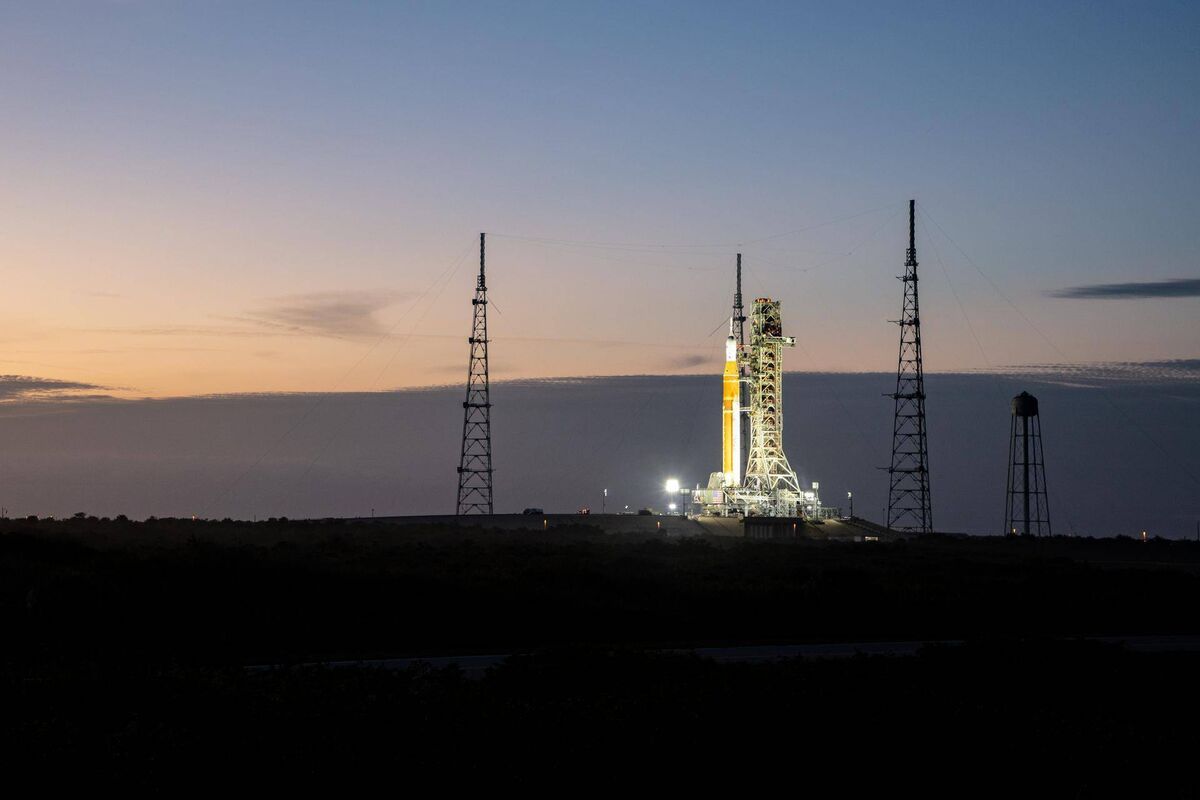
Artemis II will not land on the moon, however. Rather, it will take four astronauts on a journey around the moon and will be, in the inimitable words of John F Kennedy “returning (them) safely to Earth”.
The mission will test the systems that will eventually return humans to the lunar surface. It will also take humans farther than ever before — some 10,000km beyond our nearest celestial neighbour.
The crew of Artemis 2 — NASA astronauts Reid Wiseman, Victor Glover and Christina Koch and the Canadian Space Agency's Jeremy Hansen — are already in quarantine since January 23. This has been a standard procedure since before the Apollo era of the late 1960’s and is designed to minimise the risk of catching an infection.
I well recall the excitement accompanying Apollo. The sheer beauty of the Saturn V rocket as it lifted gracefully skyward... the tense final moments as Neil Armstrong guided the lunar module to the surface... the first time a person stepped onto a world that wasn’t the Earth.
The plaque that Armstrong and Aldrin left read “We came in peace for all mankind”. That was how it felt. An adventure for all of us to feel a part of.
One might hope that Artemis II can bring something of that sense of 'oneness' to a world that now seems all too much about individuality.

- Dr Niall Smith is head of research/ head of Blackrock Castle Observatory, Munster Technological University, Cork
Read More

CONNECT WITH US TODAY



Be the first to know the latest news and updates