Donal Hickey: Do try to avoid making pour decisions
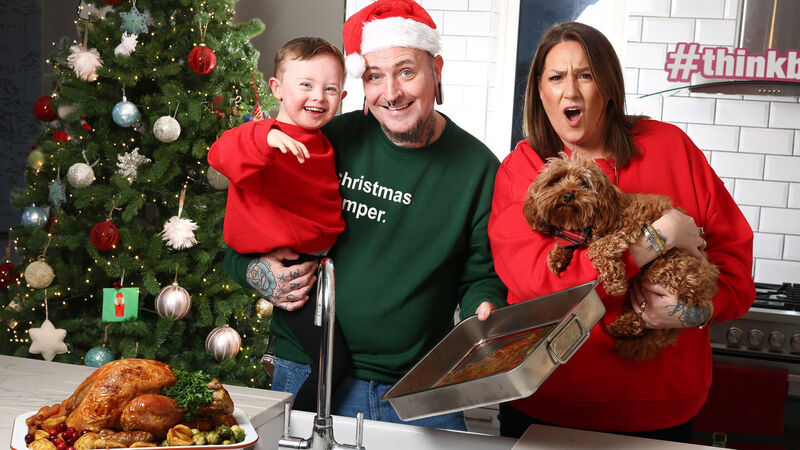
Gina and Karol Daly with son Gene and puppy Bob, aka The Daly Dish, highlight just how simple it is to prevent costly blockages and protect Ireland’s wastewater network. They want to remind everyone that leftover Fats, Oils and Greases (FOGs) should never go down the sink. Instead, let them cool, gather them in a suitable container and stick them in the bin. Picture: Marc O'Sullivan
More than one million turkeys, and probably the same amount of hams — vastly outnumbered, of course, by all those delicious desserts and treats — will be eaten in Ireland at Christmas.
Unquestionably, sending fat-rich foods 'down the hatch' is a popular activity at this time of year, but another kind of fat is often overlooked… that which, literally, goes down the drain.


CONNECT WITH US TODAY



Be the first to know the latest news and updates

![<p> The International Union for the Conservation of Nature says that “an ecosystem is collapsed when it is virtually certain that its defining biotic [living] or abiotic [non-living] features are lost from all occurrences, and the characteristic native biota are no longer sustained”.</p>](/cms_media/module_img/9930/4965053_12_augmentedSearch_iStock-1405109268.jpg "<p> The International Union for the Conservation of Nature says that “an ecosystem is collapsed when it is virtually certain that its defining biotic [living] or abiotic [non-living] features are lost from all occurrences, and the characteristic native biota are no longer sustained”.</p>")
