Bone analysis proves gladiators fought lions in Britain
Maynooth University anthropologists confirm that Roman gladiators battled wild animals — the 'sport' considerably impacted the population of North African big cats
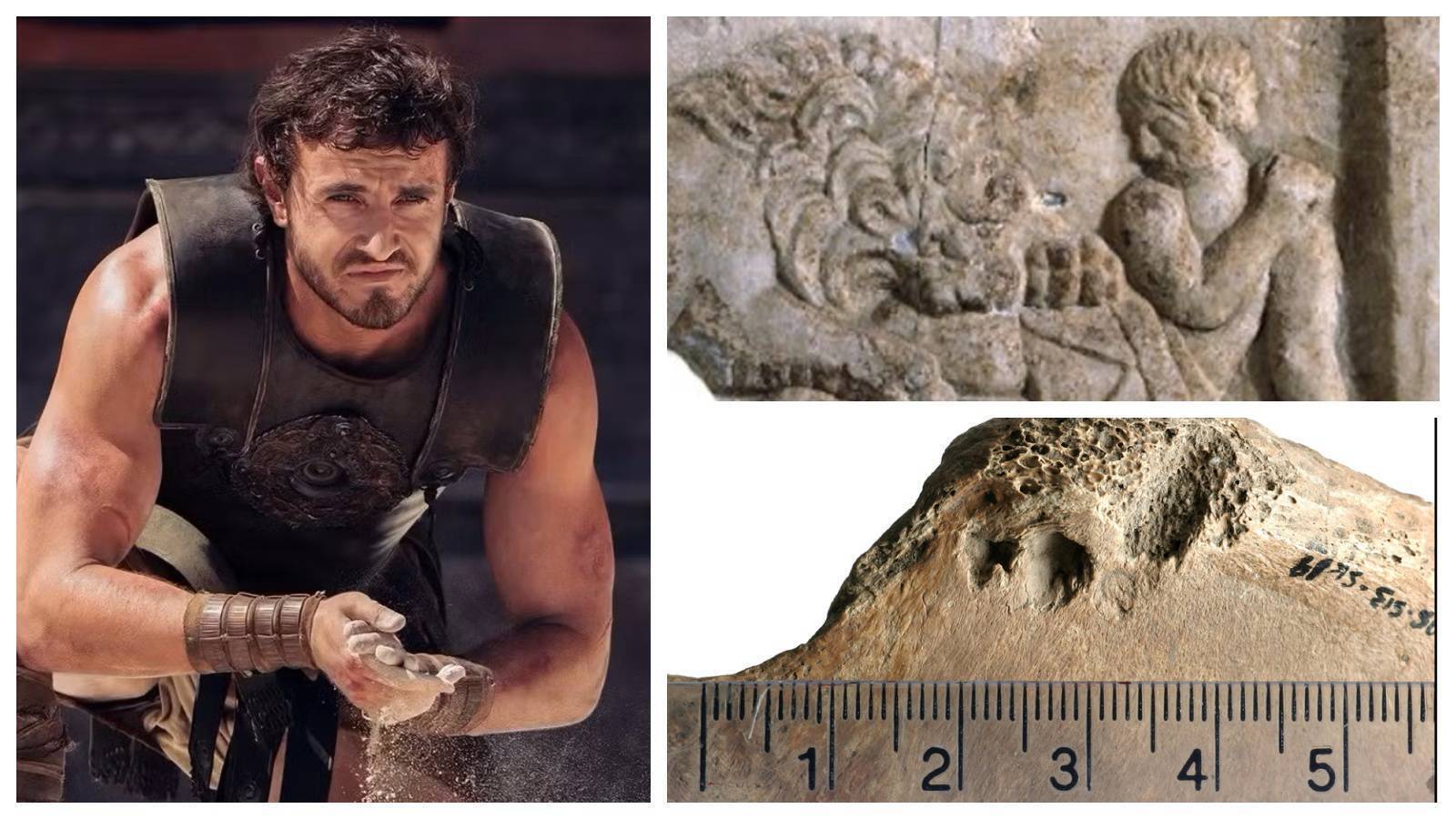
A skeleton from a Roman cemetery outside of York had unusual lesions. Investigation, including comparative work from modern zoological institutions, demonstrates that these marks originate from large cat scavenging — now thought to be the first physical evidence for human-animal gladiatorial combat from the Roman period seen anywhere in Europe. Pictured: Paul Mescal in Gladiator II; Marble relief with lion and gladiator © The Trustees of the British Museum; bite marks on the pelvic bone of a man known as '6DT19' who died almost 2,000 years ago.

A skeleton from a Roman cemetery outside of York had unusual lesions. Investigation, including comparative work from modern zoological institutions, demonstrates that these marks originate from large cat scavenging — now thought to be the first physical evidence for human-animal gladiatorial combat from the Roman period seen anywhere in Europe. Pictured: Paul Mescal in Gladiator II; Marble relief with lion and gladiator © The Trustees of the British Museum; bite marks on the pelvic bone of a man known as '6DT19' who died almost 2,000 years ago.

Wild beast ‘hunts’ were a ‘feature attraction’ at Rome’s Flavian Amphitheatre, the Colosseum:

 — Mosaics and pottery decorations depict fights between gladiators and animals.

You have reached your article limit. Already a subscriber? Sign in

185 years of the Irish Examiner

185th
Anniversary Offer

Six months of digital access for €18.50

No obligation. Ts&Cs apply.

More in this section

Revoiced

Newsletter

Had a busy week? Sign up for some of the best reads from the week gone by. Selected just for you.

Cookie Policy Privacy Policy Brand Safety FAQ Help Contact Us Terms and Conditions

© Examiner Echo Group Limited