Michelle McKeown: Why Ireland’s surf is just swell in the cold
Winter is prime time for surfing off Ireland's coasts — and here's why...
Michelle McKeown: Why Ireland’s surf is just swell in the cold

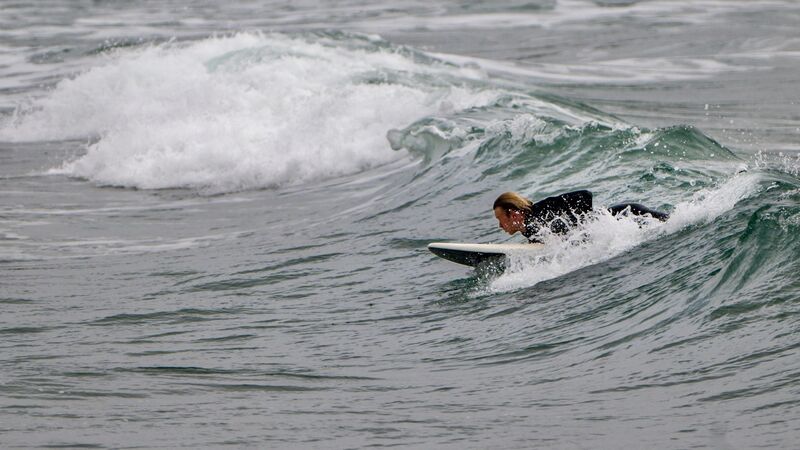
A surfer catches a wave in Garrettstown. Picture: Chani Anderson

Snowflakes on the beach, neoprene-clad adventurers in icy waters, and the relentless crash of Atlantic swells... surfing in Ireland during winter might seem like the realm of the brave (or slightly mad). But scientifically speaking, winter is the prime time for surfing on Ireland’s rugged coastline.

From oceanic physics to meteorological patterns, here’s why the science of waves makes the colder months the ultimate season for surfers.


How waves are born

Waves are formed by wind blowing across the ocean’s surface, transferring energy into the water. The size, strength, and frequency of waves depend on three main factors: wind speed, wind duration, and the distance over which the wind blows (known as fetch). During winter, low-pressure systems dominate the North Atlantic, creating ideal conditions for wave generation.

These low-pressure systems, often referred to as Atlantic storms, bring powerful, sustained winds that whip up large swells. The vast expanse of the Atlantic provides ample fetch, allowing these swells to grow as they travel thousands of kilometres toward Ireland’s shores. By the time they arrive, the energy-packed waves are primed for surfing, often significantly larger and more powerful than summer waves, which tend to result from weaker, localised winds.

A surfer on Marble Hill Strand beach near Dunfanaghy, County Donegal. Picture: David Young/PA Wire

Ireland’s geographic advantage

Ireland’s geography plays a pivotal role in its winter surfing prowess. With more than 3,000 kilometres of rugged shorelines, the country boasts a wide variety of surf breaks, from long sandy beaches perfect for beginners to rocky reef breaks that challenge even the most seasoned surfers. What makes Ireland particularly special is its exposure to the North Atlantic, one of the most active ocean basins in the world. Its west-facing coastline is perfectly positioned to receive the full force of these Atlantic swells.

Ireland’s underwater topography, or bathymetry, also enhances the quality of its surf. Offshore reefs and sandbanks help shape incoming waves, creating long, peeling rides or steep, barrelling sections. For example, the famous wave at Aileens, beneath the Cliffs of Moher, owes its perfection to an underwater reef that compresses and focuses the swell energy into a powerful, hollow wave. In winter, these features truly shine, thanks to the larger and more consistent swells.

The role of winds

Wind direction is a critical factor in determining wave quality. Offshore winds—those that blow from land toward the sea—are a surfer’s dream. They help to groom and smooth the wave face, creating clean, glassy conditions that are easier to ride. Winter weather patterns in Ireland frequently deliver these offshore winds, especially in the mornings, thanks to the interaction of cold land temperatures and warmer sea air.

Summer, by contrast, often brings onshore winds, which blow from the sea toward the land. These winds disrupt the wave face, creating choppy, unrideable conditions. This is one reason why winter waves are not just bigger but also more pristine—perfect for carving turns or slipping into a barrel.

Why winter waves pack a punch

The energy of a wave is proportional to the height of the wave squared, multiplied by its period (the time between successive wave crests). Winter waves tend to have both greater height and longer periods, meaning they carry significantly more energy than their summer counterparts. This increased energy not only makes for more thrilling rides but also allows waves to break in deeper water, making reef and point breaks more accessible.

The longer swell periods typical of winter waves are the result of storm systems generating consistent, high-energy winds over a long fetch. These long-period swells travel with minimal energy loss, arriving on Ireland’s coastline with power and precision.

Surfers on Marble Hill Strand beach near Dunfanaghy, County Donegal. Picture: David Young/PA Wire

How temperature affects surfing

While the science of wave formation makes winter surfing superior, the cold-water temperatures can’t be ignored. Ireland’s seas typically hover around 8–10°C in winter, compared to 15–18°C in summer. Cold water is denser than warm water, which subtly affects wave dynamics. Denser water provides better buoyancy for surfers, though the difference may be imperceptible compared to the sheer chill of the Atlantic.

Modern wetsuit technology, however, has revolutionised cold-water surfing. High-performance wetsuits with thermal linings and taped seams allow surfers to spend hours in the water without succumbing to the cold. Boots, gloves, and hoods provide additional protection, ensuring that the chill doesn’t detract from the quality of the session.

The ocean-atmosphere connection

Ireland’s winter surf is closely tied to broader climatic patterns, particularly the North Atlantic Oscillation (NAO). The NAO describes fluctuations in atmospheric pressure between the Azores High and the Icelandic Low. A positive NAO phase results in stronger westerly winds and a more active storm track across the North Atlantic, delivering the consistent swells that make winter surfing so reliable.

By comparison, summer is influenced by weaker pressure gradients and less active storm systems, leading to sporadic surf conditions and more frequent flat spells. This atmospheric shift underscores why winter is Ireland’s surfing season, even if it means braving snow-dusted beaches.

A winter wonderland for surfers

While snow and freezing winds might deter some, they add a certain magic to winter surf sessions. Paddling out under a dusting of snow, with waves crashing against a frosty shore, is a uniquely Irish experience. It’s not just about the adrenaline, it’s about connecting with the natural world in its rawest, most untamed form.

So, while your friends cozy up by the fire this week, consider trading the couch for a wetsuit. Winter surfing in Ireland isn’t just scientifically better, it’s an adventure that combines the thrill of the waves with a profound appreciation for the forces that shape them. And if anyone asks why you’re out there in freezing water, you can confidently reply “Because the science says it’s better".

  • Dr Michelle McKeown is a lecturer in Environmental Geography at University College Cork

x

Check out the Irish Examiner's WEATHER CENTRE for regularly updated short and long range forecasts wherever you are.

More in this section

Revoiced

Newsletter

Sign up to the best reads of the week from irishexaminer.com selected just for you.

Cookie Policy Privacy Policy Brand Safety FAQ Help Contact Us Terms and Conditions

© Examiner Echo Group Limited