Islands of Ireland: Inishkea North has Iron-Age and medieval ruins
The Inishkea Islands were also linked to international trade through their production of a purple dye derived from purpura shellfish, mosses, certain seaweeds, squids, jellyfish and starfish. The dye was traded as far as Byzantium (modern day Turkey) and was used to colour silks and velvets and was much in demand in royal courts
Islands of Ireland: Inishkea North has Iron-Age and medieval ruins

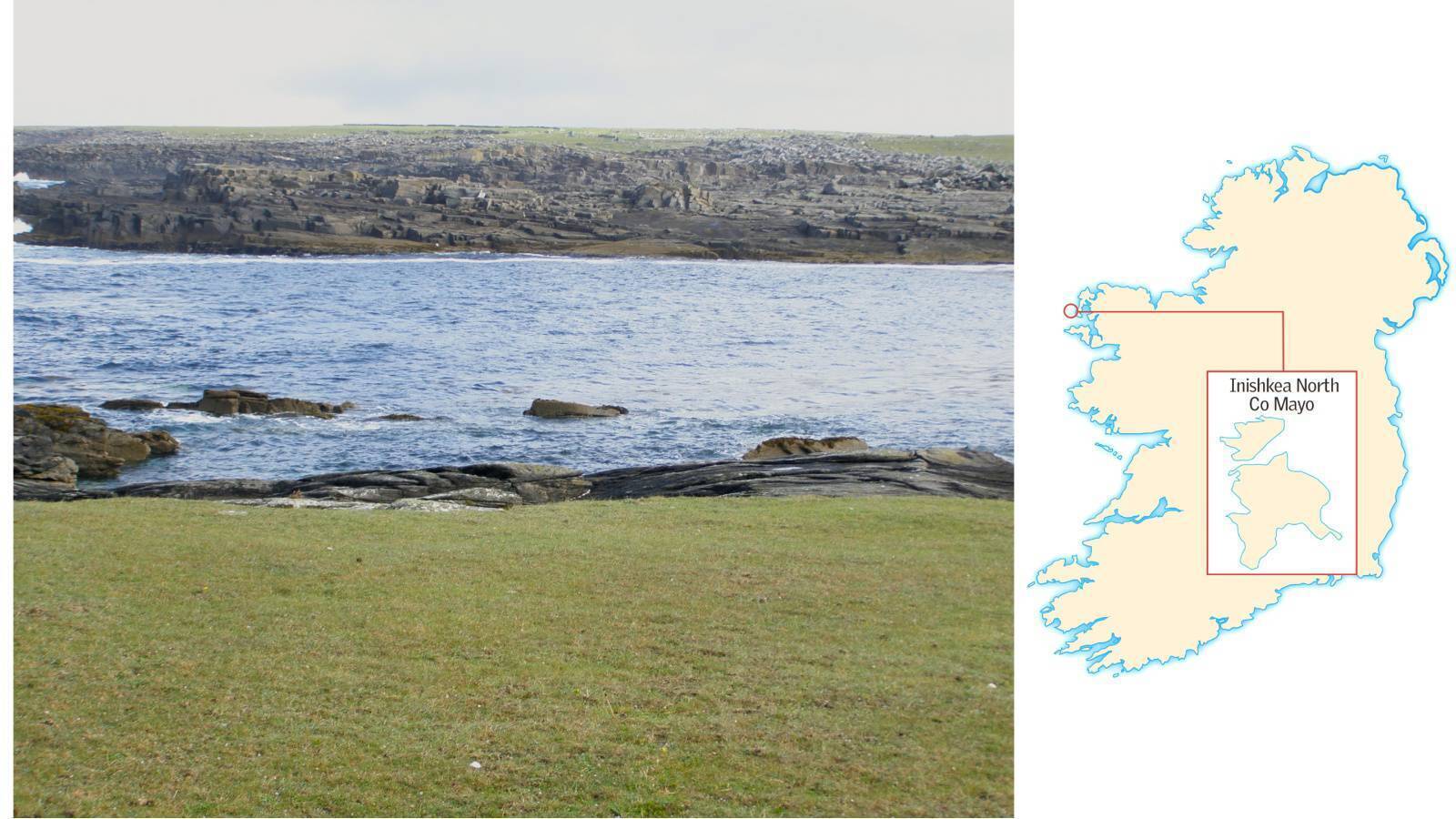
Inishkea North, County Mayo. Then name derives from Inish GĂ©, Goose Island. Picture: Dan MacCarthy

On the northwestern coast of County Mayo where the Mullet Peninsula hangs down like an elephant’s trunk there is a group of fascinating islands.

Duvillaun to the south is like a mini-Skellig Michael in appearance; to the north is Inishglora with its ecclesiastical history; in between are the Inishkeas — so close that they could be considered one island.


The name derives from Inis GĂ©, Goose Island, prodigious numbers of which were reported by the late Irish Times writer Michael Viney on one visit. The barnacle goose is the bird in question.

This awkward-looking creature was the subject of a poem by Moya Cannon specifically writing on the Inishkeas: “In April they gather now, restless, broody,/ fatted on the scant grasses of a continent’s margin/ ready to leave for breeding grounds in Greenland’s tundra.”

The islands were also the subject of a series of paintings by Hughie O’Donoghue. He told Marc O’Sullivan of this paper in a 2010 interview “the paintings are more about an idea of the islands than the islands themselves”.

The population of Inishkea North peaked at 155 pre-Famine; and at 62 for Inishkea South. Some of the islanders worked at the Norwegian whaling station which operated for a time on the small Rusheen Island adjacent to South. Visitors to the island reported an unbearable stench from the blubber. Sperm whales were hunted mainly for their ambergris which was used as a medicine and in the perfume industry. In addition, the whales yielded oil for use in homes; whale meat for cattle; and bone meal for fertiliser.

The islands suffered a mortal blow in 1927 when 10 fishermen drowned in a ferocious storm. After that disaster the decision was taken by 1935 to abandon the islands. One writer lamented the departure of the islanders as the islands “no longer resound to the mellifluous Gaelic of the picturesque fisherfolk and the happy laughter of their children but will be sentinelled only by deserted cottages and re-echo only the eerie ululations of wild sea birds".

Times were harsh over the decades but in the Second World War shipwrecks often provided them with commodities such as tobacco and coffee that were rare in the rest of the country.

In 1998 one of the evacuees, Mai Carolan, recalled life on Inishkea North island from a distance of almost 70 years. “The islanders were neighbourly and closeknit resembling an extended family. The women performed the day-to-day tasks of baking, butter-making, knitting, cleaning, curing fish as well as tending to the animals, while the men fished by the currach.” Carolan said that the economy was basically self-sufficient with occasional trips to the mainland to stock up on tea, sugar, tobacco and salt. There was no doctor, a priest came twice a year, but the children received a great education from a Master Barrett.

While the Mayo coast was long associated with piracy in the days of Granuaile in the 16th century, the Inishkea Islands were also linked to international trade through their production of a purple dye derived from purpura shellfish, mosses, certain seaweeds, squids, jellyfish and starfish. The dye was traded as far as Byzantium (modern day Turkey) and was used to colour silks and velvets and was much in demand in royal courts.

The defining monument on the northern island is St Columbkille’s Church which has no roof but just about walls. This really was the western frontier of the expansionist church in its early days. Beyond is the wild Atlantic. To serve god in these far-flung places was to bring you closer to him, was the belief. And dozens of small churches on our western islands is a testament to that creed as well as to an iron constitution.

However, the islands were inhabited way before this and the ruins of a promontory fort attest to this Iron Age structure from 500BC to 400AD on the northwest of the island. Other signs of human habitation include a graveyard, cross slabs, and ruins of medieval houses. This is dreamland for an archaeologist.

How to get there: northmayo.ie/wild-west-boat-tours-blacksod-co-mayo

Other: archaeology.ie; Western People 01/10/1997; Connacht Tribune 10/08/1929; Western People 02/09/1998

More in this section

Revoiced

Newsletter

Sign up to the best reads of the week from irishexaminer.com selected just for you.

Cookie Policy Privacy Policy Brand Safety FAQ Help Contact Us Terms and Conditions

© Examiner Echo Group Limited