Video: Shark hit by boat in Kerry has its response captured on the 'fitbit' it wears
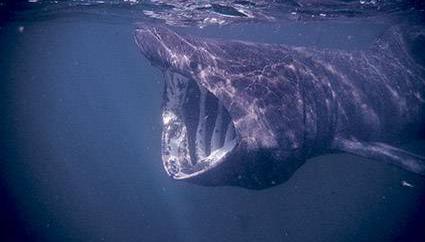
In April this year the Irish government announced the designation of a new national park in West Kerry. Covering more than 70,000 acres, it is the largest national park in the country. Kerry National Marine Park is also the first Irish National Park to incorporate marine features within its boundary and remit
The first ever hard data detailing how endangered basking sharks respond to boat strikes has been captured.
A collaborative team fitted a 'shark fitbit' with an integrated camera to a 7-metre female basking shark in County Kerry to gather important behavioural and physiological data. And just six hours later she was hit by a boat in an area recently designated Ireland’s first National Marine Park. Boat strikes post an increasing threat world-wide to marine megafauna (eg whales and large sharks).
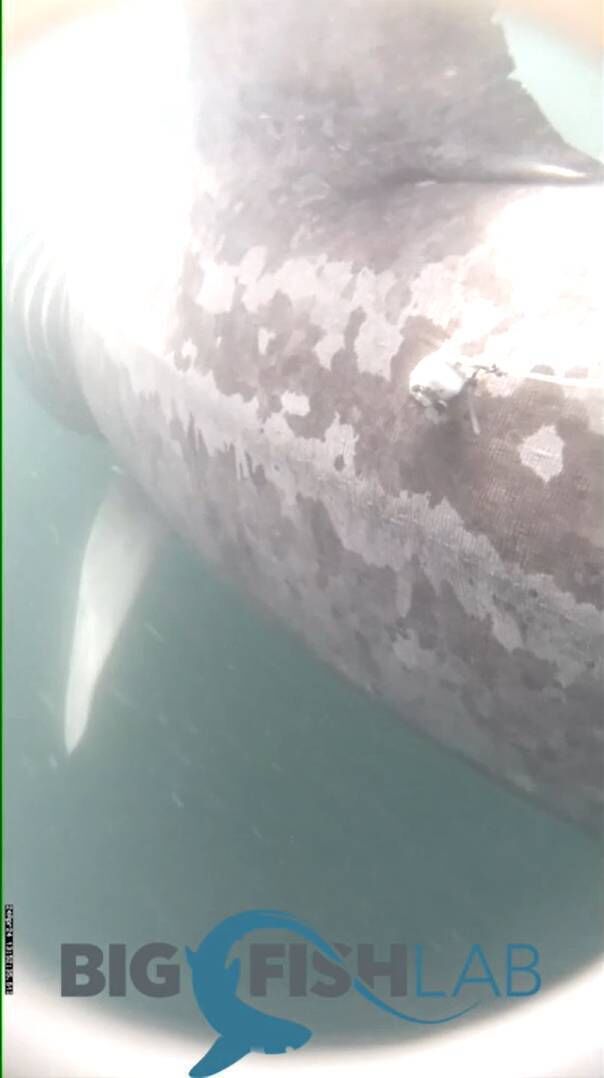
Data from the recovered shark fitbit — more specifically an 'animal-borne camera and inertial measurement unit' — showed that the shark immediately swam to the seafloor, moved to far deeper, offshore waters, and significantly reduced her activity levels. The fitbit released around seven hours later, at which point the shark had not resumed normal behaviour, so while the strike was initially non-lethal, the team is unsure how significant the internal injuries were and whether the shark ultimately survived.
In combination, the work, which has just been published in the journal , outlines the need for a legally binding code of boating conduct (e.g. restrictions on vessel speed in basking shark aggregation areas), with enforcement power for the appropriate authorities.
In the meantime, very simple guidance for boaters is to go slow (<6 knots) in any place basking sharks have been known to surface during sunny, calm days in the spring and summer in Ireland.
And for more information on how to behave around basking sharks, the Irish Basking Shark Group’s Code of Conduct is available here.
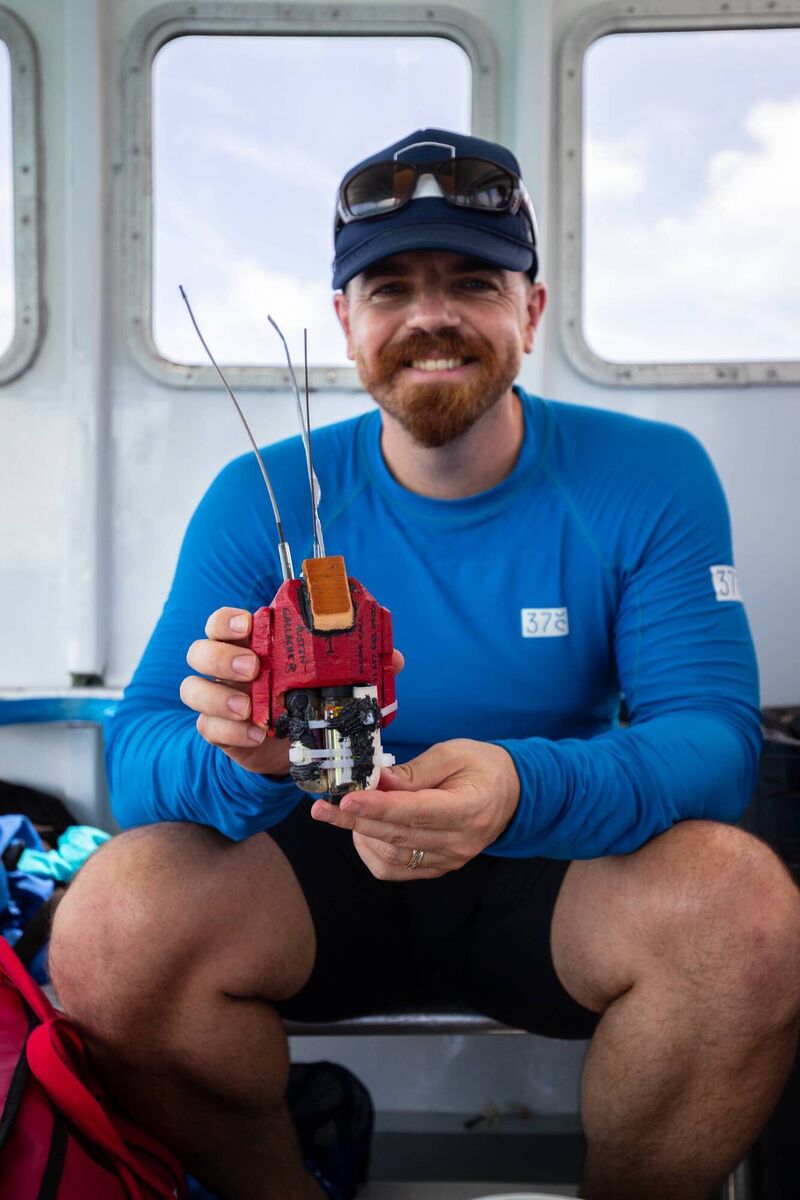
Nick Payne, assistant professor in Trinity College Dublin’s School of Natural Sciences, said: “Ireland remains one of the only locations worldwide where globally endangered basking sharks continue to aggregate in large numbers, and it is great that they were officially protected under the Wildlife Act (1976) in 2022. Additionally, this year, the Irish government announced Ireland’s first National Marine Park off County Kerry, a spot that is seasonally frequented by the species for feeding — and very probably breeding."
“But the fact a shark we fitted our ‘fitbit’ to was struck in this area within a few hours underlines just how vulnerable they are to boats and highlights the need for greater education in how to mitigate against such strikes. Basking sharks filter feed at the surface, like some whales, and this behaviour makes them similarly susceptible to strikes.”
Alexandra McInturf, research associate at the Coastal Oregon Marine Experiment Station (COMES), Oregon State University, and co-coordinator of the Irish Basking Shark Group, sees this as an opportunity to inspire further research on interactions between water users and basking sharks in Ireland. She said: “This incident suggests that much more research is needed on the prevalence of ship strikes on basking sharks in the new National Marine Park and other hotspots along the Irish coastline."
“Additionally, it brings to light further questions about whether and how often the sharks are actually occupying such habitats when they are not clearly visible at the surface. Given that Ireland is one of the only locations globally where basking sharks are still observed persistently, addressing such questions will be critical to informing both our ecological understanding and conservation of this globally endangered species.”
Taylor Chapple, assistant professor at the Coastal Oregon Marine Experiment Station (COMES), Oregon State University and lead author, added: “Unlike whales, basking sharks often sink when killed, so it is very hard to gauge mortality rates and even in this case, where the strike wasn’t lethal right away, we’re not sure of the fate of the female that was hit."
“The overlap between sharks, whales and other marine life and maritime activities is a global concern and even when strikes are not lethal, the non-lethal effects can also have significant short- and long-term consequences. These can take on even greater importance when they alter the behaviour of endangered species we are trying so hard to protect.”
The IBSG has noted that: "Basking sharks in Ireland have altered behavior and exhibited signs of stress (such as closing their mouth) when approached by swimmers or boats. Boat strikes are still a real threat throughout their range, and the impact of unmanned aircraft vehicles (UAV, i.e., drones) is virtually unknown."
Also, "People often assume that because basking sharks 'don’t eat people', it is perfectly safe to approach them. This assumption is dangerously wrong, as basking sharks can leap out of the water unexpectedly, at the same speed as a great white, or thrash their tails when 'spooked'."
According to the ISBG: "We have seen footage on social media of people swimming too close to sharks, only to be nearly crushed by a breaching shark."
Read More
CONNECT WITH US TODAY



Be the first to know the latest news and updates