Islands of Ireland: Even the name suggests you can walk to the Galway island of Inishtreh 
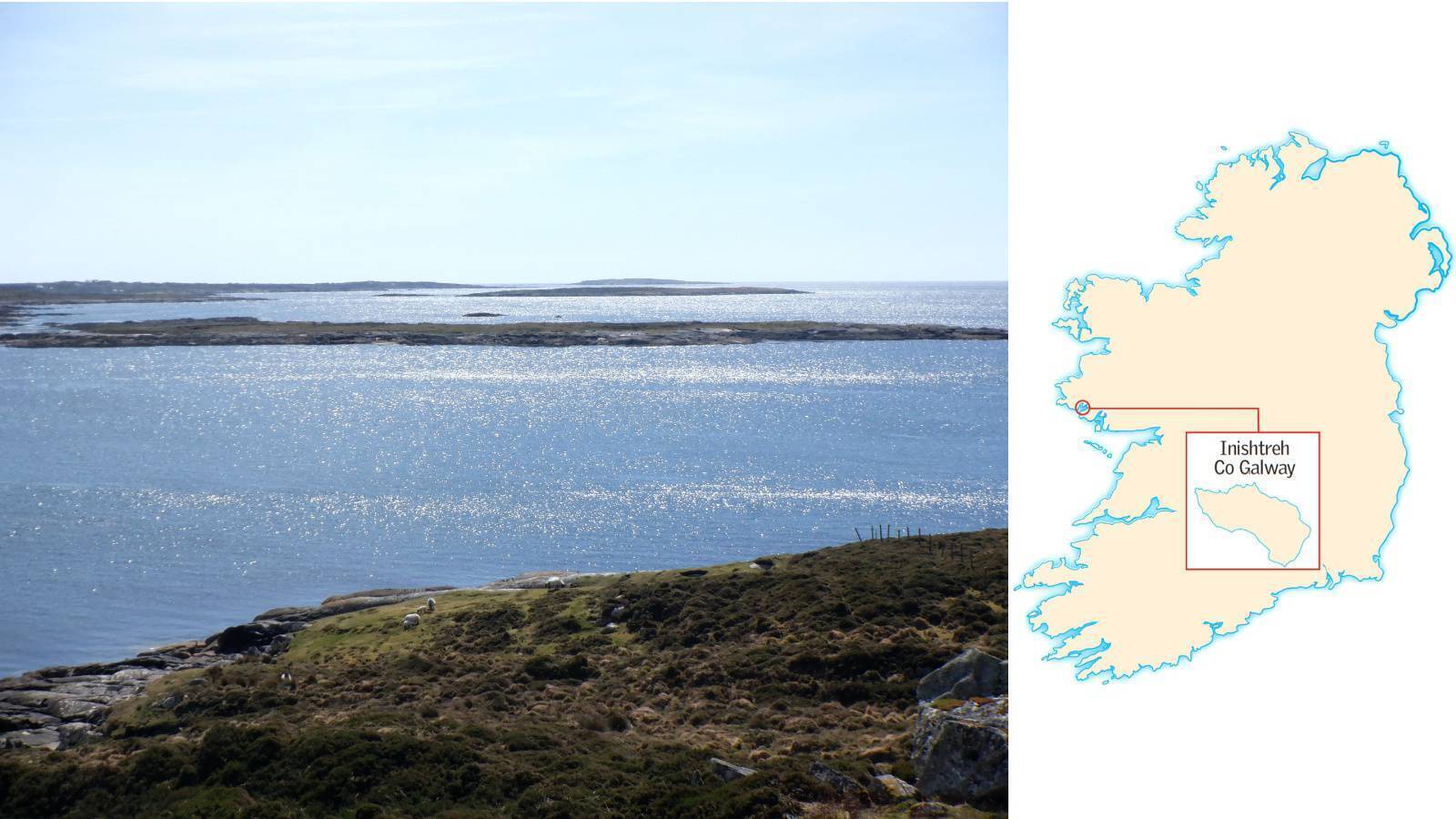
At low tide it is possible to walk to the island from a pier. In fact the translation of the island comes from ‘troigh’ or ‘foot’ indicating that such a venture is possible
Islands of Ireland: Even the name suggests you can walk to the Galway island of Inishtreh 

Inishtreh, County Galway has a holy well on it — but it's rather tricky to find. Picture: Dan MacCarthy

The numerous islands of the northern part of Bertraghboy Bay in Connemara are mostly covered in gorse or heather — or where they are low-lying they exhibit a fine fleece of reeds. Yet some have archaeological monuments that have been recorded... for those patient enough to peel away the layers of history.

Roundstone on the southwest of the bay is the standout village in the area. It attracts legions of tourists in the good weather to its lively pubs and cafes and of course its myriad boating options: sailing, angling, kayaking, island-touring.


Inishtreh or Inis Troigh lies towards the outer part of the bay on the eastern side opposite the peninsula formed by the three-part island of Inishnee now linked by a causeway to the mainland. The island is used for sheep grazing but the only noticeable manmade feature is a few lengthy walls dividing fields. However, the island does have a holy well as recorded on archaeology.ie which describes it thus: “it consists of a natural smooth hollow or pothole, obscured by masses of seaweed“. Most of the holy wells are dedicated to saints. Inishtreh’s is no different, Colm Cille being the dedicatee (Tobar Cholmcille).

Holy wells are often located near ecclesiastical sites and also linked with venerated trees or stones on which certain beliefs are bestowed. “The tradition of the venerated tree and its uncommon powers, notably of healing, pre-dates the arrival of Christianity,” states Antiquities of Rural Ireland. Drinking from the holy wells was believed to provide a cure for headaches.

One of the acknowledged experts in the holy wells in Connemara was mapmaker, writer, artist, the late Tim Robinson, who documented dozens of the holy wells in the decades he lived in Connemara. Traipsing over endless bogs, down boreens, across strands, and estuaries, he has mapped many of them in his books and incomparable maps. Robinson writes “I have taken so inordinate interest in the round and triangular holy wells treating them as major reference points in a landscape that otherwise teems with ungraspable iterations of details”. In an area otherwise bereft of human signs the holy wells testify to a rich history where the customs of the inhabitants were played out.

The holy well on Inishtreh is on the northeast side according to the Ordnance Survey maps though such locations are sometimes inaccurate.

Following a tipoff from a fisherman, Robinson embarked on an excursion to Inishtreh to locate the famous, elusive well. At low tide it is possible to walk to the island from a pier. In fact the translation of the island comes from ‘troigh’ or ‘foot’ indicating that such a venture is possible. As his companion was infirm and had to stay on the boat, Robinson and he devised a system of signals (long before the boring communication system known as the smartphone came along) where one whistle would mean ‘move north’, two would mean ‘move south’, etc.

About 400m from the pier the signalling system was working and Robinson was directed to an area near some seagulls resting on rocks. After tramping across seaweed for a while and groping in rockpools he still wasn’t any the wiser. When he got back to the mainland the fisherman informed him he had in fact been standing beside the holy well. 

David Walsh in Oileáin also states that the well has not been found. And finally, on a recent trip to the island, a similarly fruitless search was undertaken by this columnist following in the footsteps of Tim Robinson and the many islanders over the years who visited to imbibe its healing water.

There is no evidence Inishtreh was ever populated, but who knows what yet lies undiscovered beneath its furze bushes.

How to get there: No ferry. Possible to walk at very low tide from the pier 3km west of Glynsk pier which is itself 8km south of the Clifden to Galway road at a point near Recess. Important to ask for local guidance.

Other: Archaeology.ie; Antiquities of Rural Ireland, Muiris Ó Súilleabháin et al, Wordwell; Connemara; A Little Gaelic Kingdom, Tim Robinson, Penguin

More in this section

Revoiced

Newsletter

Sign up to the best reads of the week from irishexaminer.com selected just for you.

Cookie Policy Privacy Policy Brand Safety FAQ Help Contact Us Terms and Conditions

© Examiner Echo Group Limited