Anja Murray: Canals and towpaths are bustling wildlife havens for swans, dragonflies, bats and more
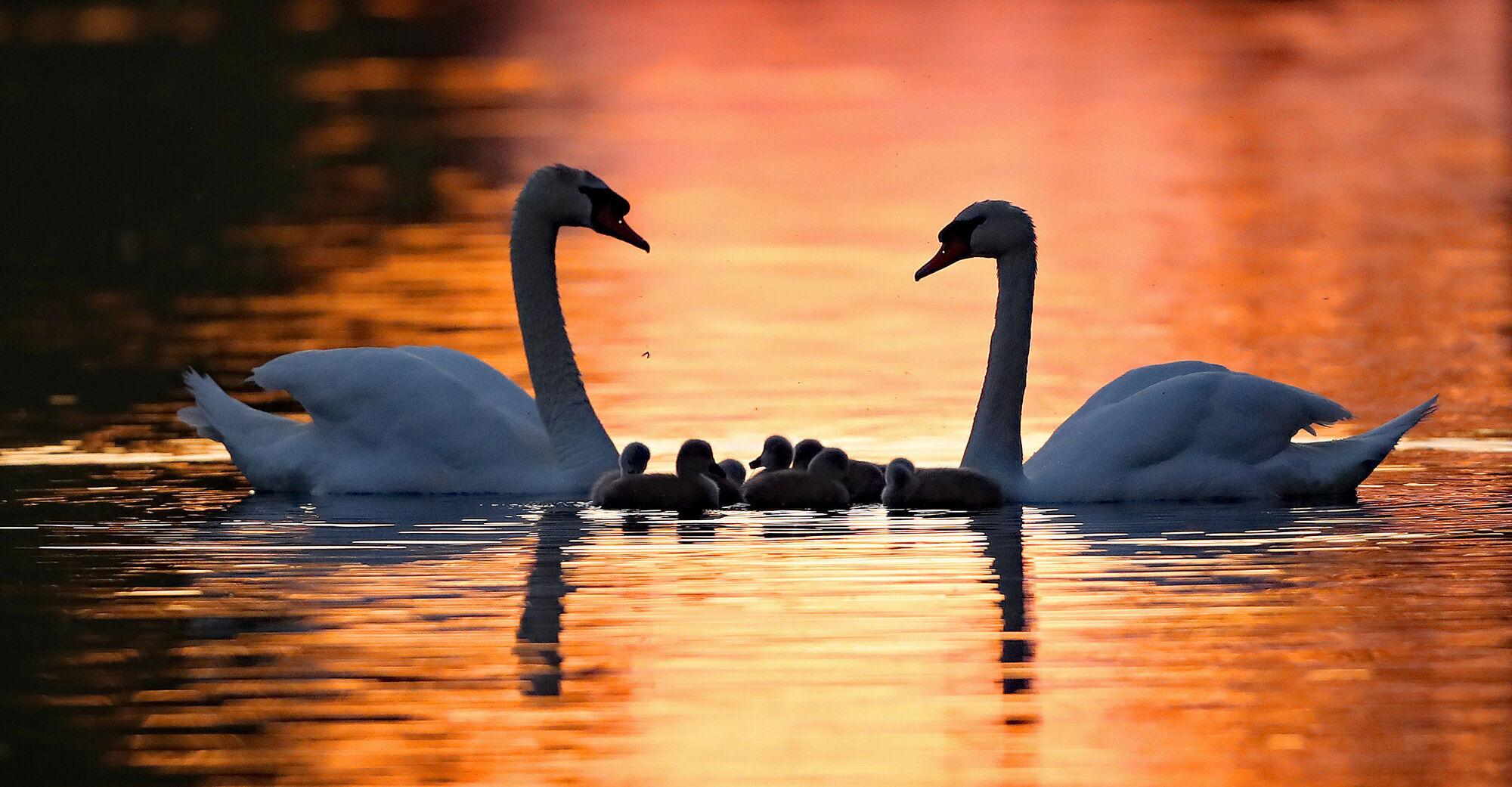
Swans and cygnetson the Grand Canal in Athy, County Kildare. Picture: Niall Carson/PA Wire
Early in the last century, my great-grandfather was a lighterman on the Lagan canal, operating a barge that ran from Lough Neagh to Belfast. His cargo was primarily coal being brought from the docks in Belfast to the inner reaches of Ulster — and he returned to Belfast laden with turf and potatoes. My Dad would often recall the holidays he spent with his grandfather on the canal, being pulled along by horses on the tow-path. Days spent catching fish to cook on the little stove; watching wildlife; and excitedly helping with barge duties such as switching over to new teams of tow-horses from section to section.
I think of them now when I walk along canal tow paths, from Leitrim to Dublin and Kildare, imagining the strong work-horses and loaded barges moving slowly through the water. Even back when the canals were functional transport routes, my great grandfather enjoyed the quiet refuge of greenery and the company of wild things. Today, canals provide refuge for people and wildlife alike. Their water quality tends to be good too, protected from much of the agricultural runoff and other pollution that most Irish rivers suffer from.
The inland waterways are rich in biodiversity, and it is important that we respect the environment. As #ScienceWeek continues, check out our Waterways Hero activity, which encourages respect for the waterways in a fun and enjoyable manner.https://t.co/7J7jjrMC0Z pic.twitter.com/wpvnAp0zVL
— Waterways Ireland (@waterways_Irl) November 16, 2023
Phragmites reeds grow tall along the edges, habitat for aquatic invertebrates and nesting sedge warblers returning each spring from Africa to breed among the reeds. Moorhen and mallard also nest among waterside plants. Big tall bulrushes with their dark brown sausage-like heads add structure to the scene. As May progresses, flag iris, also known as yellow flag or feileastram, is in flower.
Big padded leaves of yellow water lilies are buoyed by tiny air pockets to keep them afloat. Water lilies are rooted in the mud on the canal bottom, their long stems growing up through the water column. Their bright sturdy yellow flowers appear from June.
Mute swans — the largest and heaviest flying freshwater birds in the world — are nesting now. I love listening to the whoosh as they paddle and flap to take off from the water... getting airborne is no easy feat for a bird with a 2-metre wingspan. Throughout the month of May, each pair of mated mute swans will be attentively incubating a clutch of eggs until the cygnets hatch out in early June. Locals are often protective of nesting swans, and rightly so. At one nest site by the royal canal near Cabra, locals erect a fence around the huge nest to keep curious hounds away from vulnerable eggs and nestlings, though mink and other predators are always a threat to nesting waterbirds. Grey wagtails are actively feeding and nesting along canals too at the moment, recognisable by their bright yellow belly, grey back, and long wagging tail. Grey wagtails make their nest in crevices beside fast flowing water, often in the stone walls by canal lock gates. They are zippy, agile movers, expert at catching flying insects in mid-air, mayflies and midges that nourish adults and chicks alike.
Herons stand sentry, tall and elegant as they perch on one leg, motionless, watching the water for sight of a frog or a fish worth seizing. The inside of their long dagger-like beak is rough to help it hold on to slippery fish. Because they are so good at staying still, it's often possible to see and admire the streak of a black crest across their head and gentle yellow of their legs and beak.
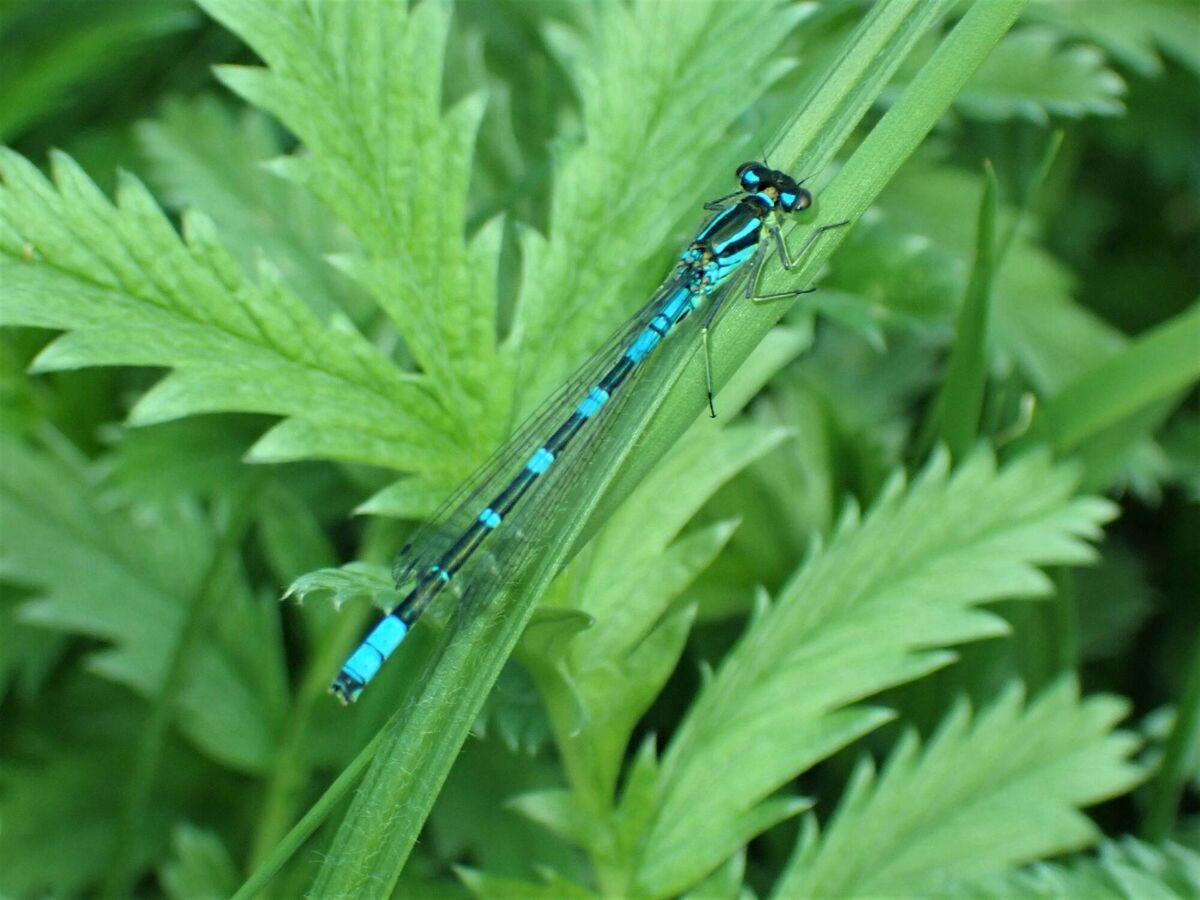
Another of my favourite canal-side creatures are the shimmering damselflies and dragonflies with their hovering flight. Before they become the colourful flying adults that we love to watch, damselflies and dragonflies typically spend a year or two underwater as nymphs, living in benthic mud, where they prey on other smaller invertebrates. As they grow they moult their hard outer case many times. When ready for the final metamorphosis, nymphs crawl out of the water, clambering up on a plant leaf at the water’s edge to dry off. Then they extract themselves, first the head, and then the legs and wings, to emerge as winged adults. For most species, this happens in the month of May. There are about 24 species of damselflies and dragonflies in Ireland, each visually distinctive, each with different habitat needs and preferences. Several species can be seen along canal waters, including the common blue damselfly with its striking metallic blue body.
Along the towpaths, grassy verges are fringed with wildflowers, enjoying the reprieve from overzealous management elsewhere. These, in turn, provide habitat for a multitude of invertebrates, including beetles, wild bees, moths and hoverflies. Butterflies on the wing at the moment include orange tipped white, common blue, brimstone, and meadow brown. Plentiful flying insects are fodder for bats roosting in old stone bridges and crevices of old trees along towpaths too. They too will be nursing young in the coming weeks and need plenty of insect protein to sustain themselves.
For you, the #Lagan Navigation in the #sun! (There was even blue sky) pic.twitter.com/w0ADrWRLNM
— walkitoffni 🇺🇦 #StandwithUkraine 💙 🇵🇸 she/her (@walkitoffni) February 9, 2021
I often wonder how much has changed since the times in which my great-grandfather lived. Farmed fields would have been packed more tightly with wildflowers, as hay was harvested only once at the end of the summer, and commercial fertilisers not yet a thing. I guess the soundscape would have been thronged with birdsong in a way that we can barely imagine now.
Much of the biodiversity data we have does not reach that far back, though trends and occasional points of reference that allow scientists to compare and indicate that many wild creatures were far more abundant in the past. More than half of Ireland’s wild bee species, for example, have undergone substantial declines in their numbers since 1980, many have declined by more than 50% in that time alone. Extrapolating back to the 1930s, things certainly would have looked and sounded a whole lot richer then.
It is incumbent upon us, now, to restore nature in every possible way, from protected areas and national parks to functional farmland too. Refugia like canals can make a big difference to many species too. Challenges such as invasive species, which displace native plant life, jeopardise their value. Those who manage these areas, in this case Waterways Ireland, have been making progress on positive management actions, though a great deal more could be done to support wild species. Its time for everyone to step up the levels of commitment and action.
CONNECT WITH US TODAY



Be the first to know the latest news and updates