Sky Matters: Go meteor-watching in May — you can expect to see 30 an hour
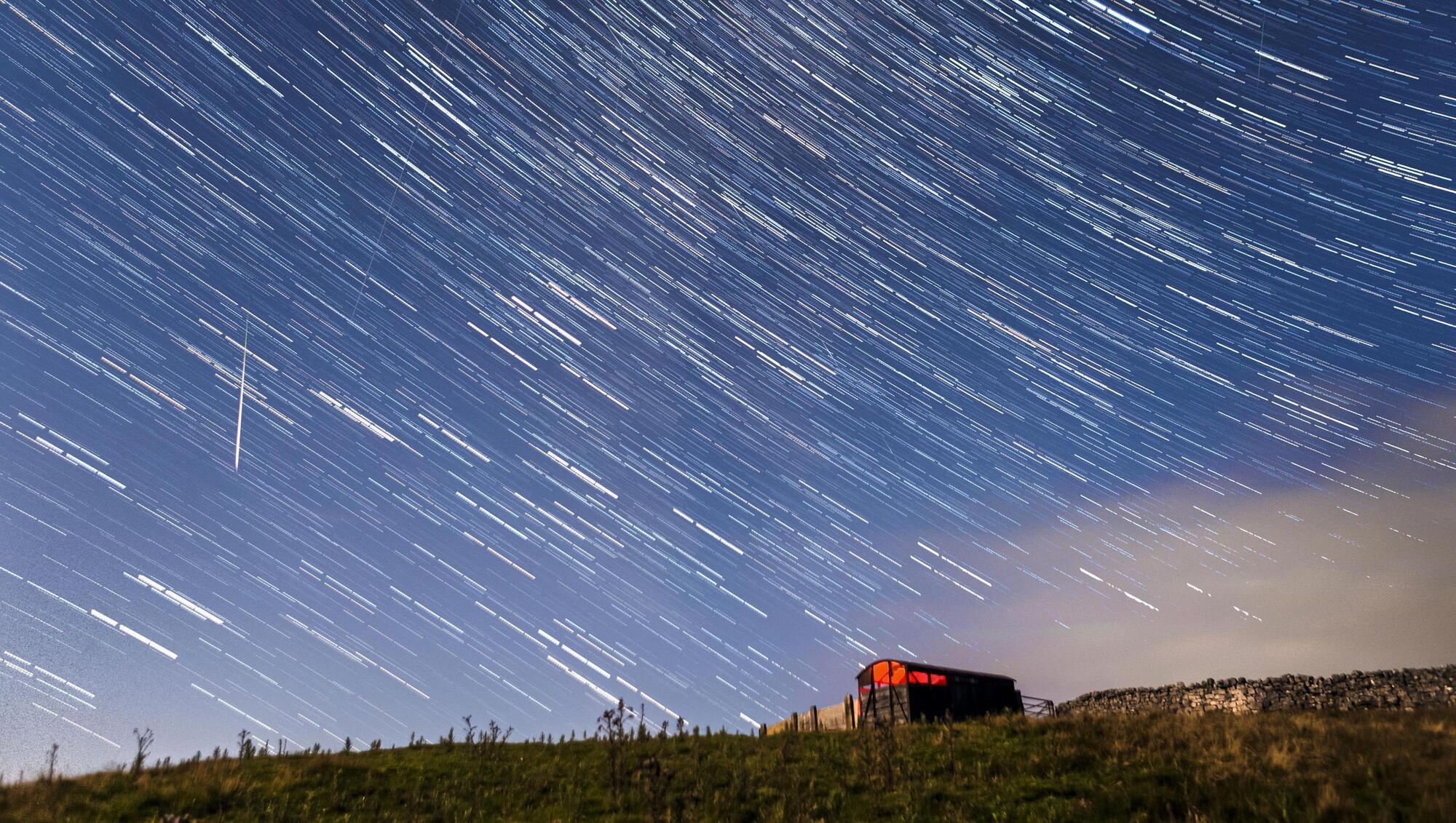
Digital composite of 30 photographs taken over a period of 15 minutes. A meteor and star trails during the Perseid meteor shower seen from near Hawes in the Yorkshire Dales National Park, as the Earth flies through a cloud of cometary dust creating a spectacular display of celestial fireworks.
The first week of May starts off with the Earth crashing into comet Halley. But don’t panic - it’s not as disturbing as it might at first seem.
It’s Halley’s trail of dust and gas that we collide with, left in the wake of the comet which most recently paid us a visit in 1986.
Comets are inherently fickle objects. They consist of loose aggregates of dust and gas.
As they approach the Sun in their orbit the gases expand and push out this dust. Mostly, the dust is smaller than a grain of sand, but there are occasional chunks of pebble size.
Sometimes – rarely - the expansion of the gases is so violent that a comet can be completely fractured into boulder-sized pieces.
If you want to witness the next occurrence of Earth crashing into comet Halley the best time is the first week of May, from the 6th onwards.
Once the sky has darkened, simply look up and wait for the infrequent appearance of a streak of light that can appear from any direction.
These streaks, or meteors, are the result of Halley’s dust burning up in our atmosphere and are completely harmless.
If you have never gone meteor-watching before, then the absence of a bright Moon at the start of May this year should tempt you to do so.
With dark moonless skies, and if you give your eyes 10-20 minutes to fully adapt to the dark, you’ll be able to see more of the fainter meteors whilst also getting a better view of the brighter ones.
This does mean no mobile phones! There are no apps, including astronomy ones, which won’t degrade the sensitivity of your vision.
While everyone is different, you can expect to see up to 30 meteors an hour.
There are some credible reasons to believe that this year’s meteor shower might be particularly spectacular, but as with predicting next week’s weather, there is a high level of uncertainty.
And yet, if it was spectacular and you missed it – what a shame!
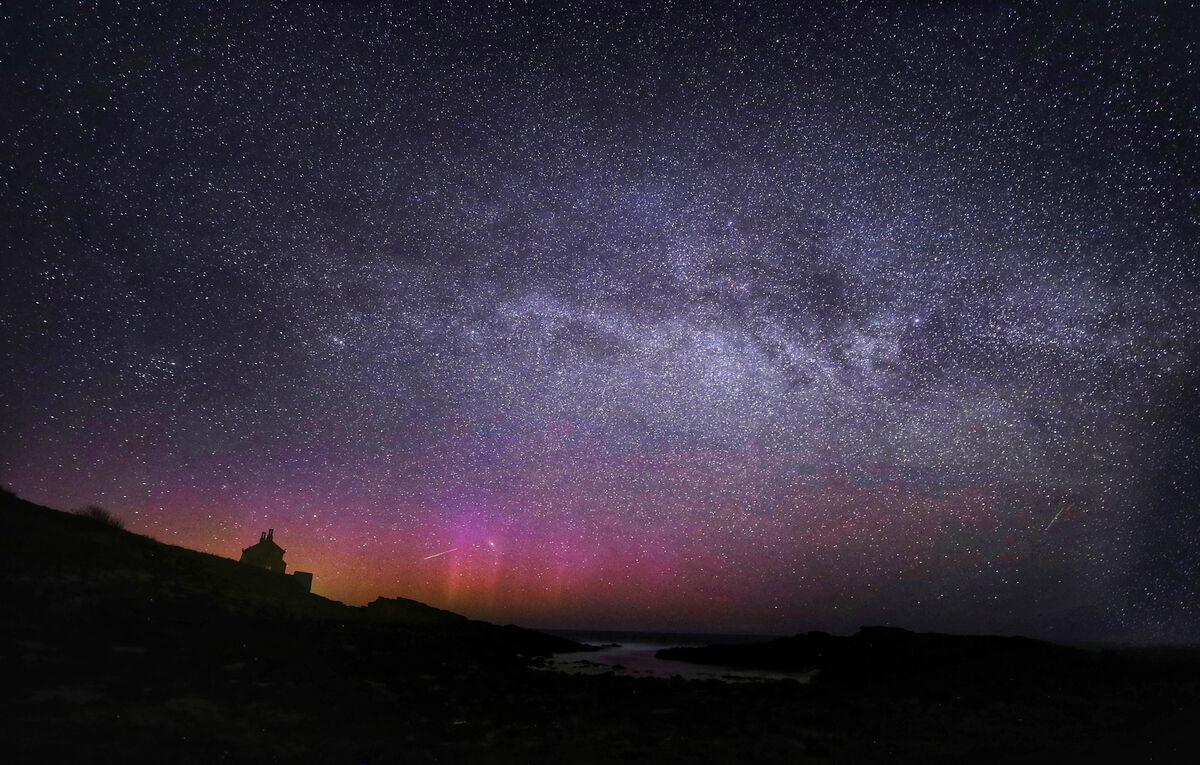
While out looking for meteors it’s a good time to reacquaint ourselves with the stars.
Even without knowing much, if anything, about the constellations there is still much to glean.
For example, some stars appear blueish-white, most appear more yellowish and a few even appear red.
These colour differences are due to the temperature of the star, which in itself tells us something about their lifecycle.
The yellowish stars are most likely to be similar to our Sun.
This means they will spend about 10 billion years in their current state, ultimately followed by a slow decline where they eventually fizzle out, a decline that will last for trillions of years (much longer than the present age of the Universe!).
The blueish stars are most likely bigger and younger than our Sun – which is 5 billion years old – and might even be only some tens of millions of years old.
But bigger stars are destined to last a short while, no more than 100 million years in many cases (often less).
They may end their lives in catastrophic explosions known as supernovae. And in that most violent of endings, they may generate black holes – indeed we think this is where the majority of black holes start their lives.
And then there are the reddish stars. There aren’t many of these visible to the unaided eye as they generally represent a short-lived phase in the life of massive stars – that used to be blue – which immediately precedes their violent end.
The fact that most stars are yellowish, and rather similar to the Sun, suggests the conditions for life may be replicated over and over in our Universe, if we may the reasonable assumption that every star harbours its own solar system and its own planets.
Such planetary systems will likely host comets. If they also host life, there’s the intriguing possibility that you’re not the only species in the Universe enjoying a good old meteor shower this May.
Read More

CONNECT WITH US TODAY



Be the first to know the latest news and updates