Islands of Ireland: A marble universe at Cappanacush Island, County Kerry
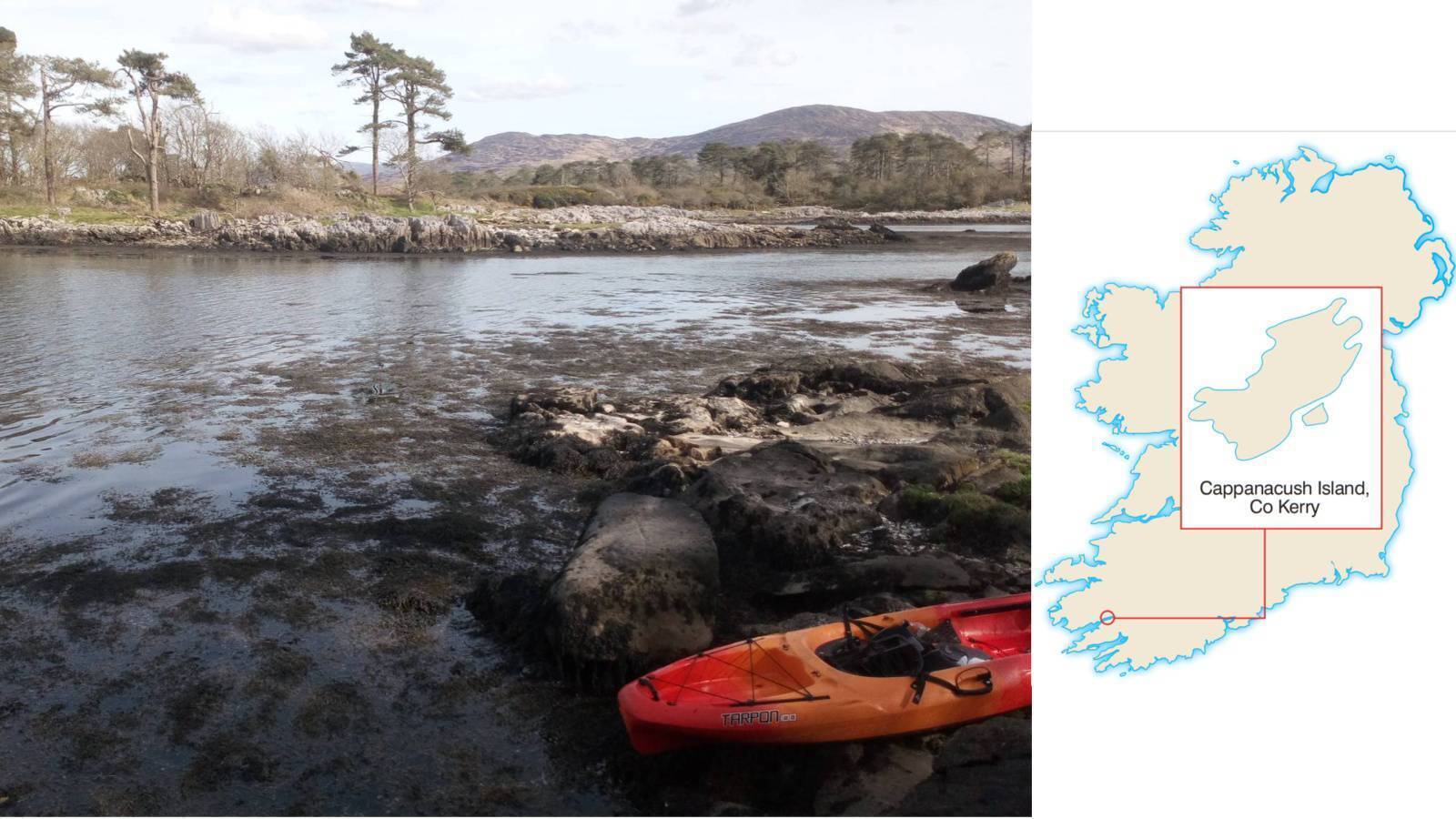
Cappanacush island, Templenoe, County Kerry. Picture: Dan MacCarthy
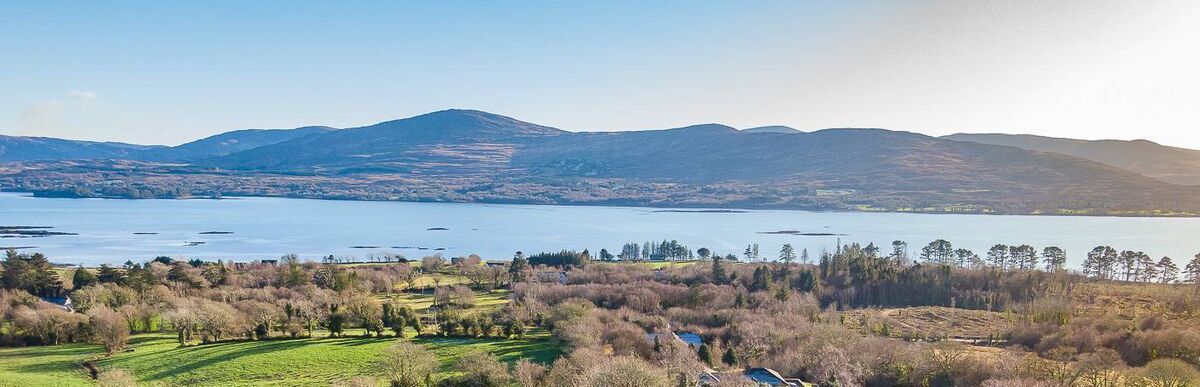
The Greenane islands which seem to float like paper boats on the so-called Kenmare River and are overlooked by the mountains of the Iveragh Peninsula are an archipelago in their own right: Cappanacush Island; Illaunakilla, Illaungowla, and Carrigacurreal as well as several small unnamed islands define this rocky but lush place. The Dunkerron Islands, close by, are also an archipelago, though are fewer in number. The Greenanes have featured here before as a unit but one of their number merits a closer look.
By far the largest of the Greenanes at 19 acres is Cappanacush. There were two Kelly families resident there in the mid-20th century, though as in common with all other abandoned islands, life just became too difficult to maintain there. The name derives from ‘Oileán an Tí’ or ‘Ceapaigh na Coise’.
Long before the Kellys called Cappanacush home (the island is still known locally as Kelly’s Island) there was substantial economic activity there in the working of marble from a mine. And the ruins of one of the mine buildings is still in fairly good nick — a vivid reminder that industry is possible in seemingly unlikely places.
There is no reference to the mine in the archaeological record, just an entry for a children’s burial ground on one of the Greenanes. And while marble mines are rare on Irish islands, unfortunately there is no shortage of the latter.
The Cappanacush mine was developed by William Petty in the 17th century when he took advantage of a quirk in Kerry’s geology that furnished these islands with reserves of marble. Petty was a figure of huge historic importance. His Down Survey maps record the transition from the old Gaelic order to the new era of plantations. The maps ‘modernised’ many placenames and regularised land types. “For the first time, the complex design of the coastlines, the shapes of this rugged topography and the elaborate boundaries of the major land denominations are revealed,” writes William J Smyth in the ‘Iveragh Peninsula’.
However, he also had industrial designs. The centre of his estate was at Killowen, near Kenmare, which he planted in 1670 with a Protestant colony which cost him the sum of £10,000 and which ‘for a time was very prosperous’.
“The lands in Kerry, Petty reserved for development under his own care. His intention, as revealed in his will, was to promote the trade of lead, iron, marble, fish, and timber whereof his estate was capable.” And in a sleight of hand worthy of some acquisitive mogul, Petty ended up as the major landowner in the entire Iveragh Peninsula. Through buying debentures from disillusioned soldiers, grants and confiscations, and other obscure methods between 1656 and about 1680, Petty became proprietor of most of the lands of Iveragh and Dunkerron, writes Smyth. Petty the mapmaker became Petty the landowner, sans pareil.
However, the cartographer was not just a landowner for the sake of it. He developed the pilchard industry at Dursey Island, Ballinskelligs, Ardgroom and Kilmakilloge.
“He sunk shafts for mines and the ore there found was smelted in the furnaces. Marble too was found in several islands towards the head of Kenmare River which abound in limestone and various types of variegated marble,” wrote Herbert Wood. His activities were interrupted, wrote Wood, in 1689 when the ‘native Irish’ attacked his properties. Funny that.

There is also a Cappanacush Castle on the mainland which was a stronghold of the Ó Suilleabháin Mór clan in the 15th century though it may have been developed from an earlier Norman construction.
In all likelihood, there are stately homes in the Kenmare area, or even far-flung corners of the British Empire, whose drawing rooms are adorned with Cappanacush marble. It may not have the ring of Carrara marble from Italy but you will know it if you have it.
: It may be possible to walk to the island at very low tide opposite the Greenane islands from the old graveyard at Templenoe 6km west of Kenmare. Or kayak!
: , Cork University Press; ‘Sir William Petty and His Kerry Estate’ Herbert Wood, The Journal of the Royal Society of Antiquaries of Ireland, Vol. 4, No 1, 1934; Logainm.ie
CONNECT WITH US TODAY



Be the first to know the latest news and updates