Anja Murray: Listen out for the 'sonic chain' of calls as brent geese fly overhead
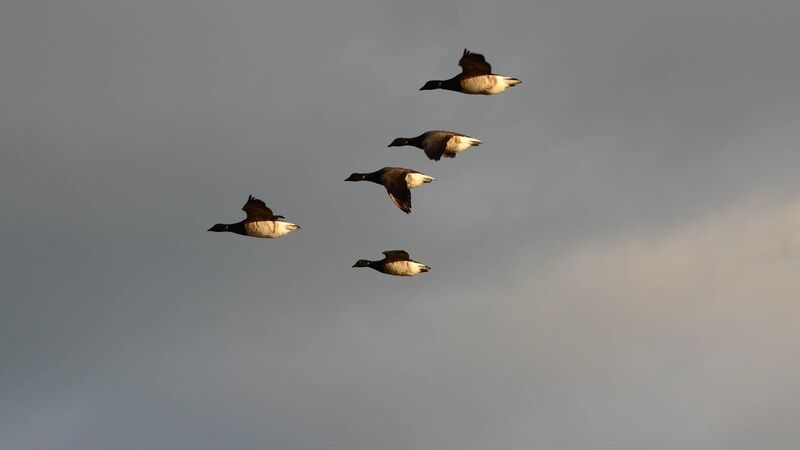
Brent geese fly all the way to Ireland from Arctic Canada each autumn — 3,000 miles over the ocean
The other night, at 5am, I woke to the sound of geese honking loudly overhead. Living by the coast for these few weeks, there seems to be no end to the discoveries on offer. These nocturnal fliers are crossing over the expanse of costal machair below the cluster of houses, heading toward the saltmarsh where wet boggy ground reaches sea level and merges with the intertidal muds.
There the peaty stream from the lake above meanders its way in a hundred soggy rivulets toward the sea. Platforms of saltmarsh species rise above the mud in their own unknowable patterns. Each are topped with succulent samphire, sea purslane and sea aster — fleshy plants that have evolved to tolerate such saline conditions. Below the saltmarsh, still sheltered from the open sea and its salty waves, slow-moving tides shape fine muds that are filled with life.
Along the shore I mostly see omnivorous gulls, dainty rock pipits and a few waders: elegant oystercatchers poking their long bill in the sand alongside flocks of flighty ringed plovers, both of which feed on the wealth of life in the muddy sand. There are clams, limpets, cockles, whelks, seasnails, and lugworms here aplenty. Curlews provide the soundtrack, their whistling 'cur-leee' call so distinctive of winter coasts. These curlew are assumedly visitors from Scandinavia, here for the winter months. Our resident breeding curlew population has suffered catastrophic decline here over the past 40 years, with only 100 breeding pairs now remaining across Ireland.
Was trying to ID this large flock of geese earlier in #crumlin - they look like Brent Geese. Apparently they are winter migrants to Ireland from high-Arctic Canada. 🇨🇦 @BirdWatchIE #geese #brentgeese pic.twitter.com/QOzOzliVcr
— ミ★ 𝘚𝘵𝘦𝘱𝘩𝘦𝘯 𝘍 ★彡 (@BearDublin) February 3, 2024
But the geese I heard at night are new to me at this location. Later in the day I see them at low tide, wading across the sandy mud with their waterproof feet a few inches deep in the perfectly smooth saltwater. A group of four of them seem to be just standing about. The next day, there are 10 together. I think they are ‘light-bellied brent geese’ (now simply called ‘brent geese’), though at first, I think that they could be barnacle geese. Both species look similar to my unexpert eyes, and are closely related. Both look as though they have dipped themselves in black ink from bill to breastplate, though I check the pile of books that have taken over the kitchen table and see that barnacle geese have a white face above their long black neck, so these must be brent geese.
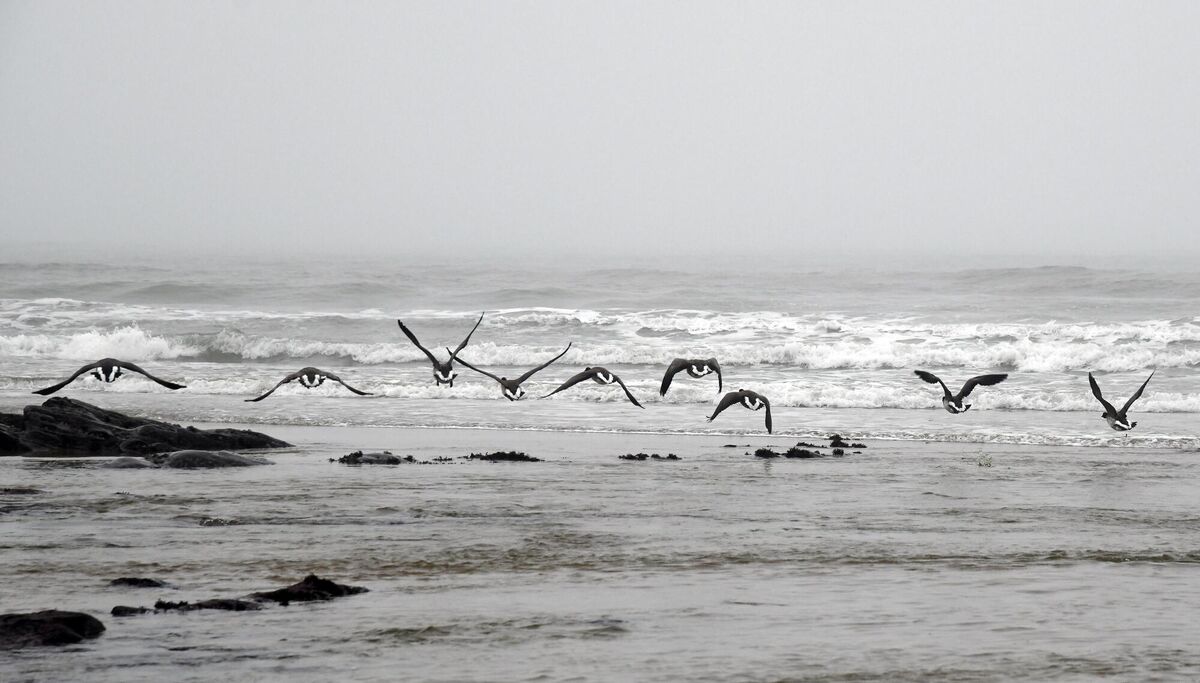
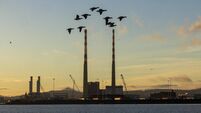
The honking calls that I heard at night concurs with what I read about them. They fly from place to place in family units or a loose flock, and call out to each other in the darkness to maintain cohesion between the group. These dedicated nocturnal calls make up a ‘sonic chain’ — almost like holding hands.
Brent geese fly all the way here from Arctic Canada each autumn, 3,000 miles over the ocean, with those born in summer joining their parents for the autumn migration south. Reaching Irish shores, they spend the winter months grazing on the liminal, muddy coastal inlets that are free of snow and ice-inducing temperatures. Although brent geese are smaller than their goose relatives, measuring about 60cm from head to tail, just a little bigger than a mallard, they are still large birds. A good deal of energy is needed to fuel their flights and to stay warm. And they are totally vegetarian.
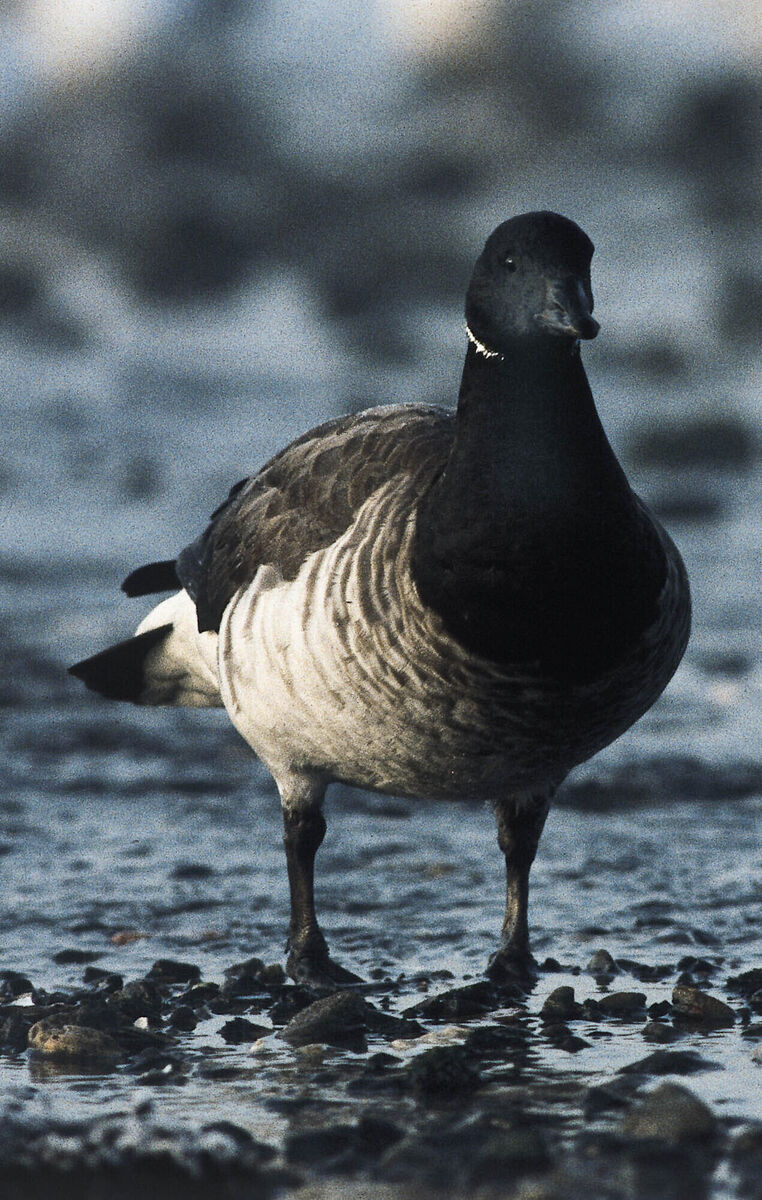
What’s more, they don’t even eat much in the way of protein-rich seeds, they stick almost entirely to the green leafy parts of a few particular plants. Mainly they graze on the eelgrass that grows in the intertidal zone of coastal estuaries, as well as the sea lettuce (a type of seaweed) that grows on muddy estuaries. They chomp on the succulent samphire and sea aster that thrive in the saltmarsh too.
During the leanest winter months, brent geese have become accustomed to grazing on the grass on sports fields and urban parks, where they are safe from disturbance. It is a joy to see them at such close quarters, though also a shame when the geese are so regularly pestered by curious dogs that these feeding areas are no longer viable for these geese. The energy expended in lifting and settling again so often makes it impossible to stay and feed.
Dieting exclusively on green leafy plants means that these geese have evolved to survive on cellulose. Cellulose is the commonest polymer in nature, as it makes up the cell walls of all plants. But cellulose is not easy to digest, no bird or mammal can digest it, only bacteria can. So, microbes, mostly bacteria, living in the gut of cellulose-eating animals do the job of fermenting all this green material and thus making the nutrients available for the bird to digest. I love that these impressive geese can travel so far on the basis of such a simple diet.
One result of this particular diet is the big tubular green turds they leave behind wherever they graze. These are a distinctive sign of geese having been this way, though finding turds is hardly a match for seeing and hearing the geese themselves!
Around 90% of the global population of light-bellied brent geese spend their winters in Ireland. Other geese wintering here include greenland white-fronted geese, Europe’s rarest goose. These were once plentiful across midland raised bogs but since the obliteration of Ireland's boglands they have relocated to coastal wetlands such as the Wexford Wildfowl Reserve. Barnacle geese, pink-footed geese, and graylag geese also winter here.
All these geese depart for breeding grounds in April, so making a trip to a coastal inlet in the last of winter is worth the effort. Right around the country are small estuaries where they might be seen and heard — though do make sure not to disturb them. Right now, these gorgeous birds must eat enough to attain not only enough energy to make the trip back to the Arctic in a few weeks’ time, but also to gain enough breeding weight for when they arrive there in early June. This feeding time is crucial.
CONNECT WITH US TODAY



Be the first to know the latest news and updates