Fires, shipwreck and malaria endured by naturalist who preceded Darwin's discoveries
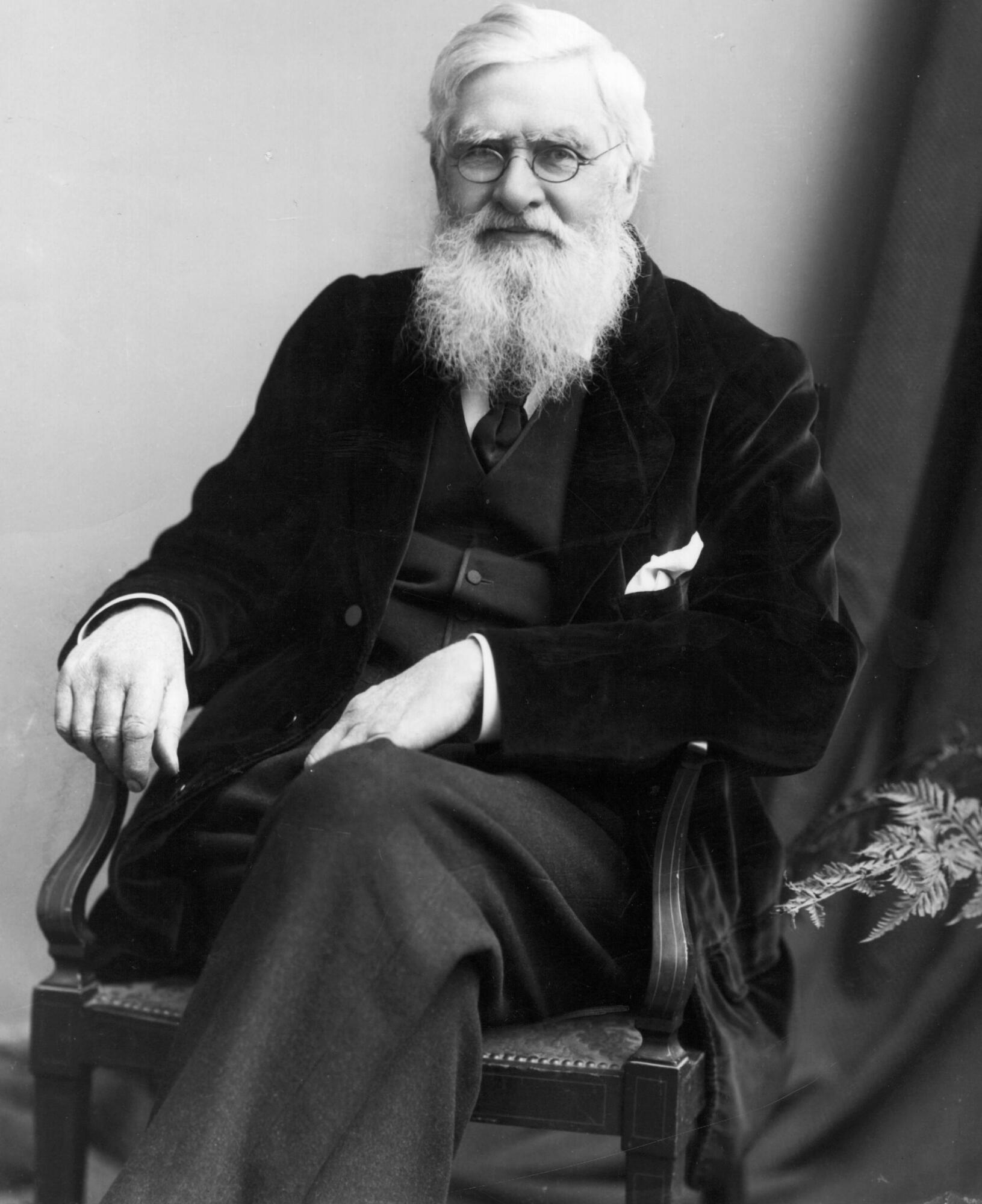
Welsh naturalist Alfred Russel Wallace (1823 - 1913). (Photo by London Stereoscopic Company/Getty Images)
Existentialist philosophers emphasise 'concrete' lived experience, whereas ‘essentialist’ ones seek to transcend the world of appearances.
Naturalists, likewise, tend to be either ‘field-men’ or abstract theoreticians. Birdwatchers want direct encounters with Nature; the dry ruminations of ivory-tower scientists, with their ‘ifs buts and caveats’, bore them.
Individuals such as Darwin straddled the divide, excelling in both field craft and analytic genius. Naturalists in his day needed tenacity endurance and courage. On January 8, it's the 200th anniversary of the birth of Alfred Russel Wallace, who made extraordinary contributions to science, enduring the ‘patience of Job’ in doing so.
Born in Monmouthshire, Russel left school aged 14. As an apprentice surveyor in London, he educated himself in museums and libraries. Befriending the entomologist Henry Bates, he began collecting beetles. This led to four years spent in the Amazon. On its way back to England, the ship caught fire and all his specimens were destroyed. He survived for 10 days in an open boat without food or water — as did a parrot. With a food shortage in the overloaded rescue ship, he ate rats. Undaunted, he resumed his collecting. Travelling to the Malayan archipelago in 1854, he spent eight years gathering specimens.
But Wallace was not just a collector. He reflected deeply on everything he encountered. Noticing that the species on Bali differed from those on nearby Lombok, he discovered what became known as the ‘Wallace Line’; creatures living to the east of the Malay Archipelago tend to be Australasian, whereas those to the west are more Asiatic. Australia and Southeast Asia have been separated for 50 million years but sea levels were 120m lower during the Ice Ages than they are today, allowing wildlife of both continents to intermingle. Nowadays a deep ocean trench separates them again. Half a century after Wallace’s insight, Alfred Wegener would argue for ‘continental drift’. A Royal Mail stamp featuring Alfred Russel Wallace. The series of split-design stamps feature portraits of important science figures paired with dramatic and colourful 'brainstorming' imagery representing their achievements
Hovering between life and death during a bout of malaria, an observation of Robert Malthus’ came to mind; only the fittest creatures survive long enough to bequeath their genes to subsequent generations. Developing that thought, Wallace wrote a paper setting out the principle of natural selection. He sent it to Darwin, who was devastated; he had been collecting evidence for this for twenty years but, fearing a backlash from the religious establishment, he had not published. Now Wallace had beaten him to the post.
The paper should have been cleared for publication forthwith. Against established procedures for scientific publishing, Darwin’s colleagues arranged that it be read, together with excerpts from Darwin’s diary, to a meeting of the Linnaean Society on July 1, 1858. Neither Wallace nor Darwin was present.
Was Wallace or Darwin the first to propose what would become the single most important principle in the live sciences?
In 1831 Patrick Matthew, in a book on naval architecture, had published Nature’s Law of Selection’ a statement of the great principle. Darwin, discovering this in 1861, wrote in : "I freely acknowledge that Mr Matthew has anticipated by many years the explanation I have offered of the origin of species."
When Wallace fell on lean times, Darwin secured him a pension. The ‘Father of Bio-geography’, he died in 1913, aged 90.

CONNECT WITH US TODAY



Be the first to know the latest news and updates