Rare albatross sighting off Irish coast
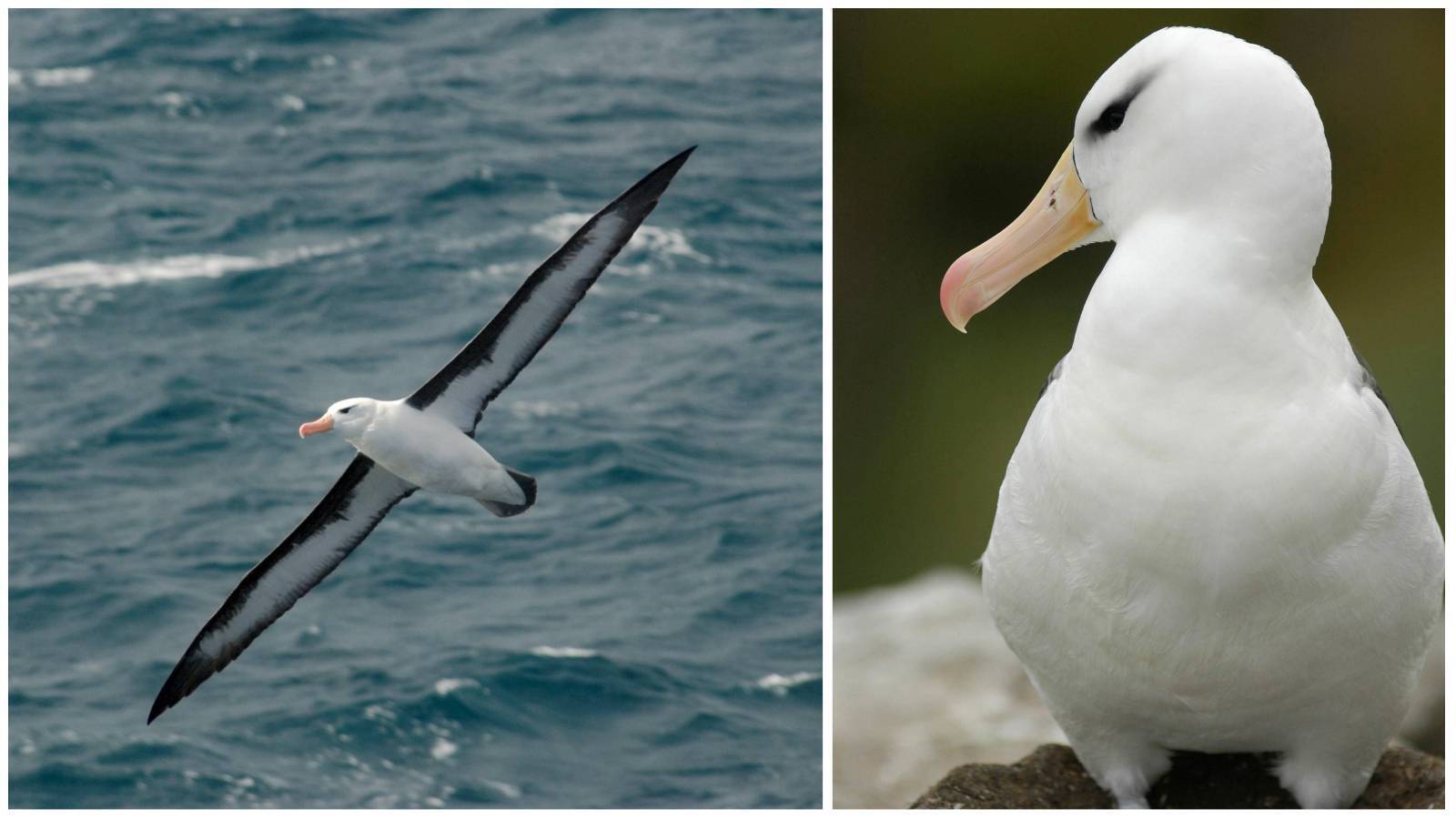
A black-browed albatross: these birds are tube-nosed seabirds which means they get 'real-time' information on air-speed and wind direction from their Pitot tube nostrils. These birds with a wing-span of up to 2 metres use updrafts to give them lift
Henri Pitot, an 18th Century French engineer, is famous for a device which bears his name. The ‘Pitot tube’ measures the speed of water moving along pipes and canals. It can also monitor air-flows, telling pilots the speed of aircraft. The air entering the tube is brought to an abrupt halt, generating pressure. The faster the flow, the greater that pressure. The meters on today’s aircraft are just sophisticated versions of Pitot’s original. ‘Plus ça change’, he would probably say, were he alive today!
But Pitot was not the first user of such tubes. The fulmars shearwaters and storm-petrels, which breed around the Irish coast, have been deploying them for countless millennia. Now a famous cousin of theirs, a black-browed albatross, has been sighted off our southwest coast. Albatrosses, like their Irish cousins, have tubes on the sides of their bills.
What an eight hour seawatch off Deelick/Brandon Pt Kerry with Michael O’Clery…it’s not every day you see Black-browed Albatross, Wilson’s Petrel, c.2,500 Cory’s, Great Shears, all four skuas, Sabine’s Gulls etc. Magical seawatch. pic.twitter.com/W69vF6zMPO
— Birds Ireland (@EricTheBirdman) August 24, 2022
The black-browed species roams the southern oceans. Although stragglers have been recorded as far north as Norway, they seldom venture into our waters — about two dozen sightings have been logged to date. Rising sea temperatures, driven by global warming, may be responsible for an apparent recent increase.
With a wing-span of more than 2m, the black-browed is a big bird. Its cousin, the ‘wandering’ albatross, has a span of up to 3.5m. Among the world’s largest flyers, albatrosses should have great difficulty even taking off but, paradoxically, they travel effortlessly over vast distances. According to the authors of a paper published in 2015, some individuals cover 120,000km a year.
Flying is easy for small creatures, such as humming-birds and insects. Lift is provided by wings, the areas of which depend on the square of the flyer’s dimensions. Weight, however, increases with the cube of the dimensions, so the bigger the creature the greater its difficulty getting airborne. It’s been calculated that if an elephant weighing 3 tonnes could fly, its wings would extend over five tennis courts!
But albatrosses, the greatest ocean wanderers, have a trick up their sleeve, or rather up their noses. An ocean wave displaces the air above it. Tube-nosed seabirds use these updrafts to provide lift. Exploiting air currents, they can fly almost without flapping their wings. Being able to do so requires accurate ‘real-time’ information on air-speed and wind direction, which their Pitot tube nostrils provide.
The tubes have other functions. Nasal glands give sea-birds an acute sense of smell. Birds also need fresh water. This is derived mostly from the bodies of the creatures they eat but, inevitably, they swallow salt water which must be desalinated. Glands for doing so are located near the nose; the resulting salty fluid runs down the nasal tubes like rainwater along a drain-pipe.
‘Is the Quayle an albatross’ ran a 1989 newspaper headline about gaff-prone vice-president Dan Quayle. Oddly perhaps, the albatross is a bird of ill omen. Coleridge’s famous poem didn’t help.
‘God save thee ancient mariner!
From the fiends that plague thee thus!
With my crossbow I shot the albatross’.
And so the narrator brought a curse on his ship.
‘Water water everywhere and all the boards did shrink, Water water everywhere nor any drop to drink.’
It’s a message for our own time; we abuse Nature at our peril.

CONNECT WITH US TODAY



Be the first to know the latest news and updates