Anja Murray: Embracing 'weeds' as wildflowers for our pollinators and insects
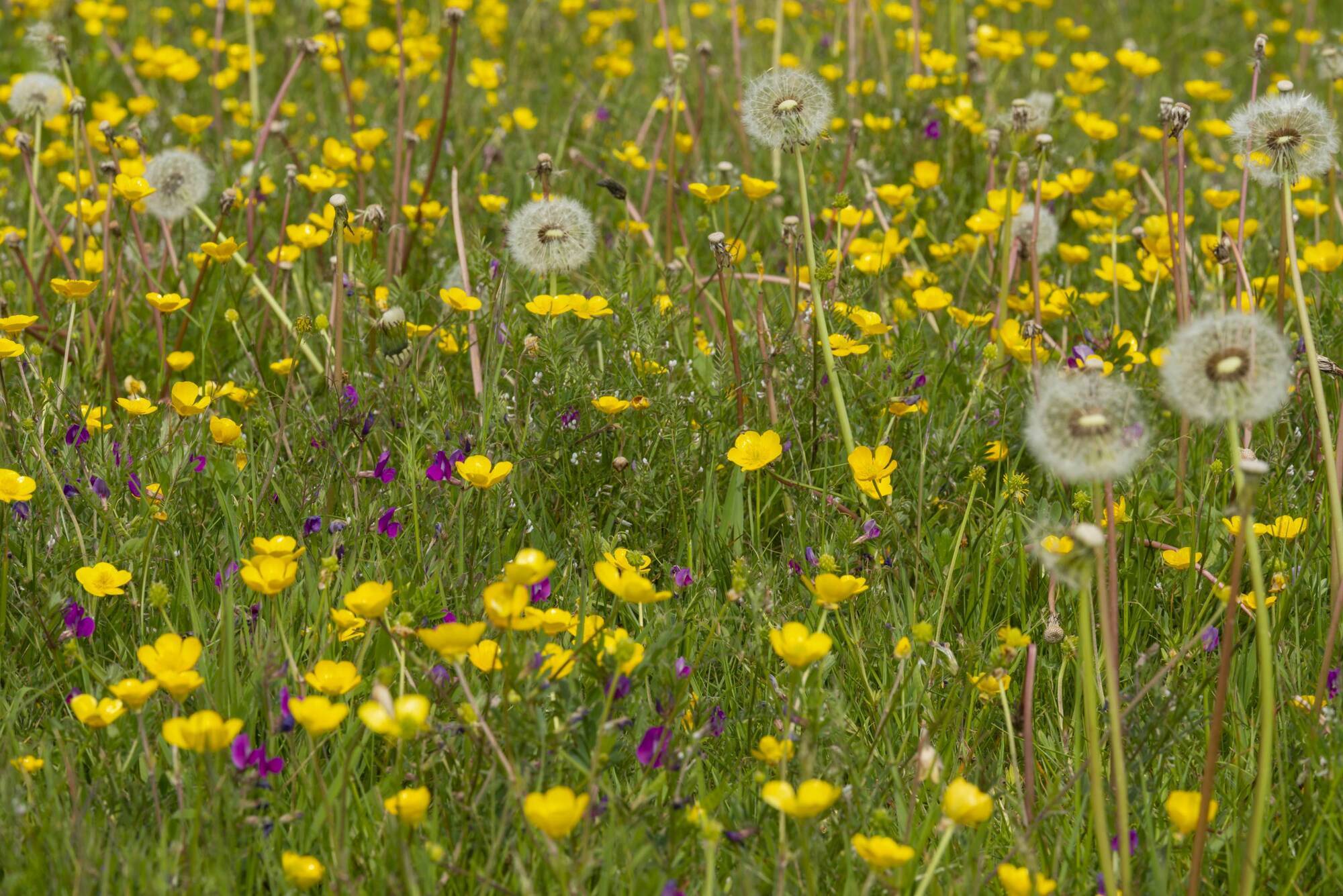
Wildflower-filled roadside verges are beautiful reminders of nature’s beauty and bounty
Weeds are far more valuable in supporting biodiversity than we give them credit for. Right now, roadside verges, neglected parts of the garden, and untended corners everywhere are erupting with weeds in flower. ‘Weeds’ are also known as wildflowers, depending on your point of view.
Patches of sunny ox-eye daisies bejewel roadside verges. Tall yellow cat's ear cheer up laneways and overgrown gardens. Wild vetches clamber through forgotten corners. Dandelions and clovers are still rolling out the red carpet for nectar-hungry bees and butterflies. Tall, richly scented stems of wonderful white flowered meadowsweet fill up patches of damp ground.
These are just a tiny fraction of the many wild plants in flower at the moment in roadside verges, offering up displays of colour in what are often the most natural parts of previous semi-wild landscapes. Rich scents spill out over tracks and trails. Wild orchids stand proud in many roadside verges too. The country’s roadside verges have been described as ‘undesignated nature reserves’, with open access for all wild plants and animals as well as people. This summer in particular, it seems every nook that is let to be is scoring 10 out of 10 on the blossom charts.
Clearly, I am deeply enamoured with summer’s eruption of wildflowers, and I know that I am not alone in this. I delight in the palette of colours, the sweet smells, and the delicate geometry of wildflowers. They appeal to me at a cellular level. Each roadside verge that is home to a tangle of wildflowers is like a hug from nature, beckoning us to remember that when nature is given a little space, so much can and will bounce back.
So I’m always so baffled at the difference of perspective that motivates so many people to spray the roadside verge in front of their home, sterilising long strips of land into depressing deadness. So many householders apparently prefer the lifeless brown mush of dead and dying ‘weeds’ to the joy of colourful wildflowers.
Similarly, in every park or greenway I visit, I see lifeless brown swathes where the sprayers have been. Green areas in every town, often the only access townspeople have to experience the local flora, are routinely kept ‘tidy’ by spraying weedkillers around the base of every tree, leaving ugly big brown circles of dead grass. Many local authorities have signed up to the ‘All Island Pollinator Plan’, yet continue to routinely spray excessively throughout council-managed amenities.
Places where wildflowers are allowed to grow are vital sustenance for insect life. Healthy populations of insects in turn provide much-needed food resources for birds, who at this time of year need the protein-rich insects to feed nests full of baby birds. Swifts, swallows and all the other insectivorous birds can’t survive without enough insects to feed on. Most of our beloved songbirds rely on a plentiful supply of insects through the summer months.
Some species of bumblebee and solitary bee will tune their life cycle to match that of their favourite flowering plants. Many of our native solitary bees are ‘mining’ bees, who dig out little holes in hedge banks to make a nest inside. What kind of a welcome to the world are we giving to the little bees who emerge from their burrow in the hedge bank to find everything shrivelled, brown and lifeless, void of the nectar they need to survive? Hoverflies are another group of pollinating insects who are sustained in the summer months by energy-giving nectar and protein-rich pollen from wildflowers. Hoverflies gobble up enormous quantities of greenfly too.
Small mammals, such as mice and shrews, also travel along hedges and verges, and these, in turn, provide food for kestrels and owls, among others. Flower-rich field edges and roadside verges also provide corridors for the movement and dispersal of many wild species, offering them routes from roosting to feeding sites, refuges to find shelter among and food within.
When long stretches of roadside verge are sprayed with weedkillers, rich corridors of life are destroyed. This is not an appropriate response to the collapse of insect populations that has been alarming scientists in recent years, both across the globe and in Ireland. Of the 100 different species of wild bee in Ireland, more than half have suffered substantial declines since 1980, when monitoring began. There are now 6% fewer butterflies present in Irish habitats than there were in 2008. I have described the evidence, the challenges and the possibilities of recovery for insects in this column before.
We now give wildflowers so few opportunities to thrive, in our parks, in our gardens, and in agricultural landscapes. Spraying verges is just one of the many ways in which we deprive insects, including wild pollinators, of the plant resources they need to survive. It is not the greatest threat to insect life but it is a stark and visually challenging example of how the biodiversity crisis proclaimed by the Irish government in 2019 has yet to prompt the behavioural change so urgently needed among the wider population.
A growing interest in pollinators means that more and more people are taking positive actions for nature. Many people are proactively leaving space for pollinators and other insects, which is often just a case of simply leaving areas unmown so that wild plants can flower and set seeds. Sometimes doing less is the best action.
It's high time that everyone stops spraying roadside verges and amenity areas with weedkillers. We know that behavioural change can be rapid. Local authorities can lead by example, introducing new policies to cease all unnecessary use of weedkillers in municipally-managed land. Contractors who do the spraying can be trained in managing land with wildlife in mind, in the same way that health and safety training is delivered. Homeowners can adopt new practices just as quickly as we all stopped using plastic bags more than a decade ago. It is my hope that in just a few years, sprayed brown verges will no longer be a feature of rural Ireland and we all come to love our wildflower-filled roadside verges as beautiful reminders of nature’s beauty and bounty.

CONNECT WITH US TODAY



Be the first to know the latest news and updates