Sexual shenanigans versus a lovey-dovey image — bullfinch research
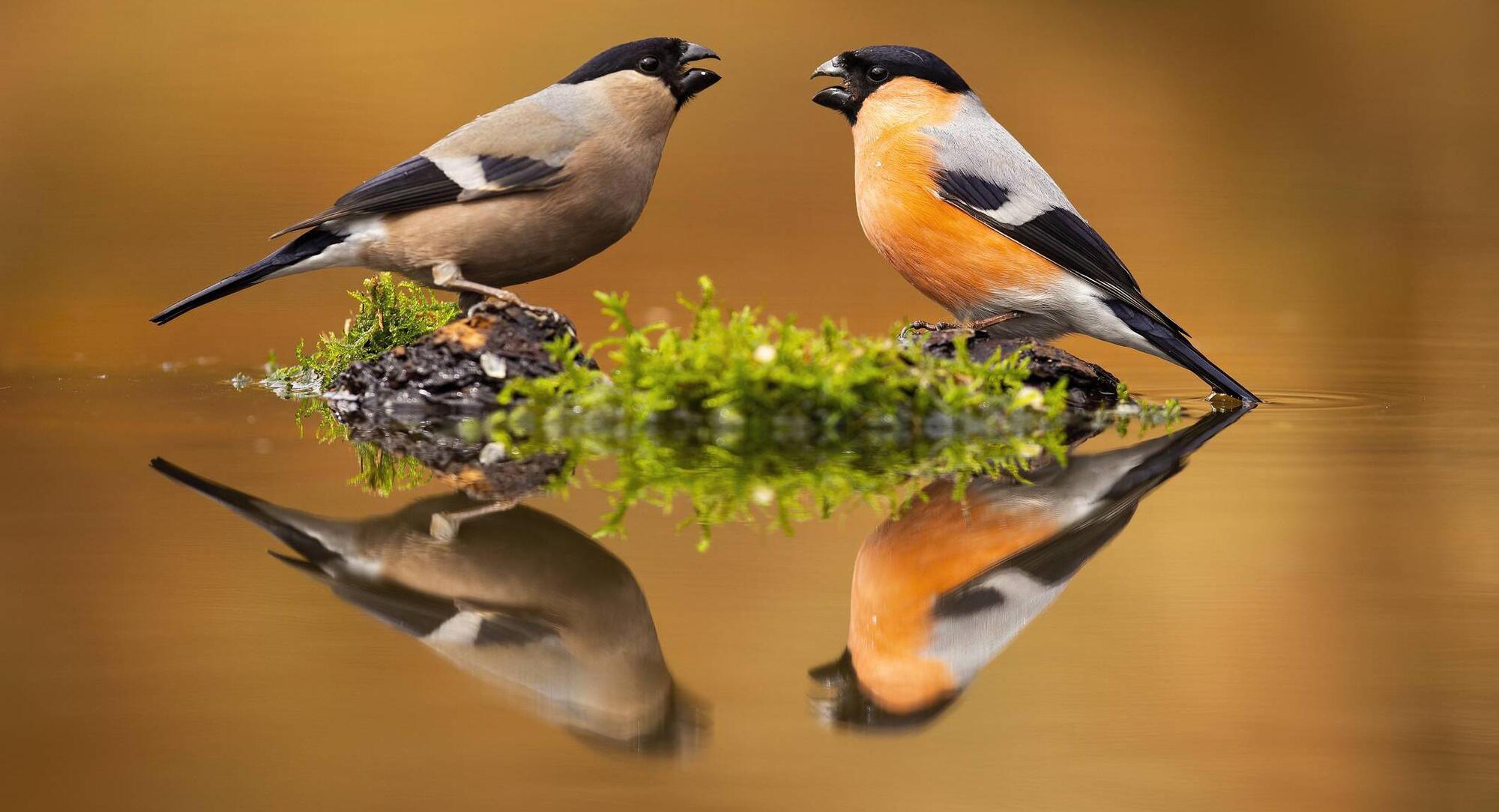
Flings, divorce and polygamy are all common for garden birds though the bullfinch had a better reputation than most... until now
Sexual shenanigans versus a lovey-dovey image — bullfinch research

'Goody-two-shoes' birds? Pair of male and female eurasian bullfinch, pyrrhula pyrrhula, sitting just above water level with their reflection mirrored on surface

Songbirds show scant regard for the ordinary decencies of family life. Cocks squabble with their neighbours over territory and access to females. Nor is the 'gentler sex' much better behaved. A female may have a ‘fling’ with the male next door when her mate’s back is turned; not all the chicks in a brood are necessarily fathered by the ‘pater familias’. Divorce and polygamy occur.

Sexual shenanigans are more common among garden birds than their lovey-dovey image suggests. But, of course, ‘all is fair in love and war.’

The bullfinch, however, seems to buck the loose-living trend. He doesn’t stake out a territory, so there are no land-grabbling disputes; two pairs may even nest amicably in the same tree. Nor, apparently, do bullfinch partners stray. That they don’t isn’t necessarily down to virtue; the male remains close to his spouse at all times, keeping such a close eye on her that infidelity is impossible. You seldom see a bullfinch without its mate. His sperm count is lower than that of other garden birds; not being adulterous, cock bullfinches doesn’t need to engage in ‘sperm competition’. As O’Casey’s Captain Boyle might say ‘I don’t think he was ever dhrunk in his life; sure he’s not like a Christian at all’!

Male bullfinch has a red breast, contrasting black head and a white rump Picture: British-Bird-Photography.co.uk

That the bullfinch should be a paragon of virtue is surprising. The male is ‘dressed to kill’, with a glorious red breast, a contrasting black head and a gleaming white rump, but he doesn’t use this glamour to intimidate rivals and seduce females. What a waste!

But are appearances deceptive? Could this goody-two-shoes bird have a hidden dark side?

In a paper just published, ornithologist Chris Wright describes a project he carried out in a Northumberland garden: 

Between July 2011 and 2017, he captured 427 bullfinches, and placed numbered rings on their legs so that each bird could be recognised in the field. Subsequently, 235 individuals were recorded visiting a seed-feeder. When two marked birds were seen together on more than one occasion, he deemed them to be an item. Thirty-six such couples were identified.

Some birds paired as early as November but most "first new bonds were identified from January onwards". Individuals who were at least one-year-old paired earliest and "older females appeared to preferentially select older males"; "of 12 pairings made by females in their second year or older, nine were with males at least one year older".

"Nearly all partnerships continued until the disappearance of one or both birds." In 12 cases where one bird disappeared, the other formed a new pair bond. There were two records of birds remaining together "over two subsequent breeding seasons (23 and 27 months) and another from winter to winter (13 months)".

But bullfinches, at least in England, are not entirely squeaky-clean; three of Chris Wright’s couples separated and formed new partnerships. In one of these cases, the female left because her partner was bigamous.

The bullfinch’s reputation, following this study, is slightly tarnished but largely intact. The bird "is characterised by high levels of partner cooperation and low levels of conflict".

Nobody is perfect.

More in this section

Revoiced

Newsletter

Sign up to the best reads of the week from irishexaminer.com selected just for you.

Cookie Policy Privacy Policy Brand Safety FAQ Help Contact Us Terms and Conditions

© Examiner Echo Group Limited