Richard Collins: Problem solving and food safety in the animal kingdom
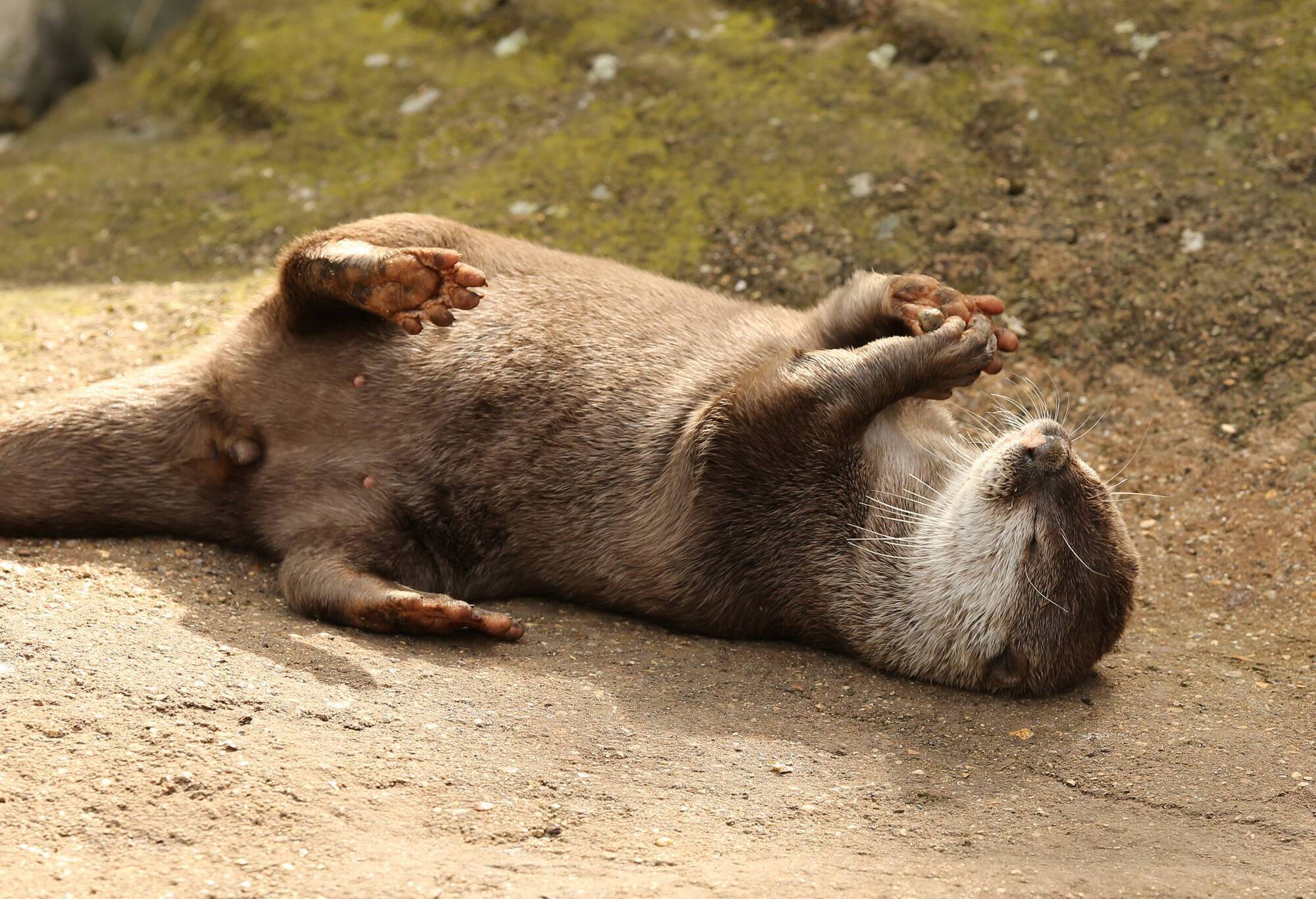
The oriental short clawed otter: listed as ‘Vulnerable’ by the International Union for the Conservation of Nature. The marshes on which it depends are being drained and animals are poached for their fur. Breeding programmes are underway in zoos
In 1921, an enterprising Southampton blue-tit pecked a hole in a milk-bottle cap. The lactose in milk causes diarrhoea in birds but cream, coming to the top in bottles, is low in lactose.Â
The little entrepreneur had discovered, not just that cream is available, but that it is safe to drink. Other blue-tits, and some robins, copied the behaviour; by the 1950s, there were holes in the lids of bottles left on doorsteps throughout these islands.

In the centuries-old jihad against rats, many novel poisons have been deployed. The rodents respond to this chemical warfare by shunning unfamiliar foods. A healthy adult rat won’t eat a strange item until it smells the food on the breath of another rat.Â
Low-ranking rodents, however, lose out in the scramble for normal food — they must eat untested items or starve. They become, in the process, the animal equivalents of medieval food-tasters protecting their lords and masters from assassination. ‘Try it on the dog’!
Being able to copy others, when confronting unfamiliar situations, is important. Start where Adam started and you’ll get as far as Adam got: we need help with our problems. Going it alone is unwise. Reintroduced creatures face a steep learning-curve — imitating the locals can be crucial to their survival.
Researchers at Exeter University have been studying adaptive behaviour in a species for which reintroduction programmes may soon be necessary; the short-clawed otter of South-East Asia is in trouble. It’s listed as ‘Vulnerable’ by the International Union for the Conservation of Nature: the marshes on which it depends are being drained and animals are poached for their fur. Breeding programmes are underway in zoos.
When reintroduced animals encounter unfamiliar foods, how are they to decide what is edible?
Also, potential prey species have evolved defences against their enemies, which the newly-arrived individuals must somehow learn to overcome.
The Exeter team offered boxes containing their normal food to captive-bred otters in the south of England. The food was clearly visible but the boxes were difficult to open. There were five designs, each requiring a different lever or tab to open. An otter could try solving the problem on its own or resort to copying what its more successful peers did.
Four months later, the otters were also offered unfamiliar natural food; molluscs and crabs with hard protective shells. They had not only to access the meat but also to decide whether it was edible or not.
The experiments revealed that otters adopt a dual approach. Confronted with a problem box, they tended to work on their own, relying on trial-and-error to open it. Eleven of the 20 otters in the study managed to do so unaided.Â
However, with an unfamiliar food item, they usually adopted the food-taster approach, watching to see what their peers did; ‘our results seem to indicate that otters relied on social interaction more when they were learning to react to the natural prey types, compared to artificial foraging tasks’ the researchers say.Â
Understanding how otters "learn to overcome novel foraging challenges could help develop pre-release training procedures as part of reintroduction programmes". they conclude.
- Alexander Saliveros al. . 2022