Juanita Browne: Helping wild animals — sometimes intervention isn’t the answer
Wildlife rehabilitation is a job for experts and hopefully, Ireland will soon have its own national Wildlife Rehabilitation and Teaching Hospital
Juanita Browne: Helping wild animals — sometimes intervention isn’t the answer

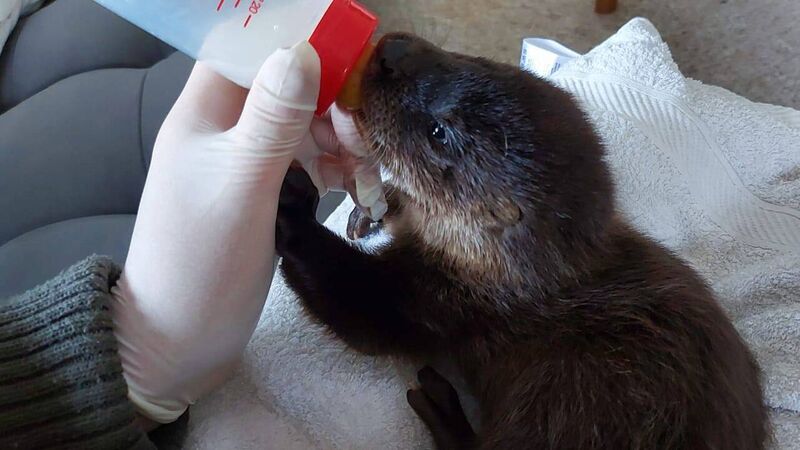
An otter cub is fed by a WRI rehabber

Wildlife rehabilitation is a job for experts and hopefully, Ireland will soon have its own national Wildlife Rehabilitation and Teaching Hospital

In 2000, I spent a few amazing months helping zoologists from Australia’s National Parks service to monitor birds in the Simpson Desert — a vast beautiful desert in the centre of Australia. While we travelled around, doing bird counts, we camped overnight in the vacant quarters of old cattle stations. The ‘bathrooms’ consisted of a row of galvanised toilet cubicles, covered by a rough tin roof. With such easy access, the building attracted lots of wild visitors, such as snakes, lizards, spiders and amphibians. On day one of our research trip, I found a beautiful green tree frog inside one of the toilet bowls, so I carefully caught it and carried it outside to release it back to freedom. The theme tune to Born Free was in my head as it hopped away. Feeling good about this successful rescue, I told the others about it, but was very embarrassed when my Australian colleague said ‘why did you do that? That frog was living its best life, enjoying the only permanent water source for miles around!’


Frog 'rescued' from toilet

Sometimes when we try to ‘help’ a wild animal, we might actually make things worse. For instance, in the case of seal pups. Newborn grey seals can’t swim straight away and over their first few weeks of life, must feed on their mother’s milk and grow quickly, in order to develop the blubber and waterproof coat needed for life in cold water. This constant feeding uses up the mother’s fat stores and eventually, she has to return to the sea to feed... but she will come back (unless she knows her pup is ready to enter the water itself, and her absence actually encourages him to do so). Well-meaning beachgoers see a seal pup on its own and often assume it has been abandoned or orphaned and must be rescued.

The same assumption is often made if walkers come across a young deer, which hides in long grass while the mother goes a little bit further to feed. The young deer is not in any danger and simply has the instinct to keep very still and quiet until its mother returns. Leverets (young hares) also hide in grass — often all day — before being visited again by their mother for quick feeding sessions.

At this time of year, BirdWatch Ireland gets a lot of concerned calls about small birds that can’t fly. But there is usually a very good reason for this and it’s not a sign the baby bird is in any trouble. When a bird leaves the nest, it spends a few days on the ground, often hiding under shrubbery, where it exercises its flight muscles and practices short flights. But it is still being watched over and fed by its parents.

Blue tits in a nest
Blue tits in a nest

It’s really important, in all of these cases, that humans don’t interfere. It is very difficult to substitute the care of the natural mother and taking in ‘orphans’ or young animals you assume are in trouble can actually put their survival at risk. In fact, it’s actually illegal to keep a wild animal in captivity — even for rehabilitation purposes — unless you have a licence from the National Parks and Wildlife Service.

Because wildlife needs such specialised care, it is always best to get advice from a local licensed rehab expert before undertaking a rescue; and, if it goes ahead, to hand the animal into their expert care as soon as possible. If you see a young animal on its own, but it looks active, alert and healthy, then it is still being looked after by its parents even if they are out of sight. Help is usually only required if an animal has obvious injuries or is cold and limp.

A pine marten is tended to by a WRI volunteer rehabber

Wildlife Rehabilitation Ireland (WRI) is an umbrella organisation promoting wildlife welfare and rehabilitation, as well as supporting all the rehabilitators around the country who voluntarily give their time to wildlife rescue. The organisation encourages standardisation of care and provides professional development opportunities for rehabbers and veterinary surgeons and nurses. It is also in the process of building a much-needed hospital. Ireland is the only country in Europe not to have its own national wildlife hospital. Instead, for many decades, rehabbers have worked from their own homes or gardens to try to rehabilitate injured birds and mammals in order to be returned to the wild.

If you do need to get help from a local wildlife rehabber, it is really important to be polite and appreciative. They are almost always unpaid, and invest a huge amount of time and personal resources, alongside juggling their jobs and families. You might like to offer to help with the rescue or drive the animal to their home, or even make a donation to help cover their costs. I’ve often heard of people arriving to rescue centres with kittens or dogs and expecting great praise and thanks, when really most rescuers are at the end of their tether and really don’t need another animal to look after.

An otter pup
An otter pup

WRI is currently looking for help to build their new Wildlife Rehabilitation and Teaching Hospital in Mornington, County Meath. If you’d like to contribute to their GoFundMe or volunteer your time or services, or to find out more about their important work see wri.ie 

Irish Wildlife Matters is the WRI’s excellent website which outlines what to do if you are worried about an animal and includes contact details for local rehabbers around the country. 

Juanita Browne has written a number of wildlife books, including My First Book of Irish Animals and The Great Big Book of Irish Wildlife.

x

More in this section

Revoiced

Newsletter

Sign up to the best reads of the week from irishexaminer.com selected just for you.

Cookie Policy Privacy Policy Brand Safety FAQ Help Contact Us Terms and Conditions

© Examiner Echo Group Limited