Islands of Ireland: This Mayo isle is a sizeable omission from Google Maps
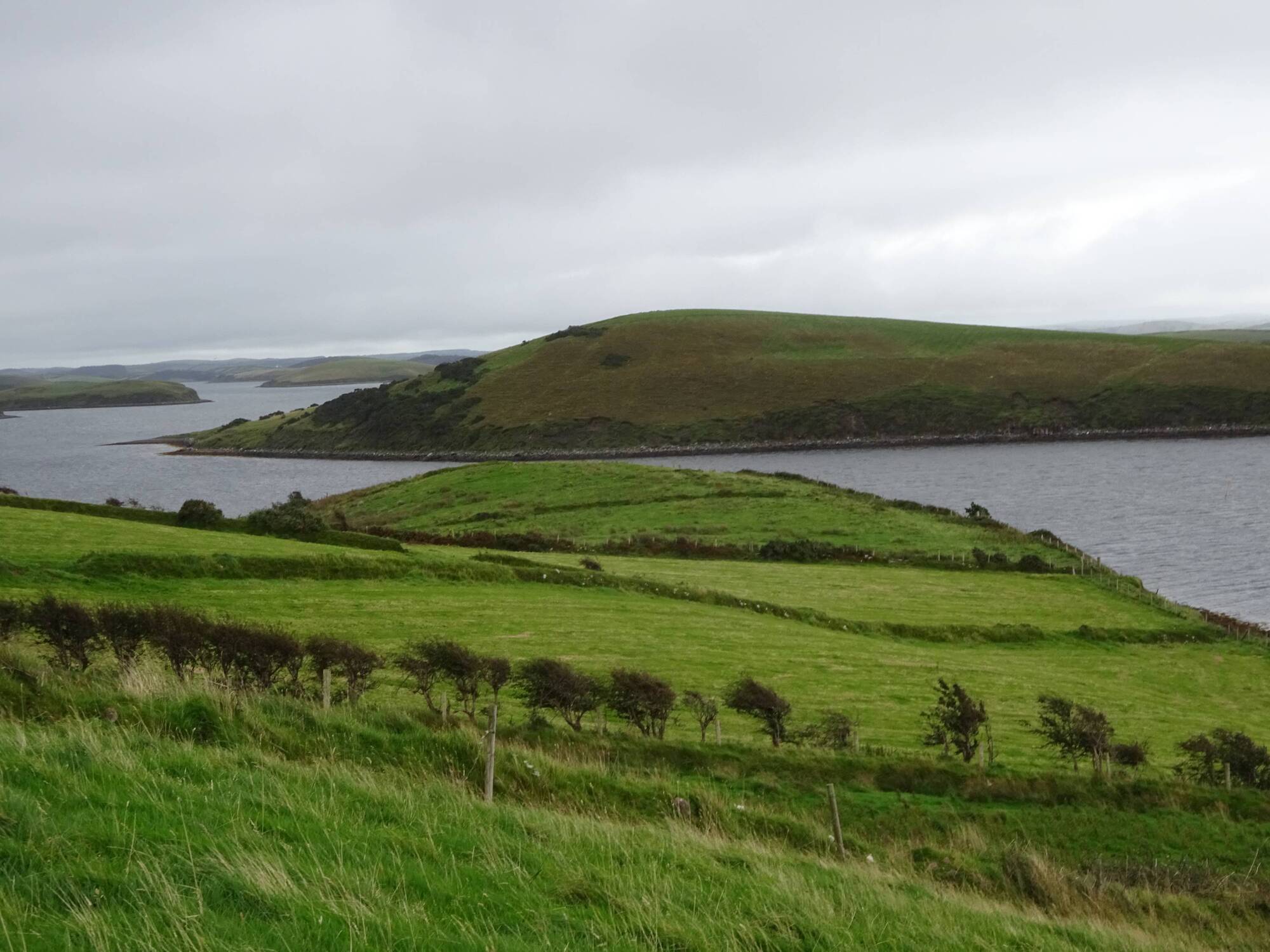
The unpopulated island of Inishtubbrid has no fewer than 23 versions of its name recorded on a placenames website
Islands of Ireland: This Mayo isle is a sizeable omission from Google Maps

Inishtubbrid, Clew Bay, Co Mayo in the foreground. Picture: Dan MacCarthy

It is difficult enough navigating among the near-identical island drumlins of Clew Bay trying to pick out the exact island you are looking for without having to contend with maps that don’t even show the place. Google Maps declines to show Inishtubbrid, Co Mayo, despite it coming in at 37 acres and ascending to a height of 28m. A sizeable omission. Still, life doesn’t revolve around Google maps and there are other maps which are more than sufficient to get you to your destination.

This island lies on the north side of Clew Bay not far from the coastal road linking Newport to Mulranny. A drive along this road at various points reveals dozens of these islands reposing like mythical sea creatures: Inishlim, Inishbobunnan, and Inishgowla but three of the myriad.

The record number of variations for an island name in this series so far is Inisvickillane, Co Kerry. The Blasket island has at least 33 versions of its name as recorded in the eponymous title by Mícheál Dubhshláine.

Not quite up to that level, though still with an impressive number of once-alternatives is Inishtubbrid. The unpopulated island has no fewer than 23 versions of its name recorded on the placenames website logainm.ie. The earliest label, Inishtubberid, dates from 1617 and is an entry in the Westport Estate Papers, which is a collection of records relating to the ownership and management of the largest estate in Co Mayo. Also in that year the island was given the name Inishtubrit according to the Inquisitions of County Mayo. The name mutated by 1635 to Ennishtubbert and the similar Ennistibboret by 1661.

Other variations of the latter spelling occurred in the 19th century before a version close to its current form was adapted in Innistubbritt. This held sway before the exotic ‘Knocknegoushe’ intervened and then several other versions of the present form returned to dominance.

The reason for the multiple variations is probably the lack of a standardised method of recording the names and the independent status of the recording bodies. There are dozens of placenames of townlands and villages and towns with the word ‘tiobraid’ or ‘tubrid’ in them, the most famous being ‘Tipperary’ or ‘Tiobraid Árann’ or ‘Well of the Arra’.

There are three ruins on the northside of the island which were last occupied in the 19th century. However, the buildings provided shelter for dozens of people in the years prior to the Famine. “In 1841, prior to the Great Famine 42 people lived in three houses on Inishtubbrid. Ten years later, this population had fallen to 24,” wrote Michael Cusack in his comprehensive analysis of the islands of Clew Bay.

The Ordnance Survey map also depicts a lime kiln where the families would have been able to burn limestone to produce fertiliser for their crops. The by-product had the added use in the making of whitewash and for purifying water.

Inishtubbrid is neatly parcelled into about 40 fields, and no doubt all were named back in the day. There is even the sign on the Ordnance Survey maps of an old boreen winding to the houses attesting to a commerce of sorts. The maps also show three wells at the shore, and hence the name. There is an uncanny feeling of human occupation, though it has vanished, while strolling around the island.

Outside one house a bower of fuchsia provides cover for cattle. Another house has giant mushrooms which have sprouted like plates from a tree stump. In the mid-19th century Griffiths Valuation recorded the names of the people living on the island as follows: Philip McHale, Martin McHale, Myles McHale, Michael Holmes and Thomas Caine. The relationships were not provided.

There is a ringfort on the minute Inishlim but surprisingly, nothing of archaeological significance, officially at least, has been discovered on Inishtubbrid. Another case of ‘watch this space’.

  • How to get there: It is possible to walk at low tide to some of the islands on the northside of Clew Bay. However, take extreme caution with the returning tide. Otherwise, kayak from one of several piers that drop southwards from the N59. No ferry.
  • Other: Croagh Patrick and the Islands of Clew Bay, Berry Print, Michael Cusack

x

More in this section

Revoiced

Newsletter

Had a busy week? Sign up for some of the best reads from the week gone by. Selected just for you.

Cookie Policy Privacy Policy Brand Safety FAQ Help Contact Us Terms and Conditions

© Examiner Echo Group Limited