Donal Hickey: Climate change could destroy buried archaeological treasures
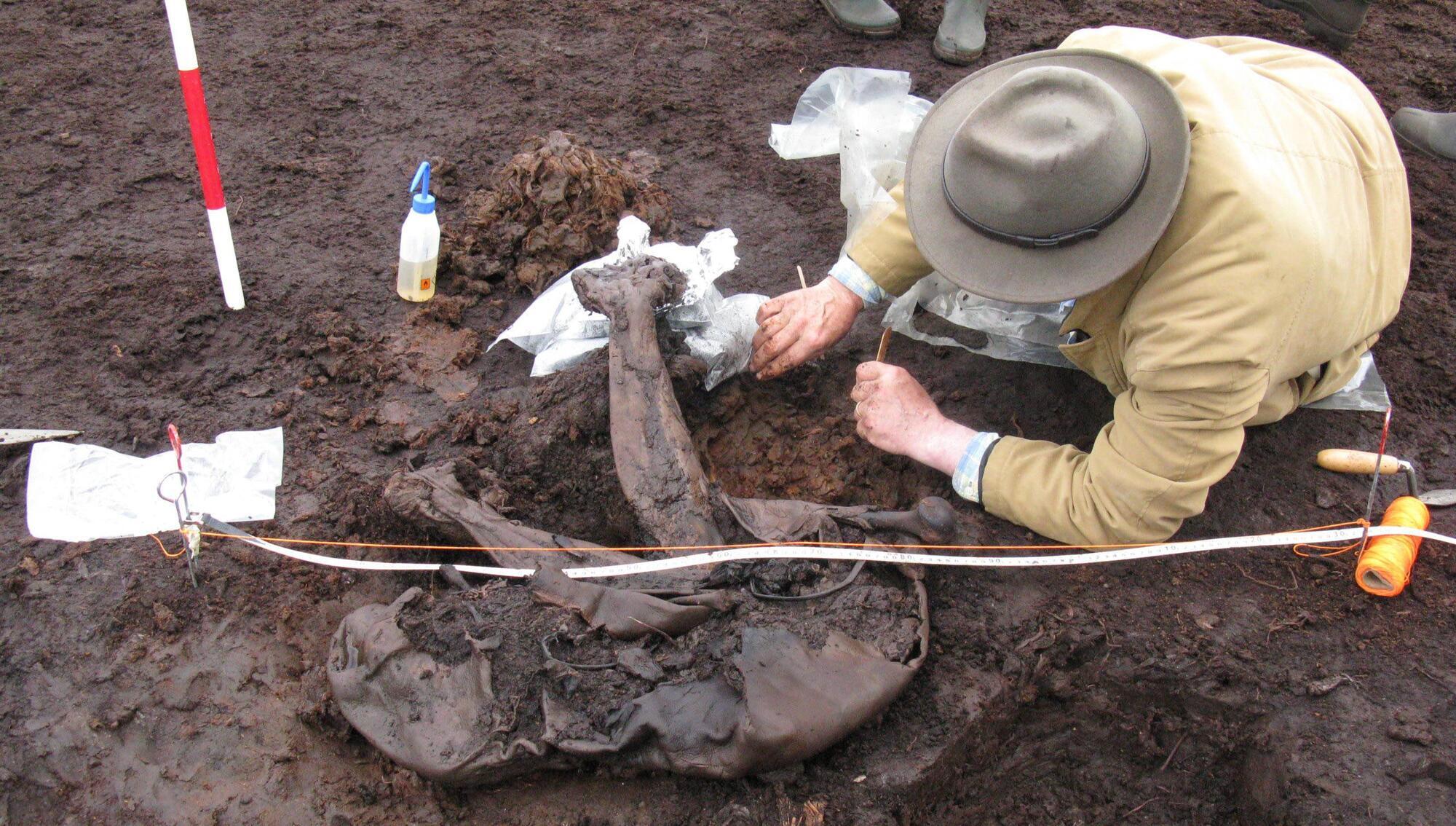
Ned Kelly, head of Antiquities at the National Museum, with 'Cashel Man' - the oldest ‘fleshed body’ in Ireland, dating to 2000BC, found in a Bord na Mona bog in 2011.
We live in hope of another fine summer that could, however, surprise us by revealing some of the landscape’s secrets. With hotter, drier summers and, conversely, longer periods of heavy rainfall, previously unknown treasures that have lain beneath the surface for thousands of years are being exposed.
In the heatwave summer of 2018, for instance, photographer Anthony Murphy was using a drone when he uncovered the outline of a monument in the Boyne Valley, Co Meath.
Highlighted clearly from the air was a circle in a tillage field, criss-crossed by lines left by farm machinery. Called a henge, the marks of this ancient settlement resembled the foundation of a ring fort and could be up to 4,500 years old.
That summer four years ago hastened the drying out of ground, thus exposing archaeological remains around this country and Britain. Now, archaeologists in the UK are warning that climate change is threatening to destroy buried treasures as the soils that protect them dry out.
Bogs are especially vulnerable and we have plenty examples here of treasures being found buried in peat where acidic powers of preservation prevent bodies and material objects from rotting.
Butter and age-old trackways have been found in bogs, but the finding of human remains garners most attention. Numerous bog bodies have been discovered, with Cashel Man, from a Bord na Mona bog in Co Laois, in 2011, being the oldest ‘fleshed body’ in Ireland, dating to 2000BC, according to the National Museum.
Changing weather patterns could undermine our understanding of the past, archaeologists fear. As peat contains hardly any oxygen, bodies and objects like leather can survive in it for millennia. But, if soils dry out, or are washed away by floods, oxygen gets in allowing decomposition to start and precious artefacts can soon disappear.
In places known to have many hidden gems from the distant past, like the countryside around Hadrian’s Wall, in England, archaeologists are doing excavations in carefully-chosen areas.
They have dug up some items but, alarmingly, have noticed that the soil has subsided by about a metre in places in recent years. Given the size of bogs in Ireland, of course, large-scale excavation for artefacts is not feasible.
Mind you, there’s no doubt that many unknown treasures still lie underground here. Chances are some will be unearthed, accidentally. That’s how the Ardagh Chalice was found, in Co Limerick, by two men digging potatoes in a ring fort, in 1868. Our ancestors were known to bury valuables in forts.
A problem is that heavy machinery can destroy objects underground before anyone sees them. Though treasure-hunters have been using metal detectors for many years, people will continue to unearth things by chance.

CONNECT WITH US TODAY



Be the first to know the latest news and updates