Juanita Browne: How frogspawn transforms from tadpole to frog
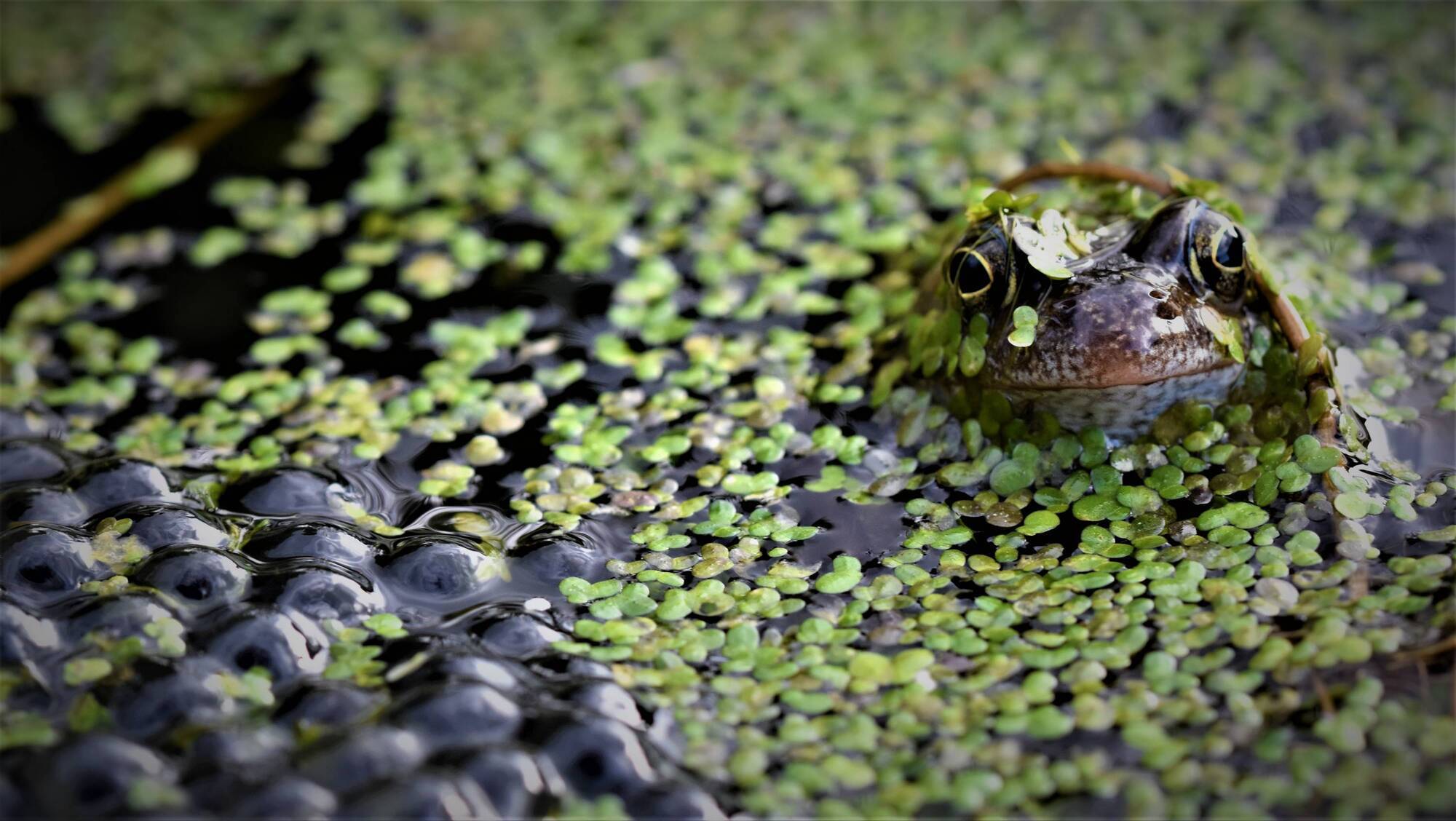
Frogspawn is a welcome sign of spring. Picture: iStock
As a young child, for many years, I enjoyed collecting frogspawn. There was a small drain at the bottom of the field behind my house, a field that also contained an old abandoned dump truck – my modest laboratory herpetarium. Each spring, I would carefully collect a clump of frogspawn from the drain in a small bucket and carry it to the dumper bucket, which was filled with rainwater colonised by algae and some water plants. I really enjoyed my close-up view of these little creatures as they developed into froglets over the following weeks.
In early spring (often as early as January or February, depending on the weather), adult frogs gather to breed in freshwater ponds, lakes, wetlands, drains and ditches, and even temporary puddles. Frogspawn is amazing. You probably never thought about this before, but the female isn’t carrying around the huge clumps of the frogspawn we are familiar with. Instead the approximate 4,000 eggs laid by each female are initially quite small and dense, but they then absorb water and rise to float on the surface. The jelly acts as an insulator, keeping the eggs up to 10C warmer than the surrounding water.
Over the next three or four weeks, the black eggs can be observed getting larger and beginning to take on their ‘tadpole’ shape, wriggling inside their spheres of jelly, before exploding suddenly overnight into a teeming mass of tiny tadpoles. At first, they feed on the remains of their jelly cocoons.
After about five weeks, a tadpole suddenly sprouts back legs. It no longer relies on gills and must now swim to the surface to take gulps of air before returning to hide in the shallows of its pond (or dumper bucket) to hide. At about 10 weeks, the front legs make an appearance and the long tail begins to be absorbed back into its body. This ‘froglet’ can now transition to life on land.
I was always amazed by this creature that begins life looking like a small fish but transforms into a land-loving four-legged creature, with lungs like us. However, many years later, I learned that my Dumper AirB&B wouldn’t have scored a very high rating from my tadpoles. You see, it turns out that once tadpoles get their back legs, their diets change too. No longer satisfied with a vegetarian diet of nibbling on algae and water plants, they become carnivorous. In a natural water body, they snack on dead animals, insects, larvae and even small fish. But I didn’t know this in the 1980s, and can only assume that my tadpoles’ enforced isolation in the dumptruck caused them to become cannibals. I do know some did survive, because when they reached froglet stage they hopped out of the dump truck to begin their lives in the field, probably returning to the drain as adults to breed two or three years later. Mortality in tadpoles is naturally high, and only one in 10,000 need to reach maturity in order to maintain a population. But this fact doesn’t fully relieve my guilt at causing my childhood friends to resort to eating their brothers and sisters.
A few years ago, perhaps to make up for past mistakes, I raised froglets in a tank in my son’s classroom. This time I got it right, serving them up a varied menu of lettuce, spinach, fish food, and even small morsels of meat. As we have lost so many of our ponds and wetlands in Ireland to drainage, the ‘Common Frog’ is no longer so common, so you now need a licence from the National Parks and Wildlife Service to collect frogspawn. Like all child-rearing, it’s not easy. It takes careful research and work to rear frogspawn successfully, but in a world dominated by TikTok and Playstations, seeing the excitement in those children over a tadpole sprouting legs was really wonderful to see. The good news is that it’s relatively easy to observe frogspawn and tadpole development in the wild, in shallow ponds or by pond-dipping, and it’s much easier than taking them home.
- If you want to find out more about Ireland’s native amphibians, check out the Irish Herpetological society, https://thehsi.org
- The Irish Peatland Conservation Council have been running their ‘Hop To It Frog Survey’ since 1997, and would be delighted to receive your records of spawn, tadpoles or adult frogs. See https://www.ipcc.ie/help-ipcc/hop-to-it-national-frog-survey-irelandcard/
- You can also record frogspawn sightings on the National Biodiversity Data Centre’ Farmers’ Wildlife Calendar, which aims to track the effects of weather and climate change on seasonal events such as frogs spawning. See https://biodiversityireland.ie/farmers-wildlife-calendar-2022/
CONNECT WITH US TODAY



Be the first to know the latest news and updates