Islands of Ireland: Keeragh Islands often a refuge for sailors shipwrecked by storms
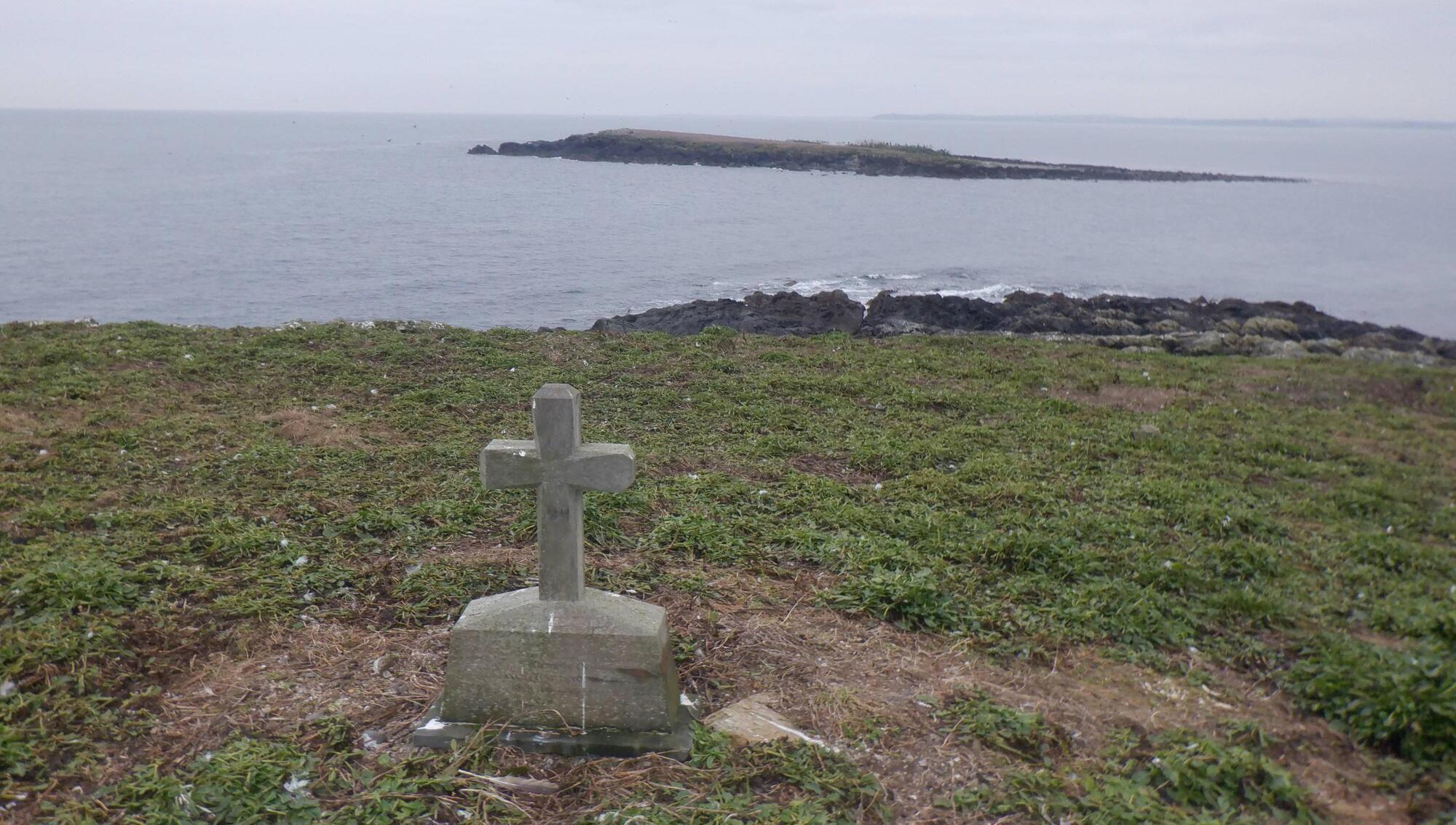
The memorial to the nine crew of the Helen Blake lifeboat on the Keeragh islands, Co Wexford. Picture: Dan MacCarthy
Overshadowed by their more illustrious neighbours, the Keeragh Islands in Co. Wexford also have an interesting tale to tell and are also decorated with teeming bird colonies that mark them as interesting in their own right.
The neighbours are the Saltee Islands: Greater, with its cacophonous gannetry and resident king (of the Neale family), and Lesser with its association to Henry Grattan (the owner is the last living descendant of the 18th-century parliamentarian).
Derived from ‘Sheep Islands’ the Keeraghs lie about 2km off Cullenstown Beach near Wellington Bridge in the south of the county. The islands are very close to the famous Bannow Island where Strongbow’s troops landed in 1170. From the shoreline, they look like upturned shells on the horizon but, in fact, come in at two acres for the big and one for the little. There is a short stretch of water between them through which a strong tide runs.
The larger island has the ruins of a house that was built to provide refuge for shipwrecked sailors of whom there was no shortage in this area frequently battered by huge storms. At the summit of the island, there is a memorial with the inscription stating ‘in memory of the Helen Blake lifeboat and crew 1914’.
On Friday, February 20, 1914, a stricken ship with a cargo of mahogany bound for Liverpool was seen in mountainous seas. Before any distress signals were fired, the Fethard lifeboat, the Helen Blake, raced to the rescue of the Norwegian schooner, the Mexico.
Having endured two weeks of storms in crossing the south and north Atlantic, the ship was cast onto the rocks of the islands. When the Helen Blake reached the Mexico, it too was smashed on the rocks. The ferocity of the storm was such that five local men were immediately lost. Their shattered bodies were found on the shore the following morning. Four of the crew made it themselves to the Keeraghs, one was saved by the crew of the Mexico, but nine were lost in the raging sea.

The next morning, smoke could be seen rising from a fire on the island giving hope to the people watching from the mainland. However, with a hurricane blowing and probably without access to food or water, the fate of the survivors was in the balance.
“The watch was maintained all day and there was hope that the men had succeeded in getting fuel and food from the wrecked ship,” reported the . However, the Mexico itself had been battered to pieces and disappeared during the night.
“The suffering and terrors of the wretched men marooned on the island during Saturday night can well be imagined, the gale was one of the worst ever experienced on the southeast coast,” the paper wrote. A rescue was deemed impossible on the Sunday also after the Dunmore lifeboat made a gallant attempt. The men had to endure another night of hell on the island.
By Monday morning, the storm had abated somewhat and lifeboats from Rosslare, Kilmore Quay and Dunmore East with the help of the Wexford tug, managed to effect a rescue of the survivors of the Helen Blake and the Mexico.
Nine of the 14 crew of the lifeboat had drowned, thereby dealing the village a phenomenal blow. Donations for the families were received from around the world and the village changed its name to Fethard-on-Sea to distinguish it from Fethard, Co. Tipperary, where some of the donations had ended up.
Later that year, the two Keeraghs were searched for arms in a time that saw guns later landed at Howth, Co. Dublin, for the Volunteers in the fight for independence.
The Keeraghs has a significant colony of great cormorants which breed on the islands from May to September which are protected under Special Protection Area status. Apart from this bird, many others call these islands home, including several gull species.
Historically, there are records of the presence of the great auk before that flightless species became extinct in the mid-19th century.
- Strongly discouraged due to the breeding birds.
-
The Awful Tragedy of the Helen Blake Lifeboat, Liam Ryan, Emco; Munster Express, 28/02/1914
www.hookheritage.ie,
www.southwexfordcoast.com/keeragh-islands;
https://www.facebook.com/FethardonSea/