Workplace wellbeing: Tired of the job but can’t work out what to do?

When the mid-career milestones of pay rises and promotions are no longer satisfying, you may find yourself in a slump. Should you change career or try to love the one you have anew?
Workplace wellbeing: Tired of the job but can’t work out what to do?

Mid-career malaise: If you are unhappy at work, you can change your job or industry, change your attitude to your current job, or cultivate outside interests to compensate. Picture: iStock

Sara Slattery had worked for 17 years in community development when she realised it was no longer for her. She had worked her way up the ranks in what she regarded as “a steady, pensionable job”, but the 48-year-old, from Galway, felt the demands outpaced the rewards.

It hadn’t always been this way. Slattery had been ambitious. “Not about climbing the traditional corporate ladder, but about making a difference in the world,” she says. “I thought I could do that through community development.”

She worked with organisations that supported families in socially disadvantaged areas and, for a long time, felt her work was making an impact. But then the recession hit, and funding was pulled from the community development sector.


Sara Slattery had worked for 17 years in community development when she realised it was no longer for her. Picture: Evelyn Woodard

“A lot of us stayed in jobs we might have left if we had other options,” says Slattery. “I’m someone who needs new challenges, and I stayed in my last job for 10 years, which, in hindsight, was too long.”

She attributes her burnout to “giving my all, but working in a system that didn’t change. Feeling as if your all isn’t good enough really wears on your motivation and capacity to do your work.”

Slattery took time out and then returned to work for another two years. But after having her third child, she decided to leave. “I told everyone, including myself, that I was doing it because it didn’t make financial sense to have three kids in childcare. But that was only an excuse. I was leaving because I was done.”

More than just a job

Although we need a job to pay our bills, for most of us, work is more than a means to an end. It’s also about finding meaning and connection. Staying in an unsatisfying job can undermine our sense of agency.

Stefanie Sword-Williams is a British-based employee development trainer and founder of F*ck Being Humble, an unapologetic community that helps people get the most out of their careers. She recently published a book, called Career Comedown.

Stefanie Sword-Williams is a British-based employee development trainer and founder of F*ck Being Humble.

“I’m 34 and many of my friends have become dissatisfied with work in recent years,” she says. 

“They have told me that after 10 or more years climbing the career ladder, promotions, pay rises, and other professional milestones begin to feel less rewarding. Some are feeling burned out by the effort it takes to achieve their ambitions. There’s an overwhelming sense of: Is this it?”

Sword-Williams wondered whether these feelings were more widespread than in her friend group and asked her 14,000-strong Instagram following if they were feeling disillusioned. Hundreds of responses later, she says, “it seemed there was a significant cohort of people for whom work was no longer working”.

When she asked people why, she noticed some recurring themes. “Advances in technology and AI have meant that the jobs people trained for may no longer be the jobs they are doing,” she says. “I have friends who are copywriters whose jobs are being cut left, right, and centre and friends in the creative industries who don’t create anymore, but oversee assets produced by AI. They are feeling a lack of identity and clarity as to the way forward and this is happening in many industries.

“The post-pandemic restructuring that has led to redundancies, particularly in the tech sector, has also made people feel insecure and question whether the time and energy they give to their work is really valued.”

Women may be especially susceptible to career comedowns. “We’re coming out of the ‘girl boss’ era, where women were encouraged to lean in, so they could have it all,” says Sword-Williams. “This led many to work so hard they burned out. Now, they’re asking if they really want it all anymore.”

Three options

Coaching psychologist Emma Lynch (emmalynchcoaching.com) often works with people who are experiencing career comedowns. Changed priorities are common to all of them.

Lynch says: “The person you are at 40 is probably very different to who you were at 22, when you first embarked on your career. You can feel stuck if your job doesn’t align with your values anymore.”
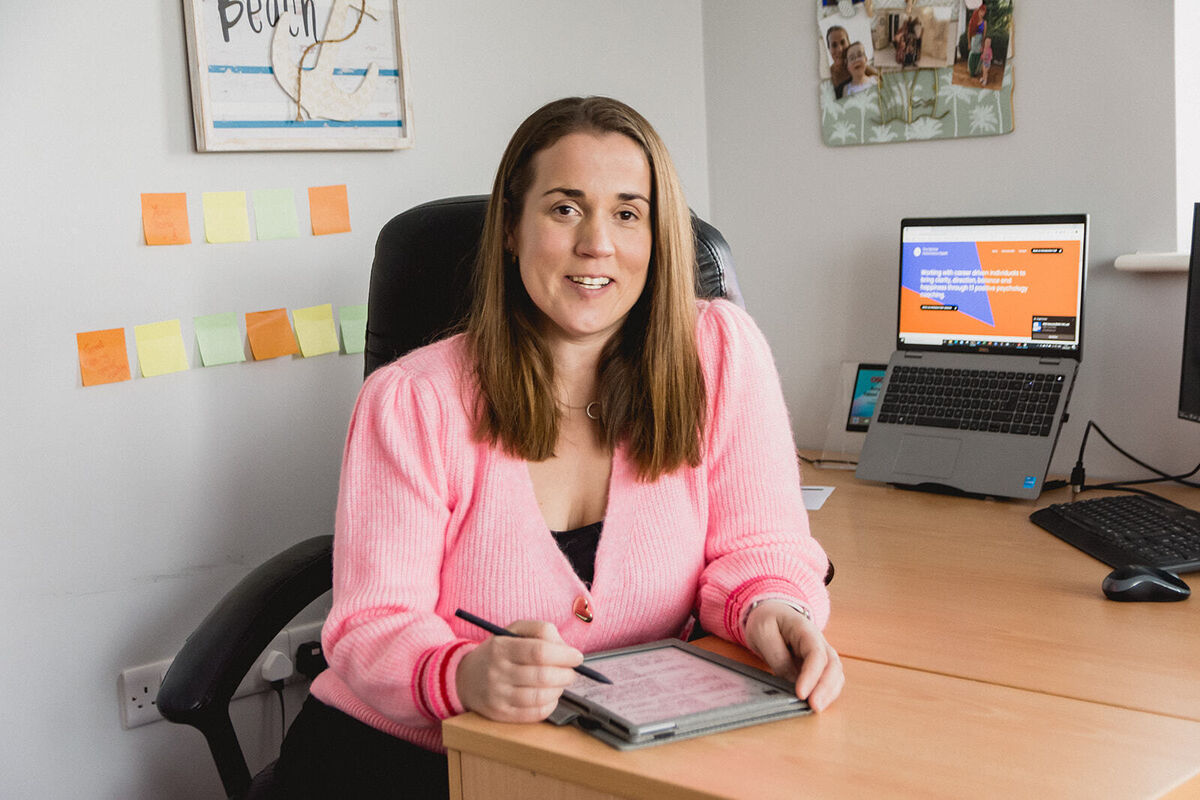
Coaching psychologist Emma Lynch: “The person you are at 40 is probably very different to who you were at 22, when you first embarked on your career. You can feel stuck if your job doesn’t align with your values anymore.”

The other commonality is feeling as if you aren’t in the driving seat of your career. “Many clients tell me they find themselves in the middle of their careers not knowing how they got there,” says Lynch. “They went to college, got their first job, and were then promoted to suit the needs of their organisation. Externally, it looks as if they have successfully climbed the ladder, but they lack control over their careers. And because work is so busy, many of them don’t even have time to consider what they want to do about it.”

Sword-Williams’s book gives people who are deep in the doldrums of a career comedown three options to get out of it: They can stick with their current career and mould it to better reflect their needs; they can start over in a new career; or they can remain where they are, but find other outlets in life to satisfy the parts of themselves that aren’t being met by work.

So, how can you mould your career if you decide to remain where you are? It starts with gathering data about yourself, says Lynch.

“Try the like-love-loathe exercise, where you note the tasks you like, love, and loathe over the course of a week. It helps you see where things really stand in your career and provides you with something tangible to discuss with your line manager. The next step is having that conversation. It’s the only way to make positive changes to the way you work.”

To decide whether the right choice for you is a career change, Sword-Williams suggests asking yourself the following question: If a dream project landed on your desk tomorrow, would it be enough for you to stay? “If the answer is yes, it’s still possible for you to reignite your spark for your career. But if it’s no, you’re probably done.”

Change is a challenge

A midlife career change isn’t easy. Lynch says many people feel overwhelmed by the prospect and the challenge involved. To help, she advises them to “picture a mountain. You don’t know what’s on the other side, but each step will gradually get you to the top, and your view will clear the higher you go.”

What might those steps consist of? Begin by asking questions, says Lynch. If no one judged you, what sort of work would you try? What trade-offs are you willing to make? If you’re seeking more freedom, creativity, or flexibility, would you sacrifice some of your salary to get it, at least initially?

“The answers to these questions will point you in a certain direction,” she says.

“The next step is to be experimental. Talk to people who work in the industries you’re interested in. Try things out by volunteering. See where your curiosity takes you.”

Your third option is what Sword-Williams describes as moving away from the “narrative that we are entirely defined and valued by the work we do”. Our work can provide us with an income and stability, while hobbies like painting or creative writing or volunteering with local clubs or charities can provide self-fulfilment.

Slattery’s route out of her comedown involved a change in career. After taking a year off, following the birth of her third child, she retrained as a life coach and now works “predominantly with women who are questioning their career paths”, just as she once did.

Lynch believes it’s important for everyone to regularly ask themselves questions about how satisfied and fulfilled they are in their careers. “It can be hard to make time for reflection, but it’s vital,” she says. “It puts you back in the driving seat and allows you to be more intentional about how you move forward.”

Sword-Williams adds that, “as humans, we’re changing all the time and our interests, expectations, and work needs inevitably change, too. Checking in with ourselves allows us to spot the signs of a career comedown and act sooner, so that we don’t get stuck, but take action to get the most out of work and life.”


x

More in this section

Lifestyle

Newsletter

The best food, health, entertainment and lifestyle content from the Irish Examiner, direct to your inbox.

Cookie Policy Privacy Policy Brand Safety FAQ Help Contact Us Terms and Conditions

© Examiner Echo Group Limited