Voice notes get right to the point
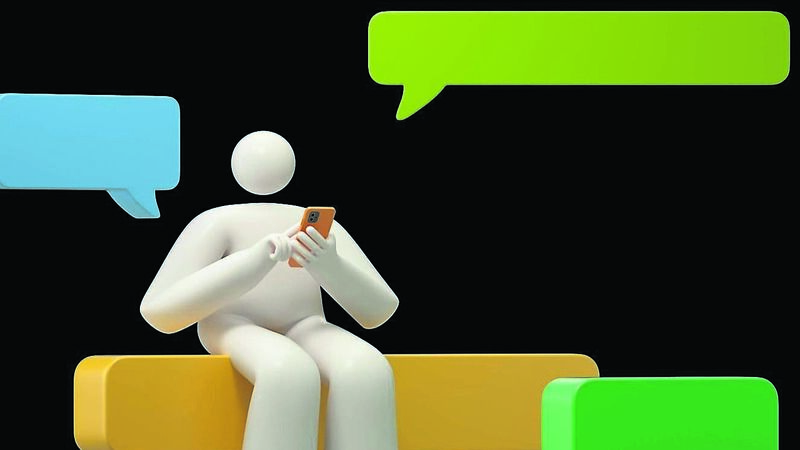
Do audio messages deepen our connection, or are they another way of avoiding real conversation between people?
Voice notes get right to the point

Voice notes are, I find, a way of communicating, sometimes lengthy and complex information, with the right vocal tone that leaves the listener or receiver in no doubt as to the gravity or lack thereof of the particular situation. Picture: iStock 

Rather bizarrely, I still remember my first voice note. I was sitting on the top deck of a bus on my way to a video shoot when a green WhatsApp bubble with a blue play button appeared. I hit play.


“I messed up,” came the voice. “I forgot to book the room…” From there, the client, also a dear friend, explained what had happened and how the situation could be remedied. 

As it turned out, it really wasn’t that big a deal but by the time the voice note ended, I somehow felt a little cheated. I had been robbed of the opportunity to respond in real time, or at the very least, the chance to slag him a little for this mini shambles. 

When I thought about it a little more, I concluded that at least he’d had the guts to say it rather than text it, and in his tone I could sense there was regret and more than a hint of an apology. I replied with a thumbs up.

Since then, I have gotten used to voice notes. I would even go so far as to say I’m something of an advocate. They are, I find, a way of communicating, sometimes lengthy and complex information, with the right vocal tone that leaves the listener or receiver in no doubt as to the gravity or lack thereof of the particular situation. 

An equivalent text often takes ages to compose and requires a plethora of those awful, infantile emojis to let the reader know you mean them no harm. 

In addition, as a person who suffers from severe bouts of self-doubt, voice notes allow me to get my information across without worrying about interrupting others as they go about their day.

But not everybody likes voice notes.

Psychologist Peadar Maxwell: ‘Texting and voice notes further reduce emotional signals.’ Picture: Patrick Browne

“I generally ignore them,” wrote a friend of mine when I asked a WhatsApp group, via voice note, of course, for their thoughts on the matter. “I’ve a friend who leaves voice notes two minutes long.” 

“[Name of girlfriend redacted for sake of relationship] and her mates leave outrageously long voice note messages,” says another. “Easily clearing five minutes. It’s insane.”

These replies belong to a certain generation, so I thought it best to ask my nieces and nephews, all in their 20s, for their take.

“I’ll use them to catch up with people when I see they’re not available for a call,” replies one of my nephews, using a voice note. 

If we’re texting and we get to a story that’s quite long, I might send a voice note

Shortly after this, my niece chips in with a text, “I use them quite a bit tbf. Particularly when I’m trying to convey specific emotions or trying to explain something long/ complicated. A lot of my mates hate them though.”

In ways, the voice note harks back to the days of the voice machine we all used to have connected to our home phones.

In our house, the first thing we often did when we came through the door from the shop was play the voice machine and listen to the messages as we packed away the food. But voicemails were different. Back then, the caller was calling you as the first option, not just to leave a message.

From the answering machine in 'Friends' to the WhatsApp message, whether used to deliver information or express love, the voice note looks here to stay. Picture credit should read: PA Photo/Warner Brothers Home Entertainment

In the 1990s sitcom Friends, the answering machine often featured in the plotline. Fans may recall the episode in which Monica leaves a message for Richard and later desperately attempts to delete it using his passcode.

Whatever a person’s motive, from delivering information to expressing love, the voice note looks set to stay.

Though they seem to have only come to the fore recently, WhatsApp introduced voice notes back in August 2013. Apple introduced its first ‘voice memo’ in the 2009 iPhone. There are now a whopping 7bn voice notes sent every day.

Length really matter

According to a survey carried out by Pure Telecom in August 2024, a quarter of people in Ireland send a voice note at least once a day. Some 45% like receiving them, while 23% don’t. Unsurprisingly, voice notes are more popular among those under 55. The same research found that length really matters, and once the message goes beyond a minute, we begin to get irritated. (Lovely research.)

Another survey from UK-based website Uswitch found that almost a quarter (23%) of 18- to 34-year-olds say they never pick up calls, with 56% assuming an ‘out of the blue’ call means bad news. For an old Gen Xer like me, who spent hours of his life on a landline talking to friends, girlfriends, and whoever else would listen, that strikes me as just plain weird and, frankly, sad. The optimist in me says that Irish men and women in that 18 to 34 bracket are more open.

But the big question is, do voice notes and similar tools deepen our connection, or are they another way of avoiding real conversation, contributing to its gradual decline?

“Nothing replaces all of the benefits of an in-person conversation where we read tone of voice and facial expressions,” says chartered psychologist, Peadar Maxwell.

 “A telephone call might come close. We can clarify what we mean, and at least in a phone call, we can make vocalisations of agreement or disbelief fairly instantly, which can guide the nature and length of the conversation. 

Texting and voice notes further reduce emotional signals, especially given the absence of tone in text messages

"Then again, it’s worth keeping in mind that we don’t always want or need to see and speak to someone. Sometimes a simple ‘be there in five’ is enough. Texting has taken some of the sting out of having to ring someone and explain a host of unnecessary information.”

While voice notes will hopefully never replace the beautiful randomness of live conversation, Maxwell suggests they offer another way of fulfilling that need in all of us to connect.

“Hearing a human voice can be reassuring or comforting when the sender is close to you, and you don’t get to see them because of distance or schedules,” he says. “Hearing their voice might make the connection feel stronger. Someone might not have a lot of human contact on some days due to remote working or living alone, and hearing a voice could be a form of company.”

With that in mind, I think of my brothers, both of whom are away working alone in hotter climes as I write this article under a canopy of grey cloud. I decide to send them a voice note. Just to let them know I’m thinking of them.

More in this section

Lifestyle

Newsletter

The best food, health, entertainment and lifestyle content from the Irish Examiner, direct to your inbox.

Cookie Policy Privacy Policy Brand Safety FAQ Help Contact Us Terms and Conditions

© Examiner Echo Group Limited