'Lots of optimism, hope and promise': String of initiatives aimed at improving cancer care
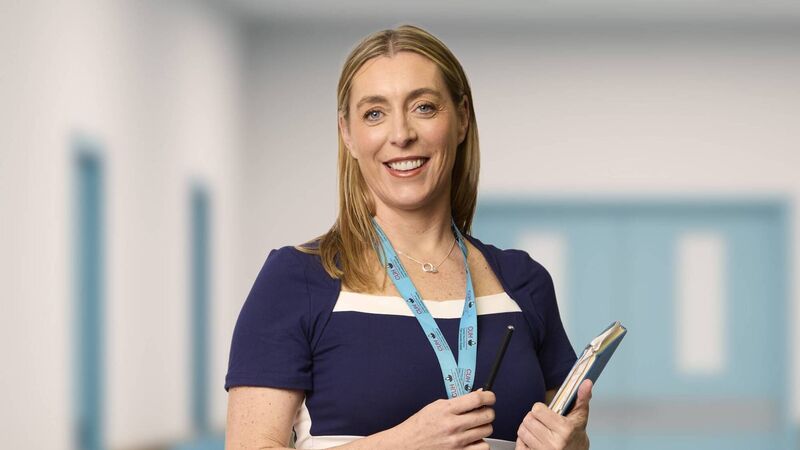
Dr Dearbhaile Collins, clinical director of cancer services and consultant medical oncologist at Cork University Hospital.
Dr Dearbhaile Collins, clinical director of cancer services and consultant medical oncologist at Cork University Hospital (CUH), is at the forefront of enhancing cancer treatments she says will see more patients cured.
Dr Collins, who oversees a multi-disciplinary team at CUH that manages cancer care, including haematology, radiation oncology, psychosocial oncology, and palliative care, explains why she is hopeful for the future of cancer care in Ireland, with ongoing improvements in treatments and early diagnoses.
Speaking to the , she emphasises the role of clinical research facilities such as Cancer Trials Cork in developing new treatments, and highlights how treatments are “constantly improving”.
“Cancer treatments are improving all the time, and our ability and our skill mix using the multi-disciplinary team, so surgery, radiotherapy, anti-cancer treatments, all that is constantly improving,” Dr Collins says.
"We’re getting better at early diagnosis, early prevention, and screening that will obviously also catch cancers earlier and improve them. So, I’m very hopeful as we go forward.
“And we’re doing vaccine trials now. So there’s lots of optimism and hope and promise. I still think, however, it will take time, but every step that we can take forward is a step of hope and a step of improvement and verification in the long run.”
Dr Collins also touches on personalised cancer treatments, also known as precision oncology, which is a tailored approach that selects therapies based on the specific genetic profile, mutations, and molecular characteristics of an individual’s tumour, rather than a one-size-fits-all method.
It uses advanced diagnostics such as genomic sequencing and molecular profiling to identify abnormalities, allowing doctors to use targeted drugs or immunotherapy, often resulting in higher effectiveness and fewer side-effects compared to traditional chemotherapy.
Dr Collins, who is clinical lead for the Irish Molecular Tumour Board, which discusses and identifies treatments that might be suitable for certain mutations, describes how personalised cancer treatment plays a significant role in “how cancer care is going to be better in future”.
“Personalised cancer treatment is where we’re actually testing the cancer DNA, for the mutations that exist within it, and then we’re trying to get targeted treatments for those mutations. We do that in some cancers, but not in all, but it’s growing all the time,” she says.
“CUH has been identified as the national hub for what we call precision oncology, so that is a big part of how we’re changing the treatments and how cancer care is going to be better in the future.”
Discussing the push for community-based cancer care to reduce the need for patients to travel long distances for treatment, Dr Collins says new community-based services will include specific anti-cancer treatments such as immunotherapy, delivered in low-risk settings.
“We’re currently trying to expand, in line with Sláinte Care, the cancer therapies that we deliver in Cork University Hospital.
!"Traditionally, we gave elective cancer care to patients in hospitals. But a lot of these new treatments have changed. Thank God, patients are living longer, they’re surviving, they’re having a much better quality of life, but they still have to come in, you know, every week or month into the units. So, there’s been a real push nationally, but also obviously internally, to try and better serve those patients.”
Highlighting that she doesn’t believe the incidence of cancer will reduce anytime soon, she acknowledges the importance of community-based care. “I think utilising community-based care is so important; that we engage with the regions and with the entire community to try and deliver best care to patients,” she says.
“I don’t, unfortunately, see the incidence of cancer reducing anytime soon. Some will improve. It’s worthwhile saying that things like vaccinations, for the HPV vaccine, so cervical cancer, will absolutely disappear over the next decade or two. That’s an incredible, incredible win.”
Dr Collins says there is also a project at planning stage, which would allow patients to self-administer treatments at home.
“There is a project in line to try and get some patients to give their own treatments in their own homes, so actually educating them on giving themselves injections, so they’re anti-cancer injection treatments,” she says.
She says the idea is that it would save patients an entire trip to the hospital, with the drug being delivered to them: “We’ll be hoping to roll that out in 2026.”
Dr Collins also touches on the importance of teamwork and engagement among the different teams within the hospital, in order to implement these new initiatives with the aim of improving treatments, cancer care and outcomes.
CONNECT WITH US TODAY



Be the first to know the latest news and updates