Going the extra mile to help beat childhood cancer
When Aoife Lucey was 10, high-risk leukaemia turned her world upside down. Now, she’s running 10 half-marathons to help children facing cancer today
Going the extra mile to help beat childhood cancer

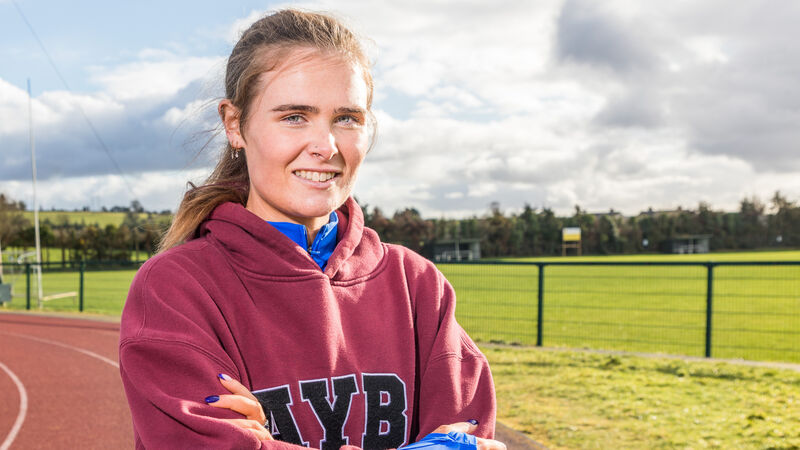
Aoife Lucey trains at Clondrohid Community Park, Co Cork, as she continues her 10 half-marathon challenge in support of Childhood Cancer Ireland.

Running a half marathon is no mean feat, but Aoife Lucey from Macroom, Co Cork, is undertaking not one, but 10, to raise funds for Childhood Cancer Ireland. The cause is close to her heart as she was diagnosed with cancer as a child and intends to do 10 runs, one for every year which has passed since her family was told that their 10-year-old had high-risk acute lymphoblastic leukaemia.

“I was diagnosed on September 9, 2015, six days before my 11th birthday,” she says. “My first symptoms were a sore throat and high temperature, which my GP initially thought was tonsillitis. But when I started to get small bruises on my stomach [about two weeks later], the panic began, and I was sent to the Mercy Hospital in Cork. The following morning, we received the news that I had cancer.

“Because I was so young at the time, I didn’t fully understand what was happening, but I knew from the reaction of those around me that it was serious. My parents were shocked and very upset, and I remember being told that I was going to lose my long blonde hair and the medicine was going to make me very sick — that really upset me. I was scared and frightened, and it was all happening so fast. All I wanted to do was to go home.”

The day after being diagnosed, Lucey, who had always been sporty and active, was admitted to Crumlin Hospital in Dublin and the lives of the Lucey family — Jim, Caroline and their four children, Conor (22), Aoife (21), James (19) and Sean (18) — were turned upside down.

“We were so lucky that we had a great support system, and my three brothers were able to stay with my aunt Margaret while mom and dad were in Dublin with me,” she says. “Treatment started when I arrived in Crumlin and lasted almost two and a half years, consisting of chemotherapy orally, intravenously, and intrathecally, steroids, and lumbar punctures, weekly bloods and many hospital stays. Anytime I spiked a temperature meant another stay in hospital, as it was a risk of infection.

Aoife Lucey of West Muskerry AC training at Clondrohid Community Park, Co. Cork. Picture: David Creedon

“The side effects from the various treatments were very harsh, ranging from mouth ulcers, which left me unable to eat, to steroids causing such pain that it was too painful to walk, and everything in between.

“But I had an amazing team of doctors and nurses in both St Anne’s ward in the Mercy and St John’s ward in Crumlin, who did everything they could to make it any bit better.”

The severity of her illness and treatment meant that Lucey, who is in her second year at UCC studying PE and Irish, had to give up sport — her biggest passion — and miss school while undergoing treatment.

Though hugely supported by family, friends, and medical staff, it was very isolating at times and undeniably difficult, making her feel as though she had been “stripped of a normal childhood and forced to grow up too fast”.

But finally, in January 2018, she got the all-clear, and after several years of monitoring, is “now doing great”.

Having been out of sport for such a long time, it took a number of years to build up her fitness, but she was finally fit enough to take on the 10 half-marathon challenge — to help families who are going through what hers went through a decade ago.

I want to show them that there can be light at the end of the tunnel

“I train around five to six days a week and participated in a cross-country run last year — I will try to compete in a track season with my club, West Muskerry, this summer too. I really enjoy it and am very proud of how far I have come, but I have to accept that I can get injured more easily because of my history. But, aside from that, I’m flying it, and there’s no stopping me.”

The 21-year-old says she chose to raise funds for Childhood Cancer Ireland because it does “phenomenal work” for children and families impacted by cancer and is there for them every step of the way.

“The charity offers everything from bereavement support to financial advice, and is very close to my heart because of what I have been through,” she says.

“I know what it’s like to be that sick, scared child in a hospital bed, and I hope that fundraising for this amazing charity can help them to carry on all the fantastic work they are doing for children fighting cancer, just like I was.”

Childhood Cancer Ireland does not receive any government funding, says communications manager Fionnuala Murphy, adding that community fundraising events like Lucey’s can make a huge difference.

Aoife Lucey. Picture: David Creedon

“They have a significant impact on our work, ensuring that we can support more families through diagnosis, treatment, recovery and into survivorship or bereavement,” she says. “We know that the impact of childhood cancer lasts a long time after treatment has ended, and we are committed to being there for as long as it takes for families to get back on their feet emotionally and financially.”

Claire McCall, CAYA (children, adolescents and young adults) cancer nurse co-ordinator at the Irish Cancer Society, says that the outcomes for children following a cancer diagnosis have significantly improved, with overall survival rates now in excess of 80%.

“This is due to a combination of reasons,” she says. “While there haven’t been new chemotherapy medications developed, the understanding of how existing drugs can be used in combination with each other to increase their effectiveness has improved, resulting in their increased effectiveness.

“However, despite the great improvements in treating children and adolescents who have been diagnosed with cancer, it remains the biggest cause of death outside of accidents, and those who have gone through treatment often have significant long-term effects of treatment throughout their lives.

“So, ongoing research on curing more while minimising and helping support the long-term effects of treatment continues.”

More in this section

Lifestyle

Newsletter

The best food, health, entertainment and lifestyle content from the Irish Examiner, direct to your inbox.

Cookie Policy Privacy Policy Brand Safety FAQ Help Contact Us Terms and Conditions

© Examiner Echo Group Limited