'Anyone of any age can get gum disease': How to care for your gums to protect your future health
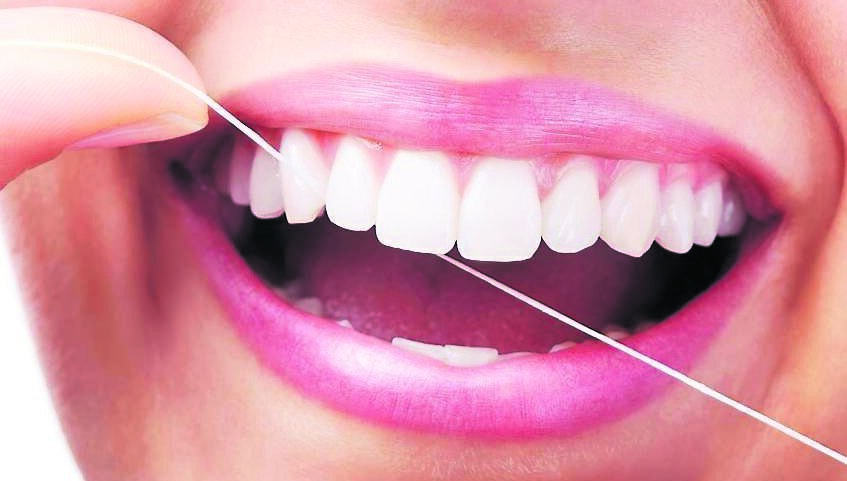
Recent research suggests that interdental brushes are more effective than flossing, but if gaps between the teeth are too tight, floss can be used instead. Picture: iStock.
Open wide and check your gums in the bathroom mirror. If what you see are pale pink, firm gums that wrap tightly around your teeth, then you get high marks for gum health.
If, however, your gums are red, swollen, and receding, there is a pink tinge or even blood when you swill out your mouth after brushing or flossing, it’s a sign of gum disease, a problem that starts as a painless inconvenience but which can eventually cause a chronic inflammatory response in the body, raising the risk of a long list of health issues from dementia and type 2 diabetes to lung and heart disease.
Age increases the risk of gum disease, and by the time we reach our 50s and 60s, few of us are immune.
Up to 80% of the population has some form of gum disease, says the Irish Dental Association, with gingivitis, early-stage gum disease, characterised by inflammation and painless bleeding, among the most common conditions. It sounds trivial, but left untreated, gingivitis can progress to full-on periodontitis, which occurs when bacteria in the mouth erode the bone, ligament, and tissues that hold teeth in position. Teeth begin to wobble and dislodge, although the aesthetic consequences should be the least of our concerns.
“Anyone of any age can get gum disease, and it is a common misunderstanding that it only affects older people,” says Orlaith Kennedy, chief executive of Dental Health Foundation Ireland (DHF).
Gum disease develops when the film of bacteria that sticks to teeth, causing plaque, is not brushed away. Eventually, it tunnels into the gum line, causing damage.
Researchers at APC Microbiome Ireland, University College Cork, are at the forefront of exploring the relationship between a person’s oral microbiome — the unique mix of bacteria inhabiting their mouth — and other diseases. In a study published this month, the APC team highlighted that oral-microbiome biomarkers could help in the early detection and assessment of oral cancers.

Other studies support the strong association identified between poor gum health and a lengthy list of diseases, including a 37% increased risk of mental ill-health, a 26% raised risk of type 2 diabetes, and an 18% higher risk of cardiovascular disease.
In one trial that tracked a group of men for 50 years to assess rates of gum disease and premature death in the intervening decades, Brenda Heaton, associate professor of health policy and health services research at Boston University, found that the more severe the gum disease and inflammation the men had, the higher their risk of dying at a younger age.
“Death arrives earlier for those who have periodontal [gum] disease,” Heaton said. “It delivers a chronic inflammatory burden, and the longer you have that inflammatory burden, the higher the risk of death.”
Poor gum health has been linked to high blood pressure and an irregular heartbeat, atrial fibrillation, in patients with existing heart disease.
Japanese researchers have reported how gum problems are associated with shrinkage of the hippocampus, part of the brain that plays a role in memory, and that even in people with mild gum disease, the increase in brain shrinkage was equivalent to nearly one year of accelerated brain ageing That study followed findings from the Forsyth Institute of dental research and Boston University, where researchers found that oral bacteria associated with gum disease can produce changes in microglial cells in the brain, which defend against the formation of amyloid plaque, a marker of Alzheimer’s disease.
By taking better care of our gums, we can prevent ill-health down the line. Here’s how:
How do I know if I have gum disease?
Early gum disease can be silent and symptomless. The most obvious visible sign for non-smokers is bleeding gums, which is a sign that your gums are inflamed.
Because smoking causes constriction of blood vessels in the mouth, warning signs are less obvious. Taste and smell can also be affected, with some people reporting a metallic aftertaste in their mouth with gum disease.
Loose teeth are a sign that gum disease has advanced to the next stage, at which point you might also develop gum infections resulting in an abscess and seeping pus, which can be tasted in the mouth.
Can you stop gum disease in its tracks?
Your susceptibility to gum disease depends largely on two factors: one is family history of the condition and the other is the degree of plaque build-up in your mouth.
The good news is that you can always improve the prognosis through going back to basics: using a toothbrush held at a 45-degree angle toward the gum line twice a day, along with diligent interdental brushing.
Gingivitis can be reversed, but more advanced periodontitis can be slowed. Smoking and vaping can make gum health worse and should be stopped.
Brushing, preferably with an electric toothbrush and fluoride toothpaste (containing at least 1,000ppm), for two to three minutes at least twice daily is recommended by DHF.
Change the brush when the bristles become flattened and see your dentist and hygienist regularly, advises Kennedy. Healthy gums are pink in colour, and don’t bleed with proper toothbrushing and flossing, she says.
In between brushing, consider using a mouthwash. A review by a team of Spanish researchers found that mouthwashes provide additional benefits for our gums in reducing inflammation and bad bacteria in our mouths.
Which is best — floss or aninterdental brush?
Even if you are super-diligent with a toothbrush, you will need to work at removing debris and plaque from between your teeth to protect your gums. Brushing removes up to 80% of the plaque in your mouth, so it is not enough on its own. Recent research suggests that interdental brushes are more effective than flossing, but if gaps between the teeth are too tight, floss can be used instead.
Inter-dental brushes come in a variety of sizes and are colour-coded. Your aim should be to get a brush that fits as tightly as possible in the gap between teeth without causing pain to be effective. Rinse interdental brushes after using and dispose of them when the bristles become splayed and damaged, usually after a week or two.
Can we eat our gums healthy?
Diets low in refined carbs and sugars are optimal for gum health as they help to reduce inflammation in the body, which improves gum health.
“Sticking to a healthy diet rich in fruit and vegetables may help to reduce the risk for gum disease and other health issues such as heart disease,” Kennedy says.
Washington University researchers reviewed 15 studies involving 1,140 mostly healthy people for a paper in Nutrition Reviewsand found that those with gums that bled on gentle probing were more likely to have low levels of vitamin C in their bloodstream. Adding more kale, peppers, and kiwis to your diet was recommended.
What are gum pockets, and how are they treated?
With advanced disease, gums begin to pull away from the teeth, creating ‘periodontal pockets’ between teeth and gums.
Over time, as these pockets become deeper and more difficult to clean, they gather bacteria and gradually the bone anchoring the teeth in the jaw is worn away so that teeth become loose.
Dentists use a probe to measure the depth of a pocket in millimetres, and the deeper a pocket, the worse the gum disease.
A pocket of 4mm or greater in depth signifies some gum disease, with a 5mm to 7mm pocket a sign of moderate periodontitis, and deeper than that is advanced gum disease and likely loose teeth.
Treatment options depend on the severity of the problem. With small pockets, you will be advised to step up your oral hygiene practice to remove the plaque. In severe cases, surgery involving a periodontist lifting or ‘flapping’ the gums away from the tooth and bone so that deposits can be removed from the root surface might be required.
Is exercise good for the gums?
Keeping active is known to help to reduce inflammation in the body, and some researchers have found it has specific benefits in warding off gum disease. One report in Nature journal suggested that active people were 54% less likely to suffer advanced gum disease than sedentary people.
Up to 80% of the population has some form of gum disease, which can lead to health issues ranging from dementia to lung disease. Fortunately, it can be stopped or slowed, writes Peta Bee.

Subscribe to access all of the Irish Examiner.
Try unlimited access from only €1.50 a week
Already a subscriber? Sign in
CONNECT WITH US TODAY
Be the first to know the latest news and updates