Book review: All in the mind: A vision of hell in which all torments are interior

The characters in 'The Sleepers' drift on seas of sadness and self-loathing, coupling and decoupling, riding out storms of anxiety that exhaust them further
Book review: All in the mind: A vision of hell in which all torments are interior

Matthew Gasda: We find ourselves invested in the author’s whining, bickering selfish monads — is there something of them in all of us?

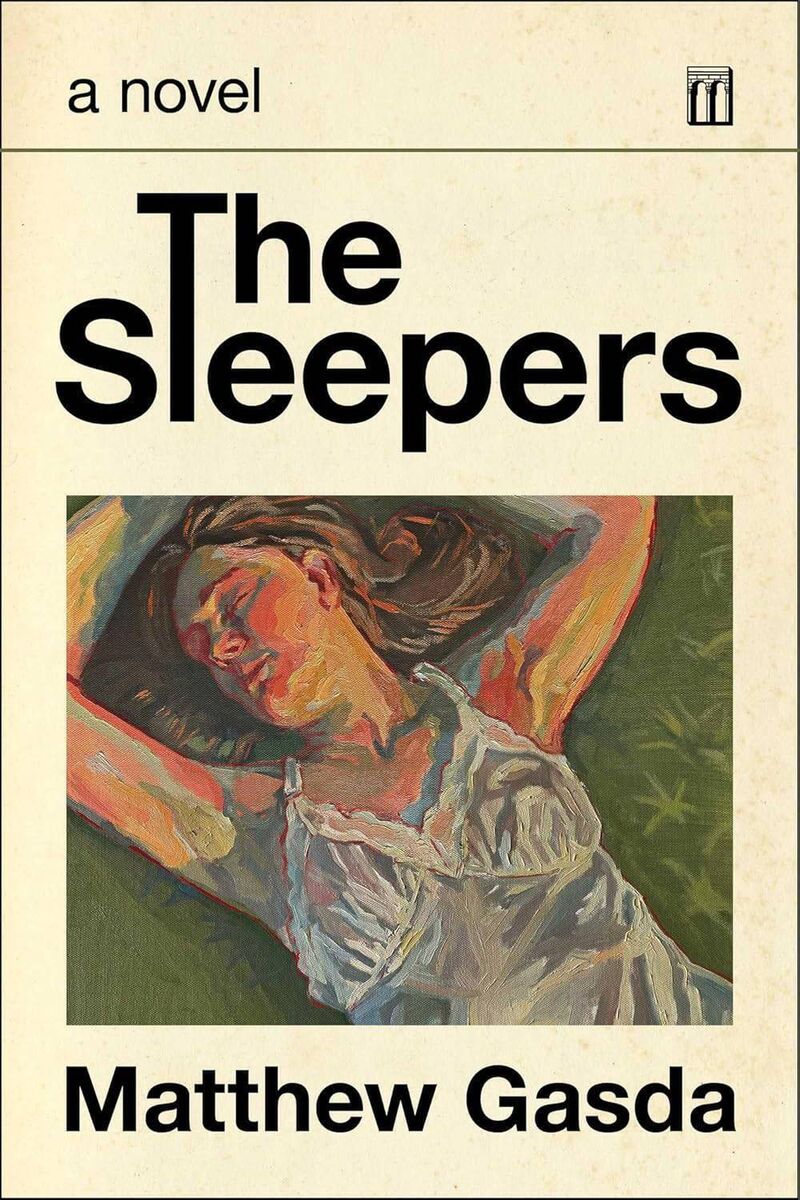
  • The Sleepers 
  • Matthew Gasda 
  • Arcade, $14.99

From any sane global-historical perspective, the characters in Matthew Gasda’s debut novel, The Sleepers, are among the most fortunate people ever to have lived: young, contemporary, educated Americans, congregating in New York; a cinematographer, an academic, an actress, a student, all from affluent families.
But The Sleepers is a vision of Hell, a hell in which all torments are interior. 

The life of the mind is the only one the characters seem to know, and with no correctives — physical labour, children, religious duties, or anything else — that might put a stay to their Herculean feats of self-absorption, or that might give them a route out of the misery they heap on one another. 

The families they come from are dysfunctional nightmares. Being in a relationship produces an “almost cosmological sense of loneliness”. 

One partner rations whatever “soulfulness” he happens to possess for himself and his own needs; the other absorbs “his averageness into her skin”, then sweats it out. 

You have to go to sleep a little bit, one character realises: “You can’t be completely awake and remain with someone.”

The characters drift on seas of sadness and self-loathing, coupling and decoupling, riding out storms of anxiety that exhaust them further. 

They are so sophisticated and well-educated that ideas are proposed, dismissed and replaced by their opposite, and the cycle repeated, within a single short conversation, forestalling any hope of progress.

Each character, then, is the ever-increasing sum of their insecurities. 

There are no routes available to any kind of fulfilling or carefree existence: one character watches the exuberant joy of a pudgy man making a catch in a game of softball among friends as if she is observing a different species. 

With the dubious aids of porn, casual but complicated sex (that must never be judged), prescription drugs, self-harm, and intermittent therapy, Gasda’s characters limp onwards, until one of their number self-destructs.

Matthew Gasda unfolds this landscape of pain for the reader carefully but never sluggishly. 

I thought I would get fed up of reading about the emotional contortions that spoiled big city Americans inflict on themselves and those around them, but The Sleepers is not bereft of incident and storylines.

 And one can only marvel at Gasda’s capacity to alight on truths of the human — not just the Brooklyn — condition: near the end of the novel, Mariko, the actor, reflecting on the consequences of existence passing by with no encounter with life-changing truth, says: 

“Then I think you disappear inside your own mistakes, like a bird disappearing into a cloud.”

Gasda is also the best writer I’ve come across, in fiction or anywhere, at tracing the coils of smartphone addiction as they wrap around our defenceless creature-brains. 

For instance, Akari, the cinematographer and sister of Mariko, has just broken up with Suzanne; but “Suzanne wasn’t a single thing, a single form or body; she was distributed across platforms: Instagram, Facebook, Tinder, Gmail, Snap — a hive of Suzannes.

“And it was for this reason that a clean break-up was semi-impossible: there were too many versions to break up with.”


Most cruelly, perhaps, Dan, the left-wing academic and internet commentator, is sucked into the new working conditions of cognitive labour, of content creation, of forced social media omnipresence, of “the thinking that surrounded the think piece, the chatter that grew, centrifugally”. 

Marx and Engels would laugh bitterly at this comrade’s dilemma, realising that when they wrote The Communist Manifesto, humanity was still on the lowest slopes of the most meagre foothills of bourgeois capitalism’s capacity for revolutionising the instruments of production, for melting all that is solid into air.

Gradually, without any special pleading of their case by the author, we find ourselves invested in Matthew Gasda’s whining, bickering, selfish monads — perhaps in the secret knowledge that there is something of them in all of us. 

Nothing human is alien to me, as the Roman playwright said.

x

BOOKS & MORE

Check out our Books Hub where you will find the latest news, reviews, features, opinions and analysis on all things books from the Irish Examiner's team of specialist writers, columnists and contributors.

More in this section

Lifestyle

Newsletter

The best food, health, entertainment and lifestyle content from the Irish Examiner, direct to your inbox.

Cookie Policy Privacy Policy Brand Safety FAQ Help Contact Us Terms and Conditions

© Examiner Echo Group Limited