Padel tennis: how the world's fastest-growing sport serves up fun and exercise
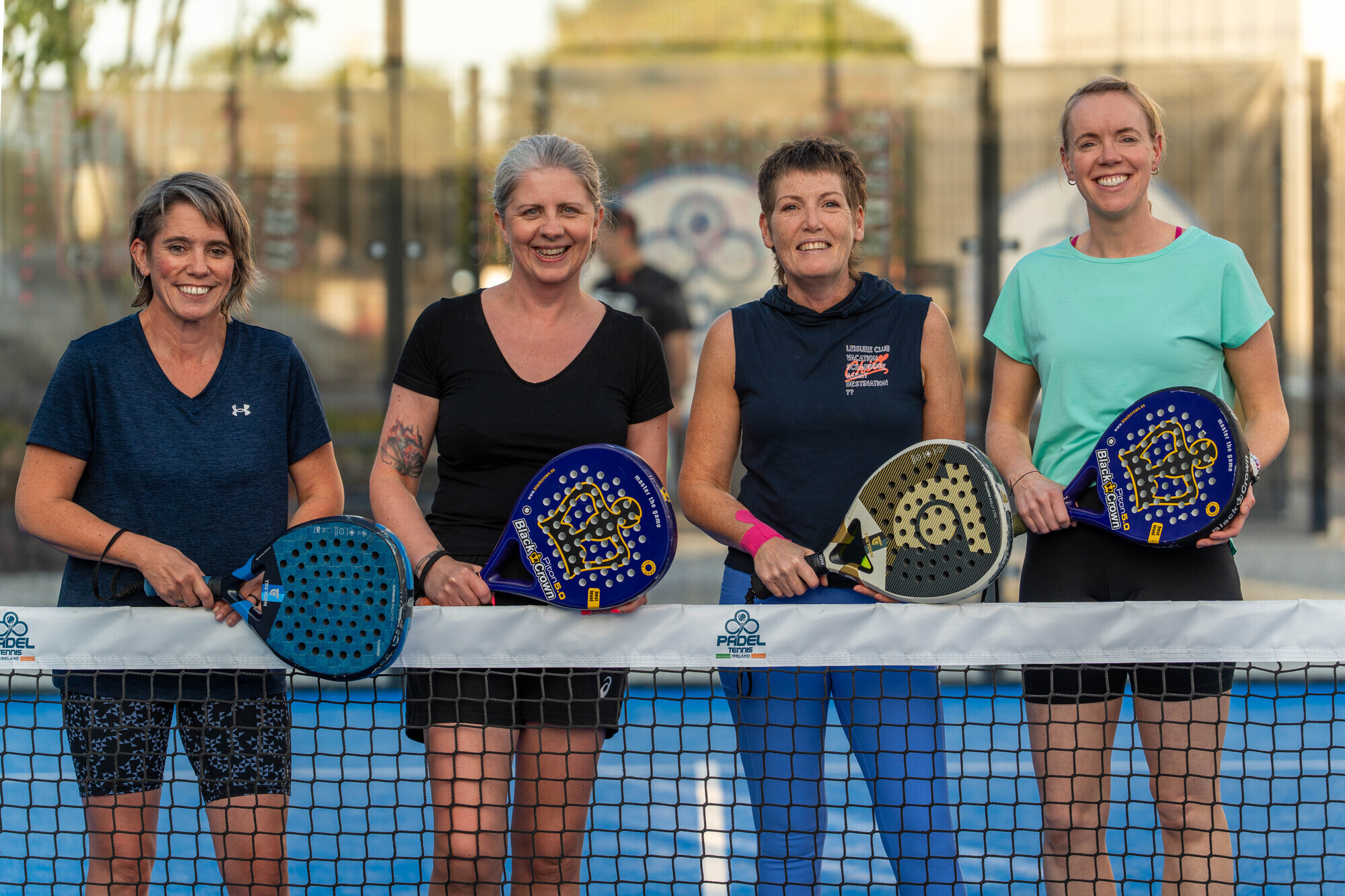
Deirdre McArdle and friends playing Padel Tennis in Carrigtwohill. L-R: Annette Quinn, Deirdre McArdle, Brenda Day and Meadhbh Campbell after their first set. Picture: Noel Sweeney
Padel tennis is the fastest-growing sport globally. Over 30 million people play the game worldwide, and the number is growing at a rate of approximately five million per year.
Here in Ireland, its popularity is also on the rise. Although there aren’t exact figures, the governing body, Padel Federation of Ireland, says the number of players is in the “considerable thousands”.
With all the buzz about padel, I had to go and check it out. The facility, Padel Tennis Ireland in Carrigtwohill, Co Cork, is packed on the Wednesday evening I attend, with all courts booked solid.
Getting a court meant I had to book weeks in advance. Co-founder Mark White says some 2,200 people play padel there every week.
Padel is played as a doubles game, so I recruited three friends to join me; only one of us had played before. As a badminton player, I thought I might have an advantage, but it’s a completely different game, though the strategy involved is similar.
A padel court is smaller than a tennis court and is surrounded by glass walls and topped with a metal ‘cage’. Padel has been described as a cross between tennis and squash. You use the tennis scoring system, so the games are generally quick.
As non-players, we were surprised how quickly we went from complete novices to passable beginners.
After a slow start, the rallies became more competitive, and we eventually got the hang of the glass walls. Similar to squash, you can let the padel ball (slightly smaller and less firm than a tennis ball) bounce off the walls, but only after it has bounced once on your side of the court. This adds an extra layer of fun as we begin to box our opponents into the glass corners.
The social aspect of the game is one of its hallmarks. TV and radio presenter Anna Daly, who plays padel every week with household names Glenda Gilson, Roz Lipsett, Sean Munsanje, Stephanie Roche and Sarah Morrisey, says it’s why their group, wittily named The Pink Padel Club, initially “fell in love” with the sport.
“Padel is a great way to keep yourself moving while catching up with people,” she says. “We all met at a press launch for House of Padel in Dublin a few months ago, and we loved the game and formed a nice bond with each other. Now we have a rolling Thursday morning booking and four of us will play every week.”
Daly's experience is common, says White, who sees people returning to his facility every week. “That gap between novice and beginner is bridged quite quickly and inexpensively, without too much coaching. And that then leads to people wanting to play again.”
That’s exactly what happened with my friends and me. We felt like we’d improved in just one hour, a welcome dopamine hit. It’s relatively inexpensive, too. Padel Tennis Ireland operates a pay-to-play system. A court costs €49 for an hour, divided by four, which works out to around €12 per session. I’ve already booked a return visit.
The Cork facility is the first indoor padel setup in Ireland, opening in November 2023. It has been growing steadily since then. It originally opened with four indoor courts, adding a further four outdoor courts six months later to meet the demand. It’s currently the country’s largest padel facility.
White and his business partner Jeremy Coyle are capitalising on padel’s popularity; the duo will open an even bigger indoor padel facility in Bishopstown, Cork, by the end of the year.
“Bishopstown will have eight indoor courts, and then we’re opening a facility in Limerick, which will have eight outdoor courts. We also plan a facility in Tipperary next year, and we’re focused on 10 facilities nationwide in the next couple of years,” says White.
The growth of Padel Tennis Ireland serves to illustrate how fast this sport is growing in Ireland. Aside from larger facilities, tennis clubs are adding padel courts and hotels are waking up to the padel potential too.
Daly and her Pink Padel Club were recently invited down to The K Club to try out its new padel courts. “Padel is just brilliant. What I notice about it, too, is it’s so accessible, ideal for people looking for a bit of fun and to get them moving too,” she says.
Daly played tennis as a teenager, and says padel is a bit easier to get your head around. “It just seems more compact, a bit less intimidating than tennis.”
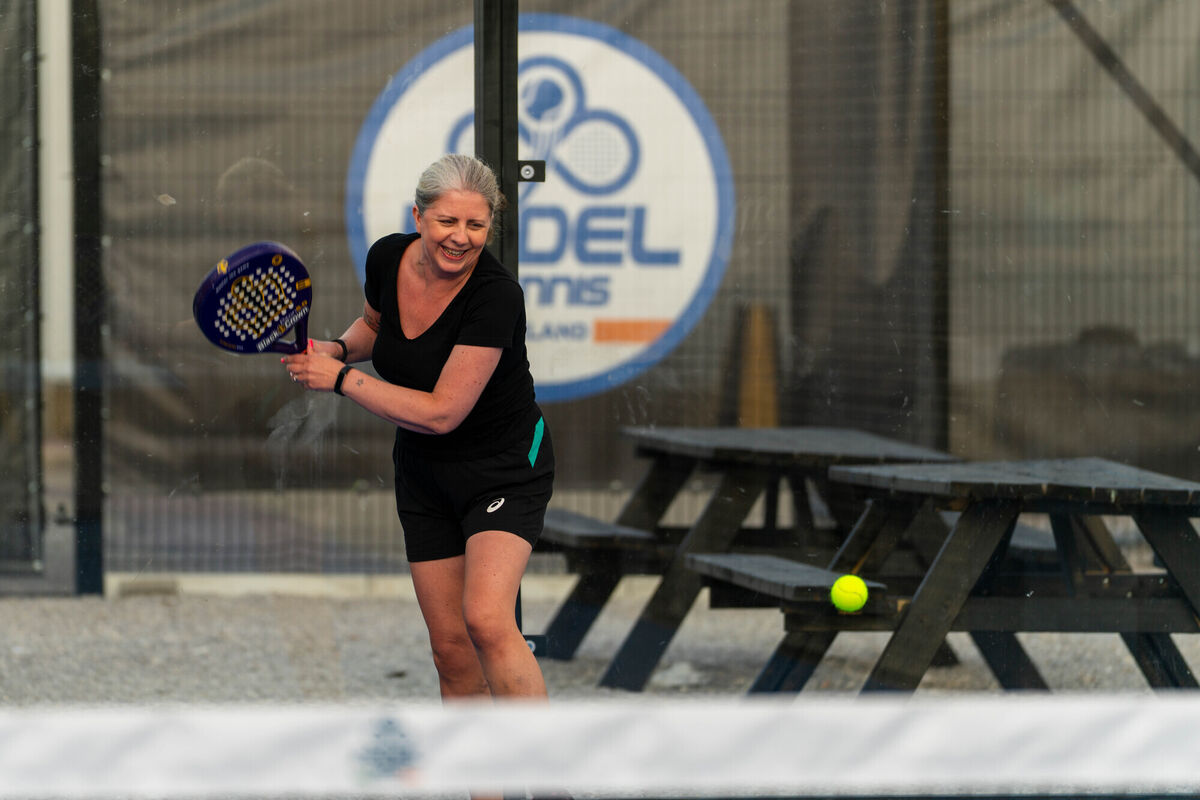
As racquet sports go, padel is arguably more accessible than tennis and badminton.
Tennis, with its larger courts and high-bouncing ball, can be strenuous, while badminton requires a high degree of flexibility and overall fitness.
Regardless, all racquet sports are great workouts, says Dirk Harm, chartered physiotherapist at Function Physiotherapy in Cork, and a keen padel player.
“Of course, you can get injured playing any racquet sport, including padel; there is no difference in that area. The intensity of the really good padel players is incredible, and I’ll see them come in with lower limb injuries, particularly the knees. Playing padel, like any racquet sport, is very beneficial physically.”
What makes padel unique among racquet sports for Harm is its social and mental benefits.
“Padel fosters a strong sense of connection and community, which is so important for mental wellness, particularly with older adults. Being part of a group or a team offers motivation, encouragement, and a sense of belonging. In my own experience, I’ve been playing padel for about 18 months now, and I’ve met at least 100 new people and created some good connections since starting to play.”
According to a 2023 report in Aspetar Sports Medicine Journal, regular padel practice improves cardiovascular health and muscle strength.
It also boosts cardiorespiratory fitness, upper body power, grip strength, speed, and agility. Furthermore, it increases BDNF, a brain health biomarker, especially in female players, supporting cognitive and mental wellbeing.
The sport attracts people from all ages and abilities: White says they see people from all walks of life and all stages of life coming to play.
“We have just under 10,000 registered players, and they range from kids all the way up to people in their 80s. The diversity among players is a real strength of the sport.”
Having played padel, it’s easy to understand why it’s become so popular. The games are quick and competitive. You can grasp the game and its rules quite quickly and enjoy lively banter while playing. In the midst of all that enjoyment, you’re getting a decent workout too.
Each session lasts an hour, an ideal amount of time to get a decent cardio hit, without overdoing it, says Harm.
“You can get hour of exercise, full-on cardio and a complete range of motion, and because you’re often chatting away and enjoying the game, you don't feel the time pass. I can only see positive benefits to playing padel.”

CONNECT WITH US TODAY



Be the first to know the latest news and updates