Workplace Wellbeing: Why compassion and time to recover are needed after an early miscarriage

Around 14,000 expectant women in Ireland lose their babies each year, but only mothers whose pregnancies end after 24 weeks are entitled to paid leave and the time to recuperate, while their partners have even fewer rights
Workplace Wellbeing: Why compassion and time to recover are needed after an early miscarriage

Mommy's trying to work, little one
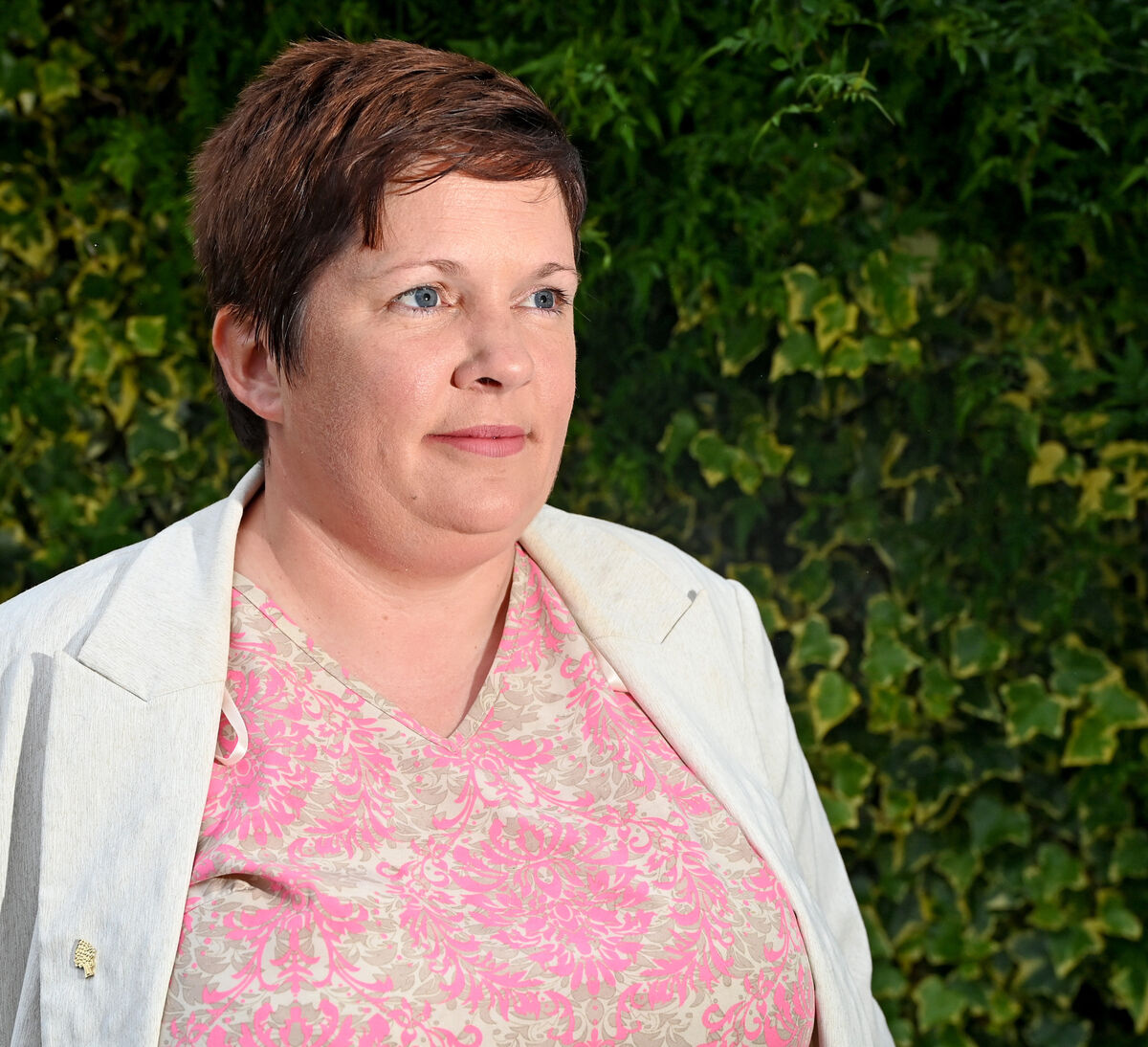
Róisín Moriarty, from Mallow, was at work when she started to miscarry her baby.

“It was 2013 and I was working as a duty manager in a cinema,” says the now 43-year-old. “I was 10 weeks pregnant with our second child and when I went to the toilet in the middle of the day, I noticed some spotting. I rang my doctor, who told me to keep an eye on it. When I finished work and the bleeding got heavier, I went to the hospital.”

Medics were unable to find a heartbeat and told her to come back the following day for tests. “Those tests showed we’d lost our baby,” she says.

Moriarty was booked in for a procedure the next day, a work day. “I called my HR manager to tell her I wouldn’t be in,” she says. “And when she asked me what was wrong, I told her. I didn’t want to deny what was happening.”

She considers herself lucky that her manager was supportive. “She told me to take the time I needed to recover, I’ve since heard stories of others who didn’t feel so supportive and felt they had to stay quiet about their miscarriages.”

Róisín Moriarty from Mallow speaks about introducing miscarriage leave at work. Picture: Eddie O'Hare

Approximately 14,000 women have a miscarriage in Ireland every year, which means that 25% of pregnancies end in loss.

Because the majority of women of reproductive age are in paid employment, Linda Hynes, a partner at the employment law specialists Lewis Silkin, argues that there is a case to be made for statutory miscarriage leave.

Currently, only women who experience pregnancy loss after 24 weeks are legally entitled to leave. Women who miscarry before then have limited options.

“Many rely on sick leave,” says Hynes. “Others take annual leave. And some employers have compassionate and bereavement leave policies, which may be extended to employees experiencing early miscarriage.”

These women’s partners have fewer leave options. Hynes explains that there are instances where they can take force majeure leave, which entitles them to time off to look after a close family member who is injured or ill. Otherwise, many have to take unpaid leave.

Employer compassion

Jennifer Duggan is the chairperson of the Miscarriage Association of Ireland (www.miscarriage.ie), a charity that offers support to those who have experienced pregnancy loss. She is unhappy with these options.

“Women who miscarry aren’t sick, which means they shouldn’t have to go on sick leave and their partners shouldn’t have to use holiday entitlements or take unpaid leave after a miscarriage,” Duggan says. “Statutory paid miscarriage leave should be legislated for by the Government.”

The Labour Party has been calling for this since 2021, when it proposed a new law that stipulated that women who had early miscarriages would be entitled to a maximum of 20 days leave.

Marian Ó Tuama, a specialist fertility counsellor, says most women need at least some time off to recover from miscarriage.

“People’s experiences vary,” Ó Tuama says. “Physically, miscarriage can range from what feels like a heavy period to something that requires medical treatment in hospital. 

"Psychologically, some people react by wanting to return to work immediately to help them get over what happened, while others might not be able to focus on work at all. 

"It’s so individual. However, if paid leave were available and funded by the Government, at least people would know they didn’t have to go to work if they were unable to. They could take time to recover and grieve.”


Marian Ó Tuama, a specialist fertility counsellor

Despite the absence of statutory miscarriage leave, Hynes says that a growing number of companies are introducing policies to look after employees who experience pregnancy loss.

“The Report on Pregnancy Loss in the Workplace, published by the Government in 2024, identifies Bank of Ireland, Lidl, Diageo, and Vodafone as examples of employers who have introduced early pregnancy loss leave,” Hynes says.

“Since 2022, Pinterest has also offered employees four weeks of paid leave for pregnancy loss through miscarriage at any point in the pregnancy. We are seeing more employers follow suit.”

Duggan welcomes this development, noting that women suffer when workplace supports are not in place. “We hear of women who are told to just get on with it and made to feel they don’t have a right to be sad. Such a response can add to their trauma and make an already difficult time so much harder.”

Ó Tuama offers advice for employers considering introducing a miscarriage policy. Her first tip is to make it flexible, because women’s experiences can differ significantly.

Next, she recommends that managers be trained. “Don’t just assume they know what’s appropriate to say,” Ó Tuama says. “Give them parameters to work in.”

Companies should also minimise the number of people who have to know the reason why a woman has taken leave. “Someone experiencing pregnancy loss doesn’t necessarily want everyone in the office to know about it,” she says. 

 Linda Hynes, a partner at the employment law specialists Lewis Silkin
Linda Hynes, a partner at the employment law specialists Lewis Silkin

“HR and their line manager need to know, but there may be no need for anyone else to be informed.”

Hynes adds that the employee’s return to work should be planned. “Have a discussion to see if the employee has any concerns and whether they require any accommodations, such as a phased return to work or flexible working hours,” she says.

This discussion could also include how the employee would like their miscarriage to be acknowledged. “Some people like their loss to be openly recognised, while others prefer to get on with things,” says Ó Tuama. “No one size fits all, and people appreciate being asked, so they get to decide for themselves.”

Because grief can hit at different stages, Ó Tuama tells employers to check in with employees in the months following a miscarriage. She also encourages them to direct employees towards counselling services, such as employee assistance programmes or external supports, like the Miscarriage Association of Ireland, Pregnancy and Infant Loss Ireland, and the Irish Fertility Counsellors Association.

Duggan reminds employers not to forget partners. “While they may not experience the physical miscarriage, they go through their own emotional distress,” she says. “They have also lost a baby and are trying to support their partner. They are likely to need leave and workplace supports, too.”

Hynes believes that early miscarriage leave is likely to be introduced in Ireland soon, citing countries such as New Zealand, Australia, and Portugal, where it is already available.

“Here in Ireland, the spring 2025 legislation programme refers to an Equality and Family Leaves Bill, which it is proposed will provide leave for pregnancy loss,” Hynes says. “So leave for pregnancy loss may be on the horizon, although it is unclear at this time what this will look like.”

Duggan would like to see statutory miscarriage leave and workplace miscarriage policies become the norm. “Such supports would show the one in four women who experience pregnancy loss that they matter, that their babies matter, and that their loss is real and recognised,” she says. 

“It would also go a long way to helping lift the stigma that still exists around pregnancy loss and would help support women, their partners, and families at one of the most difficult times of their lives.”

As for Moriarty, who has since had a second child, her miscarriage happened at a time when there was no talk of miscarriage leave or policies, but her employers showed sensitivity and compassion. 

“I went back to work after a week off and my HR manager and general manager consistently checked in with me to see how I was coping for months afterwards,” she says. “Miscarriage is never an easy experience, but with a little support, it can be made easier.”

Celebrating 25 years of health and wellbeing

More in this section

Lifestyle

Newsletter

The best food, health, entertainment and lifestyle content from the Irish Examiner, direct to your inbox.

Cookie Policy Privacy Policy Brand Safety FAQ Help Contact Us Terms and Conditions

© Examiner Echo Group Limited