Play hard: Is '90s lad culture making a comeback?
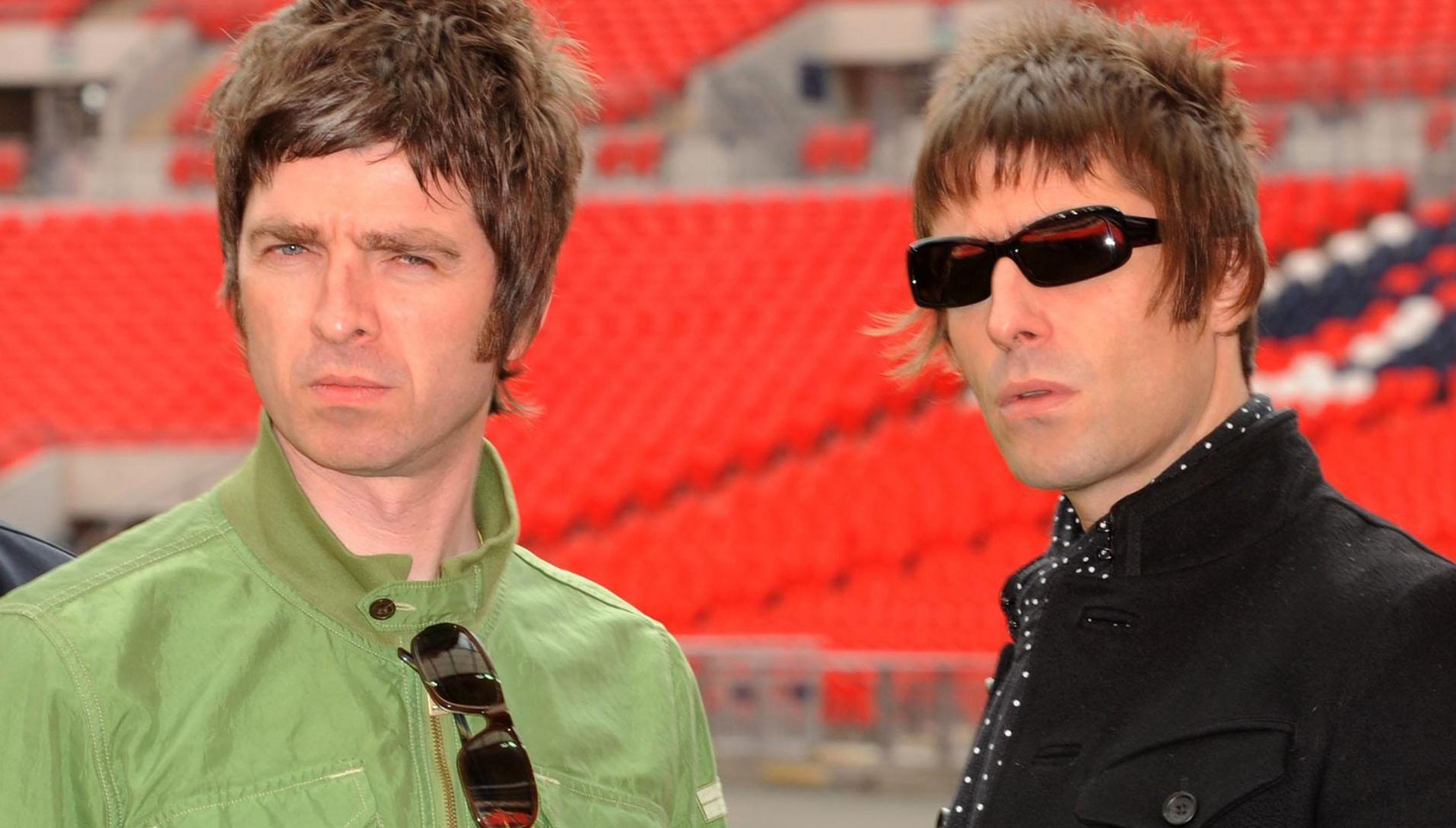
The Gallagher brothers were part of the lad ‘90s culture — work hard, play hard. As they prepare to return with a sold-out tour and the global political stage shifts to the right, are we witnessing a return to retro-male values?
Play hard: Is '90s lad culture making a comeback?

Oasis band members Noel Gallagher (left) and Liam Gallagher (right), during a photocall at Wembley Stadium.

WITH Oasis reforming to play a sold-out world tour, it prompts memories of the Gallagher brothers and their bandmates dominating the charts in the mid-90s while simultaneously trashing hospitality suites and swigging champagne in Downing Street. However, in a recent article published in the British monthly magazine Men’s Health, writer Phil Hilton argues that “the male culture that defined the ’90s is showing the signs of a resurgence” — and he’s not a fan of it.

Hilton used to work for men’s glossy title FHM in its mid-90s heyday, when it and Loaded boomed from the shelves. It was a time of peak ‘lad’, a culture closely aligned with Britpop’s rise. Everyone was indeed ‘mad for it’, he writes — even if the culture of the time, which venerated the swaggering bad boy, seemed oblivious to deeper issues.

“In the offices of FHM, when we wrote about lads, we wrote about the behaviour of famous people who drank a lot, took drugs, and broke the rules,” Hilton writes. “The antics of men such as George Best, Hunter S Thompson, and Oliver Reed fascinated us, and they joined Mexican drug lords and East End gangsters to form a cast of characters who seemed to sprint through life without a care. But, and this seems extraordinary looking back, there was virtually no discussion about the mental fitness of these men. Nowadays, everyone from rugby players to former special forces soldiers and even [former footballer and actor] Vinnie Jones talks openly about mental health. But back then, we never stopped to wonder if the ‘crazy’ displayed by the celebrities we covered was literally a
product of mental distress.”

As a teenager who occasionally flicked through the pages of both FHM and Loaded — though not to the same extent as I devoured the NME and Uncut — it did seem that the ideal existence was a life in which you dressed like Steve McQueen and drank like Richard Burton. Some of the tunes, not least on that first Oasis album, were fantastic, best summed up by Liam Gallagher’s wild-eyed roars of ‘Yeah yeah yeah’ at the end of the band’s ode to excess, ‘Columbia’. But as Miki Berenyi, guitarist and songwriter in contemporary UK band Lush, put it in her 2022 autobiography, those Britpop years were not easy for women, with the scene riddled with “constant,
relentless sexualisation”.

And now? Maybe it’s that instead of a reversion of ‘lads’ mag’ culture, we are faced with something similar but darker: the toxic ‘manosphere’. Just last month, it was reported that a new resource was available to guide schools, teachers, and parents on how to address the impact of online masculinity influencers on children and young people, particularly teenage boys. Created by Dr Darragh McCashin and Dr Catherine Baker from Dublin City University, along with Dr Fiona O’Rourke, it was put together to address the type of influence wielded by the likes of Andrew Tate, who is currently facing a string of criminal charges in Romania, including for allegedly trafficking women.

Riskier behaviours

For Finian Murray, senior health promotion and improvement (HP&I) officer with the HSE, there are concrete fears that the online manosphere and the tilt to the far right politically in many countries will negatively impact men’s health more generally, even leaving aside the effect on broader society.

“One thing we found in the last number of years with the work we have been doing in men’s health, including with the policies and action plan — [concerted campaigns aimed at farmers and construction workers, for example] — is that it is bearing fruit,” he says. “Men’s life expectancy has increased, and morbidity rates have gone down. So we are concerned that the gains we have made might be reversed through the online
influence.”

According to Murray: “How men view their masculinity is often at the very heart of how they act — if they see themselves as a hard man or a tough guy, that view will determine how they act. This is very true in the area of looking after their health. In the past, with traditional masculinity, they would say things like: ‘My father never went to a doctor, and I’m never going to a doctor’. That’s very traditional. We have made great strides in that [area], but the danger is that with the influence of the internet, men go back to that traditional form of masculinity and not take care of themselves.”

He says this can manifest in other ways, such as riskier behaviours.

As for the supposed ‘simplicity’ of online messaging, it is often not that straightforward. Speaking on RTÉ radio recently about the mental health issues young men are facing, Dr Tadhg MacIntyre, associate professor of environmental psychology at Maynooth University, said that simple online messaging can lead to unintended solutions, such as eating disorders. That message can be as straightforward as the maxim that everyone should be at the gym, developing a six-pack.

“What we’re doing is actually setting us up for people to fail,” he says. “If they see that [online messaging], there is a degree of iconography on Instagram or other social media platforms around that certain body image type, they will strive to do that, and often take many risks.”

The sense of an active shift towards more rigid forms of masculinity is all too apparent: witness Meta boss Mark Zuckerberg’s call for more “masculine energy” in the workplace. According to Dr Noel Richardson, lecturer and director of healthCORE at South Eastern Technical University, such language may highlight something else.
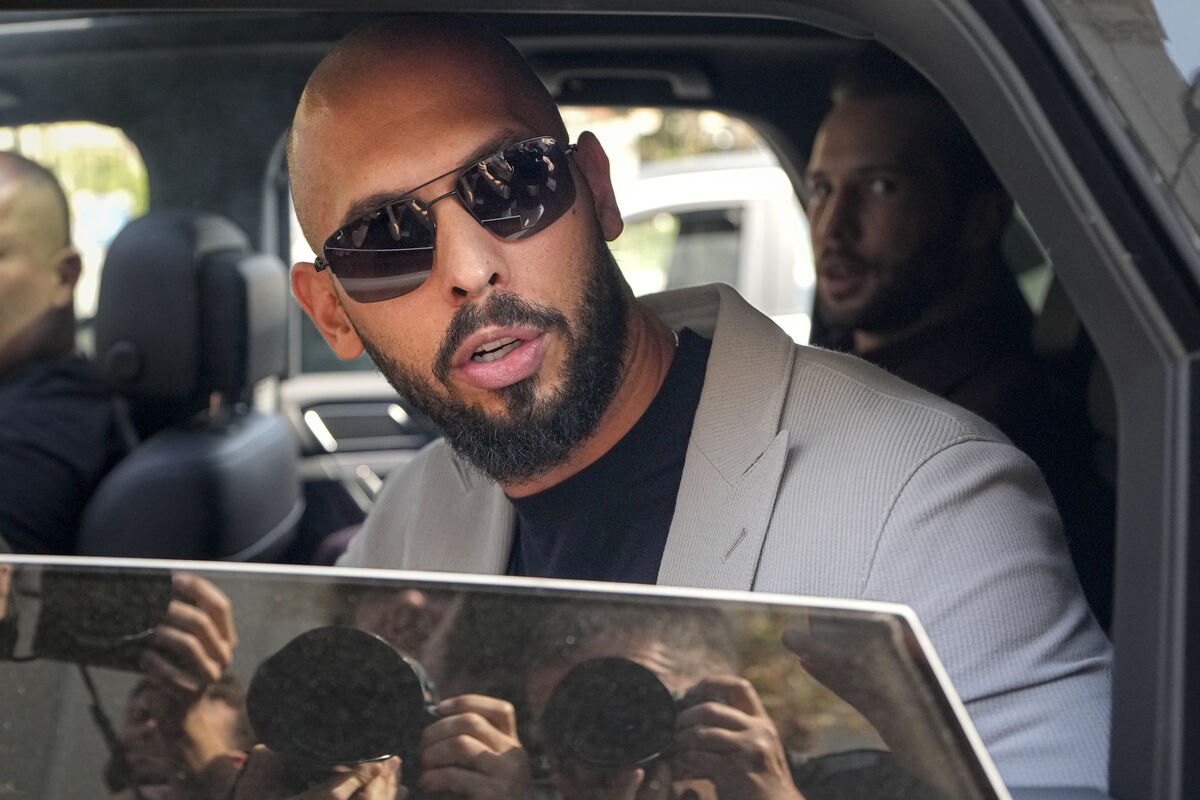
Andrew Tate sits in a car and talks to reporters surrounding his car after exiting the Court of Appeals building, after a hearing, in Bucharest, Romania, Wednesday, Sept. 4, 2024. (AP Photo/Vadim Ghirda)

“The question I would ask the likes of Mark Zuckerberg or Andrew Tate is ‘What are they so scared about?’ and what do they find so threatening about embracing what I would call healthy masculinities,” he says.

These “healthy” qualities include honesty and openness, being tuned in and self-aware emotionally, being proactive in seeking support when feeling vulnerable, respecting women and other men, and supporting efforts to attain gender equality.

“They are all worthy characteristics of ‘being a man’ in the 21st century,” he says. “The challenge to men and boys in Ireland and elsewhere is to be more vocal and proactive in championing healthy masculinities to be embraced in our everyday lives.

“This doesn’t mean abandoning or betraying what we might regard as more traditional notions of masculinity. For example, some of the strategies that we have found work well in men’s health programmes include connecting what we might call more traditional masculine ideals (autonomy, control, resilience) with being healthy.”

Richardson says these include using positive messaging to promote change without amplifying guilt or shame, encouraging other men to take ownership of their health, using peer support, and building social interaction and team spirit into men’s health programmes.

“We need more male advocates to call out the toxic Tate masculinity doctrine for what it is — extreme right-wing, divisive, domineering, controlling, misogynist, sexist, bullying, inciting hatred,” he says. 

“Can we honestly stand by and allow a minority of Tate followers to exercise such influence in this space?”

Better outcomes for men

It might sound like a ‘manly’ thing to do is throw away your smartphone and stop thinking you need people’s validation online to live your life. But as Finian Murray says: “You can’t un-invent something”, and the influence on those online is likely here to stay. And just as men’s mental health seemed to be sidelined in ’90s lads culture, so it is marginalised in the manosphere.

The recently published National Men’s Health Action Plan, which covers 2024 to 2028, is a key element in continuing to push for better health outcomes for men.

Murray points to the GAA, the IRFU, and other sports organisations as examples of promoting progressive masculinity. That includes the GAA-linked Healthy Clubs, which operate outside of the field of play and were recently involved around the country as part of the response to Storm Éowyn.

But if you’re in Croke Park for a different reason, namely to see a group of Mancunians on August 16 and 17 next, just remember: even the hellraisers grow up. The band may have been wild, but they always had a sensitive side — listen to ‘Acquiesce’ or ‘Half the World Away’ for proof. And while Noel is taking stock of his health, telling the media last year that he wanted to tackle his drinking, Liam has parked the booze and fags in recent years in favour of regularly rising at 5am and trusting in an extensive health and fitness regimen. How else could anyone expect to ‘Live Forever’?

More in this section

Lifestyle

Newsletter

The best food, health, entertainment and lifestyle content from the Irish Examiner, direct to your inbox.

Cookie Policy Privacy Policy Brand Safety FAQ Help Contact Us Terms and Conditions

© Examiner Echo Group Limited