Natural Health: What can I do to ease my heat rash?
Pic: iStock
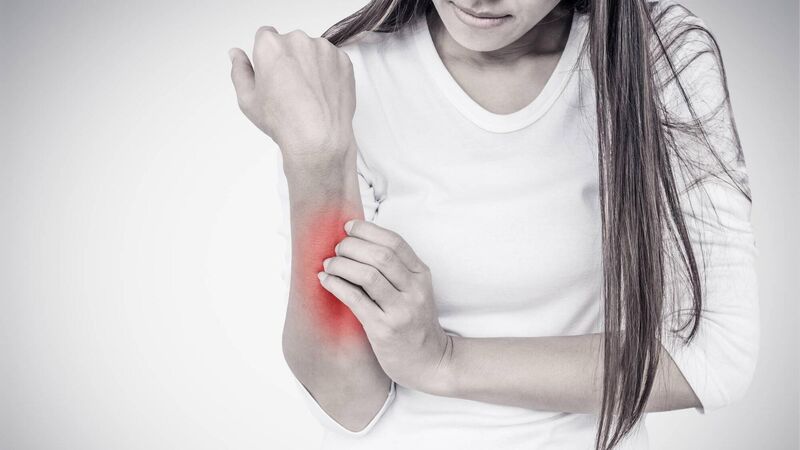
Chances are your heat rash is prickly heat, but as you say, it is likely to be further exacerbated by the hormonal changes associated with menopause. Prickly heat, also known as miliaria rubra, shows up as small, red spots that typically appear on body parts where you tend to sweat more.
Prickly heat is a type of allergic reaction related to urticaria or hives. Vitamin C has natural anti-histamine properties, so taking 1,500-3,000mg of this nutrient daily will help your body break down the histamine. Vitamin C will reduce the histamine response in your body and enable it to break histamine down more rapidly. For best results, take your vitamin C in 500mg doses throughout the day rather than all at once.
Fish oil is another supplement worth considering. It contains vitamins A and D, nutrients shown to be deficient in prickly heat sufferers. You should take 3,000mg of fish oil daily in the summer. For the remainder of the year, take just 1,000mg daily.
For instant relief, try applying Balmonds Skin Salvation Intensive Balm or the lighter Skin Salvation Daily Moisturising Cream, both available from Boots (see www.balmonds.co.uk for more information).
You may want to look into the Q&A below regarding cooling herbs and foods and balancing excess cold or heat using TCM and Ayurveda.
Some herbs are instantly cooling when applied to the skin in the form of an infusion or a poultice—especially members of the mint family (peppermint, spearmint, catnip, etc.), aloe vera, and lavender. These herbs may provide cooling and soothing benefits when taken internally, along with other calming herbs such as chamomile and calendula.
I recommend any of the above herbs for an iced tea—you can add additional ones for flavour. To support the cooling properties, hibiscus, liquorice root, and lemon balm are great choices. Adding a slice or two of cucumber, citrus fruit, or watermelon to your drink will also help reduce internal heat.
In TCM (Traditional Chinese Medicine) and Ayurveda (the traditional Indian system of medicine), herbs, spices, and foods are considered to have cooling or warming energies or properties. The terms 'hot' or 'cold' typically refer to the imbalance of specific conditions and systems within the body.
Conditions that fall under the heat category include constipation, dry skin, inflammation, redness, lack of moisture in mucous membranes, flushing, restlessness or hyperactivity, high blood pressure, and fever. As a result, the herbs prescribed, such as dandelion, peony root, and skullcap, usually help clear heat from the body rather than being ‘cooling’ in the sense of a mint-like herb.
Cold conditions include sluggish metabolism, fatigue, diarrhoea, low blood pressure, excessive mucous, and cold extremities. These issues are usually addressed using 'hot' herbs such as ginger, cinnamon, ginseng, fennel, peppercorns, and cloves.
Ayurvedic medicine views the cooling and heating system slightly differently, although there is some crossover. Ayurveda has three doshas: vata, pitta, and kapha. Everyone has a combination of these elemental energies, usually one that is the most dominant or imbalanced.
In basic terms, vata is associated with air and ether, pitta with fire and water, and kapha with water and earth. The balance changes not only with diet and herbs but also climate, emotions, physical activity, and environmental factors. Ayurvedic practitioners recommend favouring food, herbs, and lifestyle choices that support qualities that are aggravated or out of balance.
- If you have a question for Megan Sheppard, please email it to feelgood@examiner.ie
- NOTE: The information contained in this column is not a substitute for medical advice. Always consult a doctor.
Celebrating 25 years of health and wellbeing