Standing up to stigma for International Albinism Awareness Day
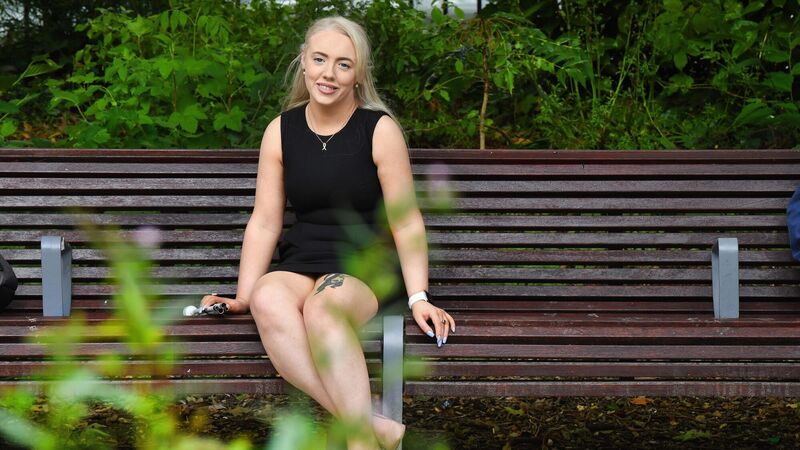
One in 10,000 people in Ireland lives with albinism, which often affects their eyesight. Those affected by the condition can experience discrimination from an early age
Standing up to stigma for International Albinism Awareness Day

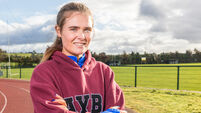
Jessica NĂ­ MhaolĂĄin, originally from Cork who was born with the vision impairment, occulocutaneous albinism and also has nystagmus, an involuntary movement of the eyes which means she struggles to focus. Photograph Moya Nolan


Jessica NĂ­ Mhaolain has sometimes resented her albinism.

“As a teenager, I went through a phase of dying my hair any colour but blonde, because I tied it to the albinism,” she says. “I still have days when I wonder what it would be like to see properly.”

Albinism is a genetic condition that affects the body’s ability to produce melanin, and therefore colour in the hair, skin, and eyes. It also affects the development of the eyes.

People with albinism usually have poor sight, are sensitive to light, and experience involuntary movement in the eyes, called nystagmus, which can be tiring.

There is a 25% chance that a child will be born with albinism if both parents carry the gene that causes albinism, and one in 10,000 people in Ireland have the condition.

“I was the one in my family born with the condition,” says Ní Mhaolain.

“There are lots of different subtypes... I’ve been registered blind since I was a child.

“I walk with a white stick and I can only really read the top letter in the doctor’s eye chart.”

School was a “huge struggle”, says Ní Mhaolain, and though “everyone did their best to try and treat” her “the same as everyone else”, she only started to excel academically when she was assigned a special needs assistant (SNA) in fourth class.

There were also the inevitable social challenges.

The bullying as a child “was tough”, says Ní Mhaolain. “There wasn’t so much physical stuff. There was a lot of isolation. I don’t blame the kids. They don’t know any different, but the parents see you as a different child. There are a few things that still stick with me.”

She recalls the difficulties in getting funding for a laptop. Having been refused, the official dealing with her case told her parents, “If people like her don’t learn how to read and write, it’s not the end of the world.”

Luckily, when NĂ­ Mhaolain joined University College Cork, education and scribe support were in place from day one.

Since graduating in 2015, with a BSc in public health and epidemiology and an MBS in government, she has gone on to work for a TD in the Oireachtas.

“It shocks me to think of that official now,” says Ní Mhaolain, “but things have changed for the better since then.”

 Jessica Ní Mhaoláin: "I’ve been registered blind since I was a child." Photograph Moya Nolan
Jessica Ní Mhaoláin: "I’ve been registered blind since I was a child." Photograph Moya Nolan

Support group

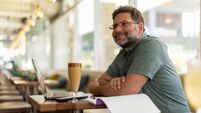
Sean Wensley’s children, Willow, four, and Enda, one, both have albinism. 

Though Willow was born with what Sean describes as an “amazing shock of blonde hair that got a lot of attention on the maternity ward”, she wasn’t diagnosed with albinism until she had difficulty with her sight and at creche “had a tendency to walk through things rather than around them”.

“My wife and I had to start learning about albinism,” recalls the Bangor resident. “We were put in touch with a support group, and it’s good and practical.

“There are online forums and get-togethers with other families in Northern Ireland. We don’t attend everything, but appreciate being able to dip in and out. We have a qualified teacher for the visually impaired (QTVI), who comes out to the house regularly and plays with Willow, and now that she has started pre-school, she has a classroom assistant, too. The school has made lots of reasonable modifications. So there’s a lot of help and Willow is thriving.”

When Enda was born and the diagnosis was made, they were better prepared to take on the challenges without feeling overwhelmed.

It also helps that Wensley and his wife, Jenny, are both vets and thus well-practised in the need for age-sensitive communication.

“The main thing for us is when to talk to them about it appropriately,” Wensley says. “As far as we know, Willow is not aware that she has albinism and she wouldn’t recognise the word or link it to herself. We do talk about difference quite a lot.

“If she asks us ‘Why has that lady got a wheelchair?’ or ‘Why has that man got a walking stick?’, we’d use that as an opportunity to talk about difference, the value and benefits of difference, and how people cope with being different.”

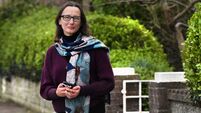
 Dr Mark Wheeler, of Edenpark GP surgery in Raheny who works with people who have albinism in Malawi. The GP, along with his wife Carol O'Dea set up a skin cancer prevention programme back in 2016. They were also aided by local campaigners and clinicians. Photograph Moya Nolan
Dr Mark Wheeler, of Edenpark GP surgery in Raheny who works with people who have albinism in Malawi. The GP, along with his wife Carol O'Dea set up a skin cancer prevention programme back in 2016. They were also aided by local campaigners and clinicians. Photograph Moya Nolan

Stigma and superstition

On average, one in 18,000 people across the globe has albinism. In East Africa, particularly in Malawi and Tanzania, the condition’s incidence is particularly high, with approximately one in 1,000 people having it.

“We don’t quite understand why it hasn’t become rarer,” says Dr Mark Wheeler, a Dublin-based GP who works in Africa. “But I think that people still tend to marry within communities and so that may have concentrated the gene in that location.”

In 2013, Wheeler and his wife, Carol O’Dea, took a sabbatical to Malawi, where they worked at the Billy Riordan Clinic in the village of Cape Maclear.

“There were eight people with albinism,” Wheeler recalls.

“You’d see them wandering around with severe sunburn, cracked lips, and problems with their eyes. I have a big interest in dermatology, so I invited them to the clinic for an examination and I was shocked. The degree of sun damage was awful and two of them had skin cancer.”

As they spent more time in the village, they discovered that there was no national programme and that the country, with a population of approximately 17m, had just one dermatologist.

When they returned home, the couple contacted the UK-based charity Standing Voice to see if there was an opportunity to work together to help people living with albinism in Malawi.

Much of the charity’s focus at the time was in Tanzania. With Standing Voice’s knowledge and experience and the couple’s determination, the charity started to bring their programme to towns and villages across Malawi.

They now visit twice a year to deliver consultations, training, and education.

Apart from the medical difficulties, people living with albinism in Malawi have to contend with stigma and superstition, which often leads to mutilation, murder, and the desecration of burial sites.

“They are constantly in fear of being attacked,” says O’Dea.

“The last time we visited, we attended a clinic and a young girl came into us: Her whole arm had been chopped off.”

The culture of taking the limbs and body parts of people with albinism is rooted in the belief that it can bring luck to those who know how to use them in various spells.

“The perpetrators are usually poor people who are paid, but above them are people of power,” says Wheeler.

“About three years ago, there was a conviction for a murder. Unbelievably, there was a priest involved. These ancient beliefs are still very pervasive. Fundamentally, education is very important, but it is very difficult to change.”

“I always say I’m quite lucky to have been born in Ireland,” says Jessica Ní Mhaolain.

“We’re in a much better position than people with albinism in other parts of the world.

“Twenty or 30 years ago, it was terrible to be born with sight loss here, but things have come a long way. I work full-time. I’m paying my rent, I go out with friends, go on holidays, go on solo breaks. I’m living a fully independent life.”

  • International Albinism Awareness Day is on Thursday, June 13
  • June 18, 2024: This article was edited to remove a quote that referred to many people with albinism having pink or red eyes. This is incorrect. The eyes of people with albinism are usually purple or blue but can appear red when light shines on them due to lack of pigment in the Iris (coloured part of the eye) which makes the blood vessels more visible.

x

More in this section

Lifestyle

Newsletter

The best food, health, entertainment and lifestyle content from the Irish Examiner, direct to your inbox.

Cookie Policy Privacy Policy Brand Safety FAQ Help Contact Us Terms and Conditions

© Examiner Echo Group Limited