Funny side up: how female Irish comedians laugh at life

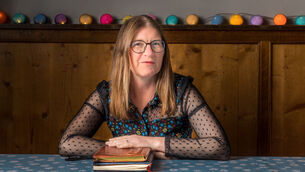
L-R: Alison Spittle, Sinéad Culbert, Julie Jay, Sinéad Quinlan

The spotlight is on Irish female comedians. They are making fun of the world around us — including the weather — and selling out national and international venues in the process. Here, four of Ireland’s leading funny women talk about the value of laughter and how it helps them navigate life’s ups and downs.
For comedian Alison Spittle, being able to make people laugh has been a valuable tool in her psychological arsenal. It started when she was a kid and her family moved around a lot. “I was always the new girl at school and quickly learned I could make friends easily by being funny,” she says.
When she first tried standup at age 20, she experienced it as a revelation. “I didn’t feel as if I had any power in most aspects of my life, but being on stage gave me a sense of power,” she says. “People might heckle me, but I could come right back at them.”
Comedy also enabled her to explore the darker side of her life. “My last show was about a man who sexually harassed me,” she says. “I was never going to get justice for what he did, but I could turn him into a pathetic figure by laughing at him and getting others to laugh too.”
Her latest show, Soup, sees Spittle digging deeper into that notion of laughter as medicine. “I’ve done a lot of standup about stuff that traumatised me and thought it was a good form of therapy,” she says.

“But sometimes jokes aren’t enough, and you need professional help. In Soup, I look at the complex post-traumatic stress disorder I have as a result of a man breaking into my house one night, how I’ve dealt with trauma through standup, and the effect the cost-of-living crisis is having on mental health. It sounds heavy, but it is funny.”
Spittle still quakes at the thought of her worst-ever gig. “There were about eight people in the audience and instead of getting a laugh when I uttered my first joke, all I heard was someone groan. I ran through my entire one-hour set in 20 minutes and then ran off stage crying.”
It got worse. The owner told her he had paid for an hour, so she had to perform for an hour. Also, he informed her that her mother was in the audience. “She’d come to surprise me,” says Spittle. “Just think of it: The most embarrassing situation of your life and, to top it all off, your mammy is watching.”
Despite such moments, Spittle relishes the high-wire stress of comedy. “I’ll enjoy a stress-free life when I retire,” she says. “In the meantime, when I need to relax, I watch videos of sloths on YouTube. Lazy little animals really do it for me.”

Leave your worries for a moment
Sinéad Quinlan has always embraced new experiences. “I’m a big believer in trying things so that I’ll have great stories to tell the other people in the nursing home when I’m old,” she says.
That attitude led to her entering the Stand Up and Be Funny competition on the Ray D’Arcy Show in 2020. “I must have been having a quarter-life crisis as I only had two gigs under my belt at that stage,” she says. “But I was planning on moving to Australia, so I knew I’d literally be able to leave the country if it went terribly.”
Quinlan won and went on to write the Seriously Sinéad? series for the RTÉ Player. From the Irish oral to modern dating in all its sexting and ghosting glory, the series saw her pointing out the surreal oddities of everyday life for young people in Ireland.
She finds comfort in laughing at such things. “Life is hard even at the best of times,” she says. “But with comedy, everyone agrees to leave their worries at the door and sits down to laugh at nonsensical things. You pick up your worries again when you leave, but at least you’ve had a break in the meantime.”
This is not to say that Quinlan’s shows are always a success. “There are times when the comedy clubs are full of tourists who don’t speak much English, not to mind understanding the Cork accent,” she says. “Other times, hens and stags can be pure doses.”
On these occasions, she has a simple technique for looking after herself. “I’m easily pleased,” she says. “A nice coffee and a toasted cheese sandwich and I’m delighted with life again.”

Comedy as a coping strategy
Sinéad Culbert is one half of the DirtBirds comedy duo, along with fellow comedian Sue Collins. If you have yet to see their sketches lampooning the lives of modern women, check out the one about the frustration that comes from having to decide what’s for dinner day after relentless day. That video and others like it struck a nerve with thousands of housebound women during lockdown.
“We still get messages from people telling us how we helped them get through covid,” says Culbert. “Comedy thrives during dark times like the pandemic as it distracts us from the daily struggle.”
It has always done so for her. “Comedy has been my coping strategy for as long as I can remember,” she says. “Something goes wrong, and I try to find a way to see the funny side of it.”
This approach to life led to the formation of DirtBirds in the first place. Culbert and Collins both have solo careers as comedians and came across each other on the comedy circuit.
“We realised we shared a sense of humour and decided to write a sitcom together,” says Culbert. “We spent three years developing one before it suddenly got shelved. We were devastated.”
That was 2016 and rather than letting that material go unappreciated, they started making videos and posting them online, slowly building a fanbase.
“Then lockdown struck and that hit us hard,” says Culbert. “We thought there would never again be live comedy performances and that our careers were over.”
True to form, they tried to see the funny side again and posted more videos riffing on the lives of women and the stresses they are under.
“Women these days are expected to lead Insta-perfect lives,” says Culbert. “Perfect bodies, marriages, parenting — our comedy is the antithesis of that.”
One of their most popular sketches involves Culbert attempting to take an online yoga class. “The kids bother you mid-stretch. The dog licks your face. The phone rings. Far from Insta-perfect, it’s closer to the flawed reality most of us have to deal with,” she says.
DirtBirds’s audience may relate to such stories but there have been times when Culbert has struggled to connect with a crowd. “I recently volunteered to be a secret reader for my son’s class, thinking that picking a book and bringing it in to read to the class would be a great parenting move,” she says. “But no. My son was mortified to see me and, to make matters worse, I’d picked a book everyone had already read. That class of 10-year-olds was my toughest audience.”
She laughs about it now. “For me, comedy comes from situations that are traumatic in some way,” she says. “At least I got a funny story out of it.”

High highs and low lows
Julie Jay tried standup comedy for the first time at 32. Like Spittle, she became instantly addicted to the thrill of the experience. “I’d never enjoyed anything more,” she says. “There’s a real sense of validation and adrenaline rush that comes from making a room full of strangers laugh.”
She has never been afraid to draw on challenging experiences from her life. “I think there’s a bit of darkness in all the best comedy,” she says. “There’s something cathartic about looking at the most serious and darkest aspects of life and making people laugh at them.”
For example, Jay finds audiences laugh at her jokes about her mental health. “But they’re not laughing at me,” she says. “The laughter we share is empowering and reassuring. When you name something and people laugh, it’s because they relate. They see themselves in you and you feel connected.”
But there are times Jay finds her work hard. “The highs are very high and the lows very low,” she says. “It’s an industry of emotional extremes and you have to be robust to deal with it.”
During the low times, she tries to maintain a sense of perspective. “I remind myself that it’s simply a moment in time that will pass and that tomorrow will probably be better,” she says. “There are days when nothing goes your way and other days when everything falls into place. Both are equally transient, so I try not to take them personally.”
Jay also makes sure to relish the highs. “In comedy, we’re all solo artists looking after ourselves, which means that even though you have many friends, it can be lonely,” she says. “But there are upsides. When you receive accolades, they are all yours and nobody else’s. You feel you’re stepping into your own power.”
That’s exactly what she thinks female comedians are doing in Ireland at the moment.
“For so long, there were so few comedians that it was hard for young women to even contemplate a career in comedy,” she says. “But now there are so many ambitious women telling it like it is and absolutely killing it.”
CONNECT WITH US TODAY
Be the first to know the latest news and updates