Oat, almond and more: How do milk alternatives measure up?
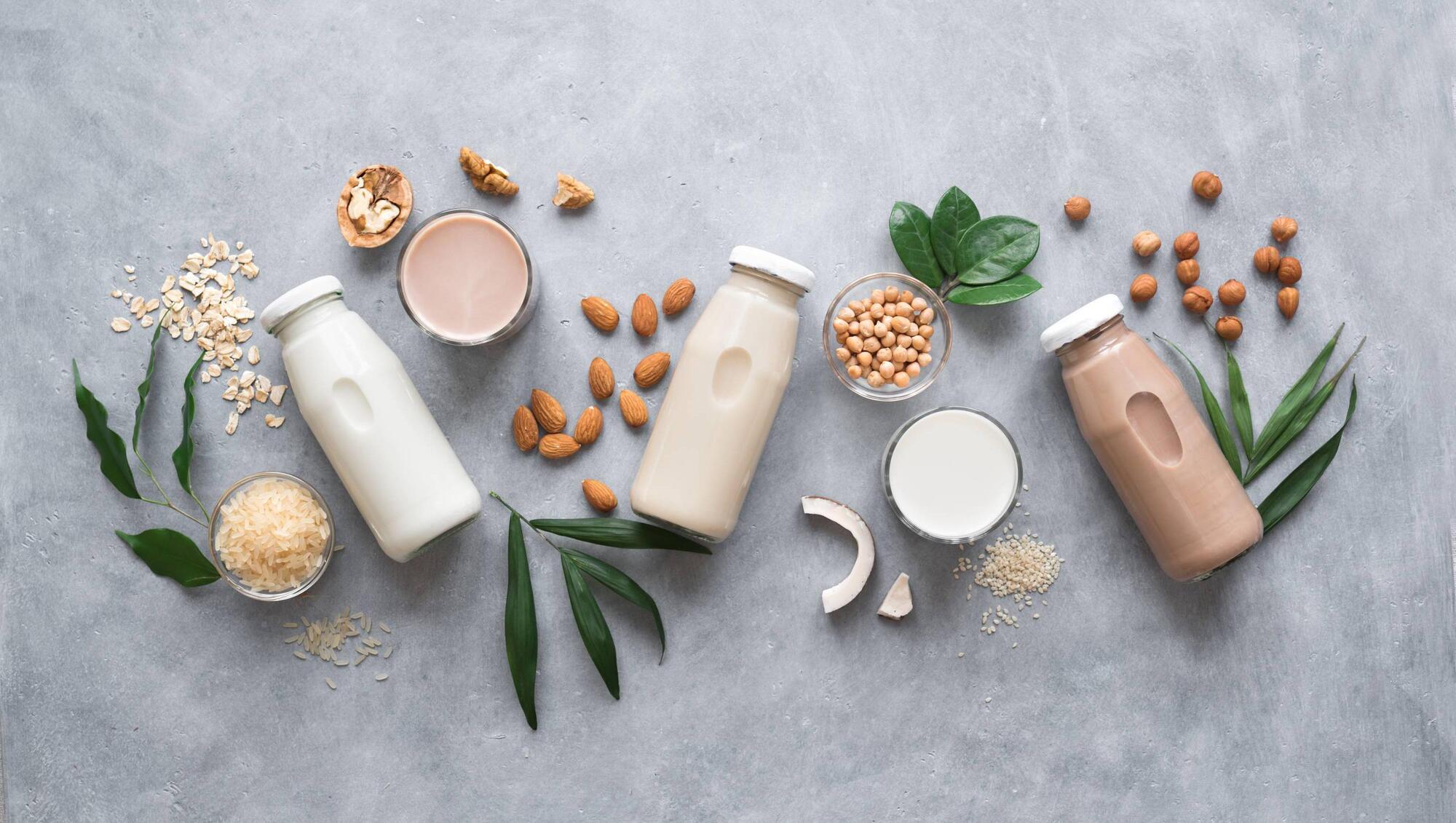
Pic: iStock
Do you take milk with your coffee?
There used to be two possible answers to this question: a simple 'yes' or 'no'.
But options are more varied these days.
You can add plant-based alternatives made from oats, almonds, soya — or even potatoes — to your cup of joe.
Walk down the aisles of your local supermarket and you’ll find even more choice.
Alongside the ones we’ve already mentioned, there are others made from coconuts, hazelnuts, cashews, rice, flaxseed, and hemp.
While sales of dairy milk remain high, with the National Milk Agency reporting that €595million was spent on milk and milk products in 2022, sales of milk alternatives are booming.
According to market data provider, Statista, the Irish milk alternative market was worth approximately €33 million in 2022 — and this is expected to grow by 14.8% annually between now and 2028.
Why is this happening? It’s not because the alternatives are cheaper. Plant-based drinks cost €2.30 or more while a litre of dairy is only €1.50.

Kathryn Stewart, a dietitian at the Dublin Nutrition Centre, suggests there are several factors at play: “I think it’s a combination of increased interest in veganism and environmentalism."
“There’s also such a variety of plant-based drinks now, so popularity may have risen to do increased choice. However, from my perspective as a dietitian, the majority of people I see opting for plant-based drinks are doing so because of possible dairy intolerance or because they don’t like the taste of milk.”
Research commissioned by the oat drink brand Oatly found that one-third of Irish shoppers are buying more plant-based drinks than they were three years ago and their top reason for doing so is environmental.
A quarter also said they choose plant-based products as a way of cutting back on dairy and improving their health.
This tallies with a 2022 report by safefood, the all-island body promoting food safety and nutrition. It too found that one-third of Irish people consumed plant-based dairy alternatives. They were especially popular with young people, with 44% of 15 to 24-year-olds consuming them regularly.
As for their motivation for doing so, 20% thought plant-based was healthier than dairy. 18% wanted a change. 15% preferred the taste. 14% had a dairy intolerance. And 51% believed it to be better for the environment.
“We commissioned the report to understand what drove people to choose plant-based over dairy and what we found was lots of mismatched knowledge and reasons,” says Dr Aileen McGloin, director of nutrition at safefood.
“We realise that some people avoid milk because of allergy or intolerance or due to ethics or other believes. We’d like for them to be fully aware of what they are doing and what they should be looking for in milk alternatives.”
GP Sean Owens is a member of Plant-Based Doctors Ireland and Irish Doctors for the Environment.
He thinks consumers are justified in being concerned about the environmental impact of dairy farming: “When you factor in land, water and nitrogen use as well as the carbon and antibiotic footprint of dairy, its true cost is far higher than what you see displayed in the supermarket."
Scientific studies prove it. A 2018 University of Oxford study found that producing one glass of cow’s milk generated three times more greenhouse gas emissions than plant-based alternatives and required nine times more land.
Owens argues that adults don’t need to drink milk, pointing to countries such as Canada and Belgium which have excluded dairy as a daily recommendation as nutrients can be found elsewhere.
“Milk in tea, coffee, and cereal are all social constructs pushed by market forces,” he says. “It’s cultural to consume dairy in western countries but spend time in Asia and you’ll soon see it’s not necessary.”
However, there’s no denying that dairy has been a nutritional cornerstone of the Irish diet for generations. Our current healthy eating guidelines recommend three servings a day for adults and five for children and teenagers.
There’s a sound nutritional basis for these guidelines. “Dairy milk contains high-quality protein complete with all essential amino acids and is a good source of highly bioavailable calcium, vitamin A, B vitamins, zinc and iodine,” says Caroline O’Connor, a registered dietitian specialising in nutrition for babies and children.
“These nutrients are vital,” says McGloin. “Calcium helps maintain strong teeth and bones, proteins are the building blocks of muscle development and maintenance, and amino acids are the foundations of many functions within the body.” Most plant-based drinks aren’t rich in these nutrients.
“Cow’s milk offers more from a nutritional perspective,” says Stewart. “If people like the taste and don’t have allergies or intolerances, I don’t see why they should switch.”
Cow’s milk contains up to 3.5g of protein, 120mg of calcium and 30ug of iodine per 100ml. Soy is the only alternative that comes close in terms of protein content, with 3.4g. Almond only has 0.6g and oat 0.3g.
There are virtually no micronutrients in plant-based drinks. “They must be added during manufacture,” says Stewart. “All plant-based drinks are fortified with 120mg of calcium unless they are organic. Customers choosing organic should be aware of this. And those who opt for fortified should shake the carton before use to ensure that calcium is evenly distributed and doesn’t just form sediment at the bottom of the carton.”
Fortification levels of other macronutrients vary. “Most brands fortify with calcium, vitamin D and B12 but very few add iodine and riboflavin,” says O’Connor.
Safefood drew some of its general conclusions from its report on plant-based drinks. “Most are enriched with calcium to the same level as dairy but apart from soy, they contain about a third of dairy’s protein content,” says McGloin.
“Many also contain added sugars so it’s important to choose unsweetened options where possible. They are not nutritionally equivalent to cow’s milk.” This is where marketing plant-based drinks becomes problematic. It’s also why the EU banned plant-based alternatives from calling themselves milk.
“These drinks are marketed as a substitute for animal milks and people assume they are equivalent,” says O’Connor. “But they are not a straight swap.”
This has particular significance for children. “Children aren’t mini-adults,” says O’Connor. “They have unique nutritional needs and for many, milk remains an important and convenient food to help meet their energy, protein and micronutrient requirements."
The HSE currently recommends unsweetened fortified soya milk for children who are allergic to cow’s milk, and I’d also recommend this option to those wishing to follow a plant-based diet.” So, the next time your barista asks what milk you’d like in your coffee, consider your answer carefully.
“Plant-based drinks are a tool, albeit an ultra-processed tool, that can help us tackle climate change,” says Owens. “They allow people to continue adding a milk-like product to their coffee while lowering their environmental footprint.” Weigh up the health benefits. “For plant-based to be a good alternative to cow’s milk, make sure it’s a good source of protein, unsweetened and fortified,” says McGloin.
And for all the talk of the importance of plant-based diets, remember that it doesn’t have to be an all-or-nothing approach. “There are benefits to eating more plant-based foods, but this doesn’t mean we have to cut things out or become vegan,” says O’Connor. “We can simply eat more plant-based foods while still drinking cow’s milk, getting the best of both.”
We may not need to worry about such dilemmas in a few years’ time, according to Owens. “Scientists are developing cellular technology to produce dairy milk without the need for any cows,” he says. “When that happens, there will be no environmental or ethical questions to answer when it comes to drinking milk.”
: The OG when it comes to the answer of what you’d like to add to your tea, coffee, or cereal. 100ml of cow’s milk contains up to 3.5g of protein, 120mg of calcium, and 30ug of iodine.
: one of the most common non-dairy choices, it packs a protein punch with 3.3g of protein per 100ml. Most brands fortify with other micronutrients such as calcium.
: popular for its mild nutty flavour, 100ml only contains 0.6g of protein and its calcium content is negligible unless it’s been fortified.
: this has a pleasant mildly sweet flavour, but it has little to recommend it nutritionally. 100ml contains a mere 0.1g of protein and little to no vitamins or minerals unless they have been added.
: this isn’t the thick creamy coconut milk that comes in a tin. That’s high in fat, low in liquid and great for sauces. This coconut milk comes in a carton, and it’s diluted with water to make it thin and drinkable. Nutritionally, it contains 0.2g of protein. Calcium and vitamins A, B12, and D are usually added.
: one of the most popular options for adding to coffee, 100ml of oat drink is minimally nutritious, with 1g of protein and no calcium. Because it’s derived from a cereal, it’s not suitable for anyone with a sensitivity to gluten.
: this has a rich and creamy taste but it’s low in protein, with only 0.5g per 100ml. However, most brands are fortified with vitamins D, E, and B12 along with calcium and riboflavin.
: the newest milk on the block, it contains 1.3g of protein per 100ml and comes fortified with calcium, vitamins D and B12, riboflavin, and folic acid.
: all plant-based alternatives, except for soya, are lower in protein than cow’s milk. They tend to have fewer calories, less fat, and more water content. They are inferior on a micronutrient level too but increasingly; manufacturers are fortifying them with vitamins and minerals.


CONNECT WITH US TODAY



Be the first to know the latest news and updates