Call the doctor: Making the difference between life and death 
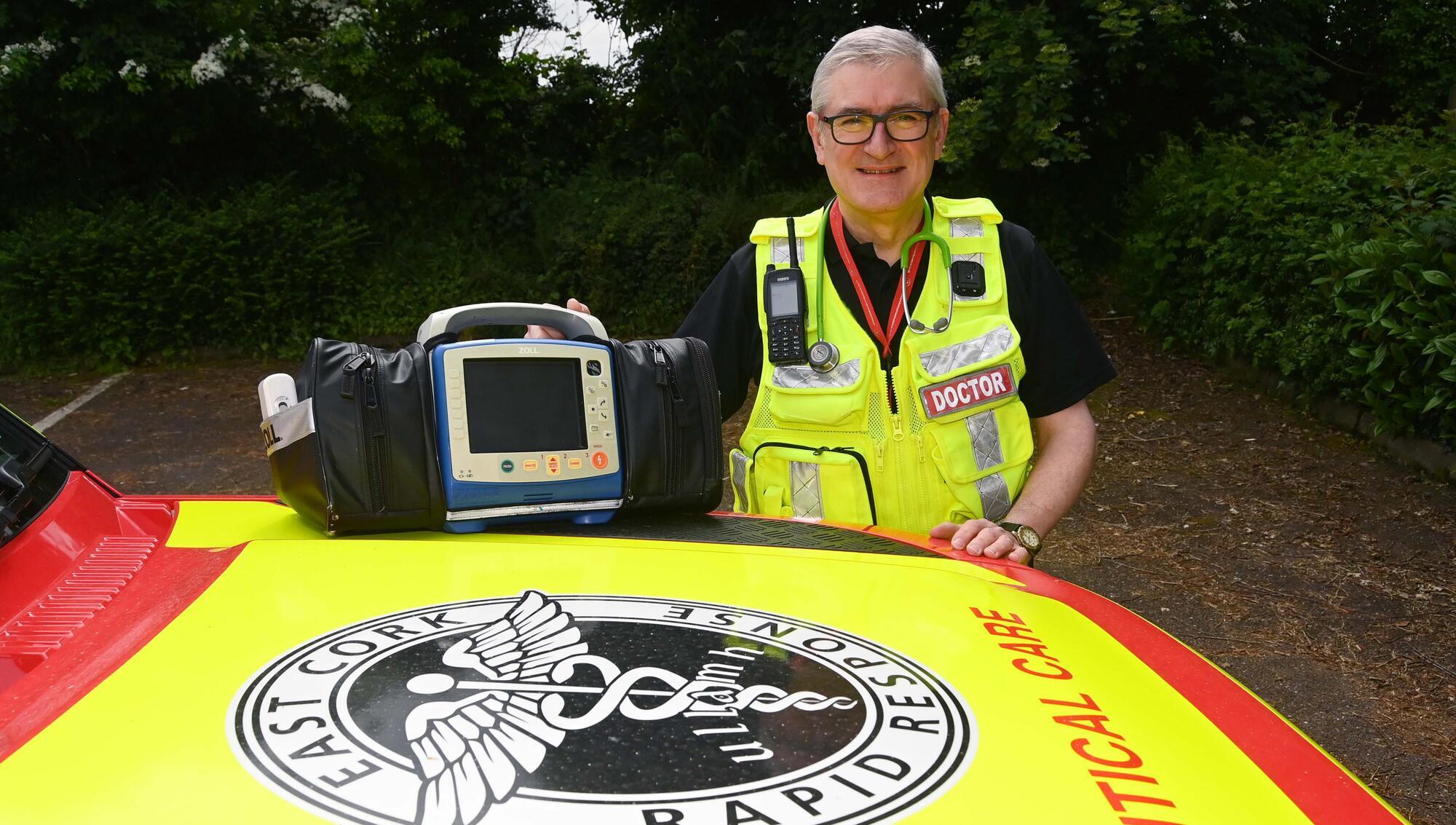
Dr Hugh Doran is often the first medic at the scene of an accident in east Cork, offering critical care ahead of hospital admission.  It's a voluntary role, and he's on call 24 hours a day 
Dr. Hugh Doran, Carrigtwohill and East Cork Rapid Response, at the critical care response vehicle. Picture Denis Minihane.
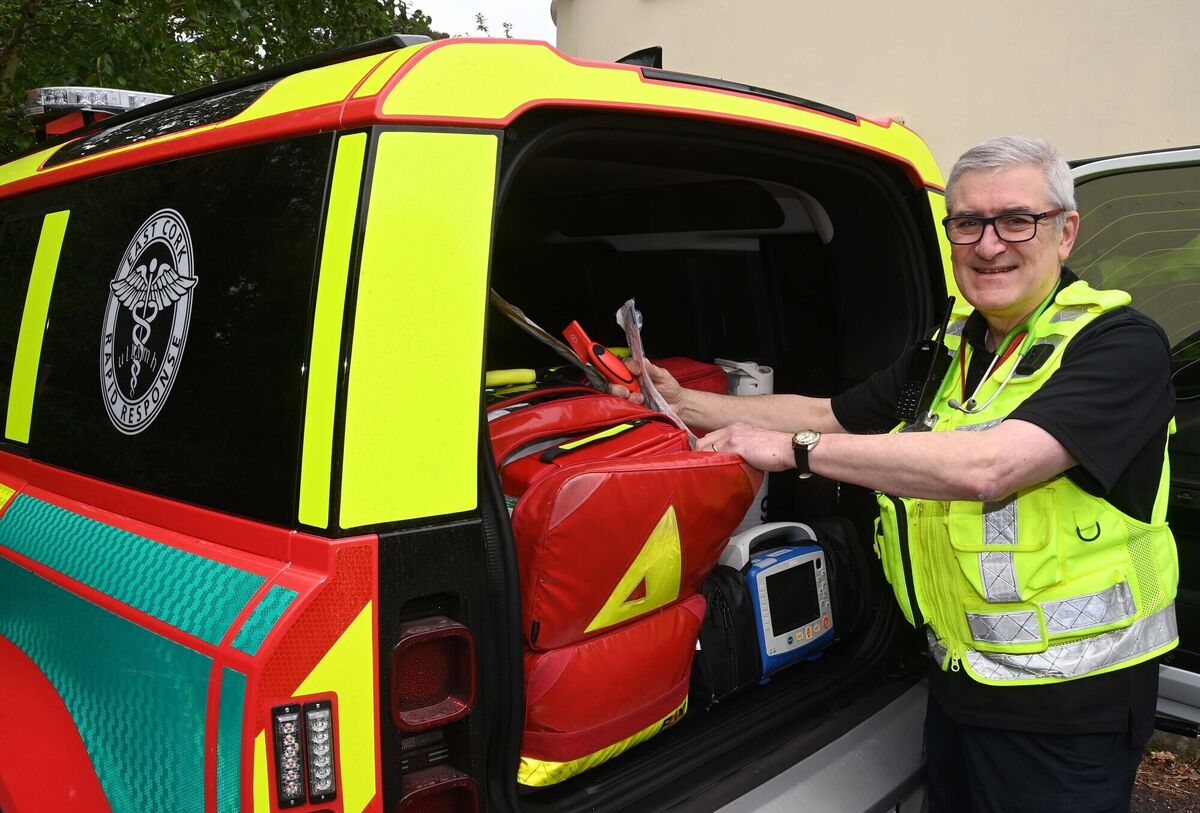
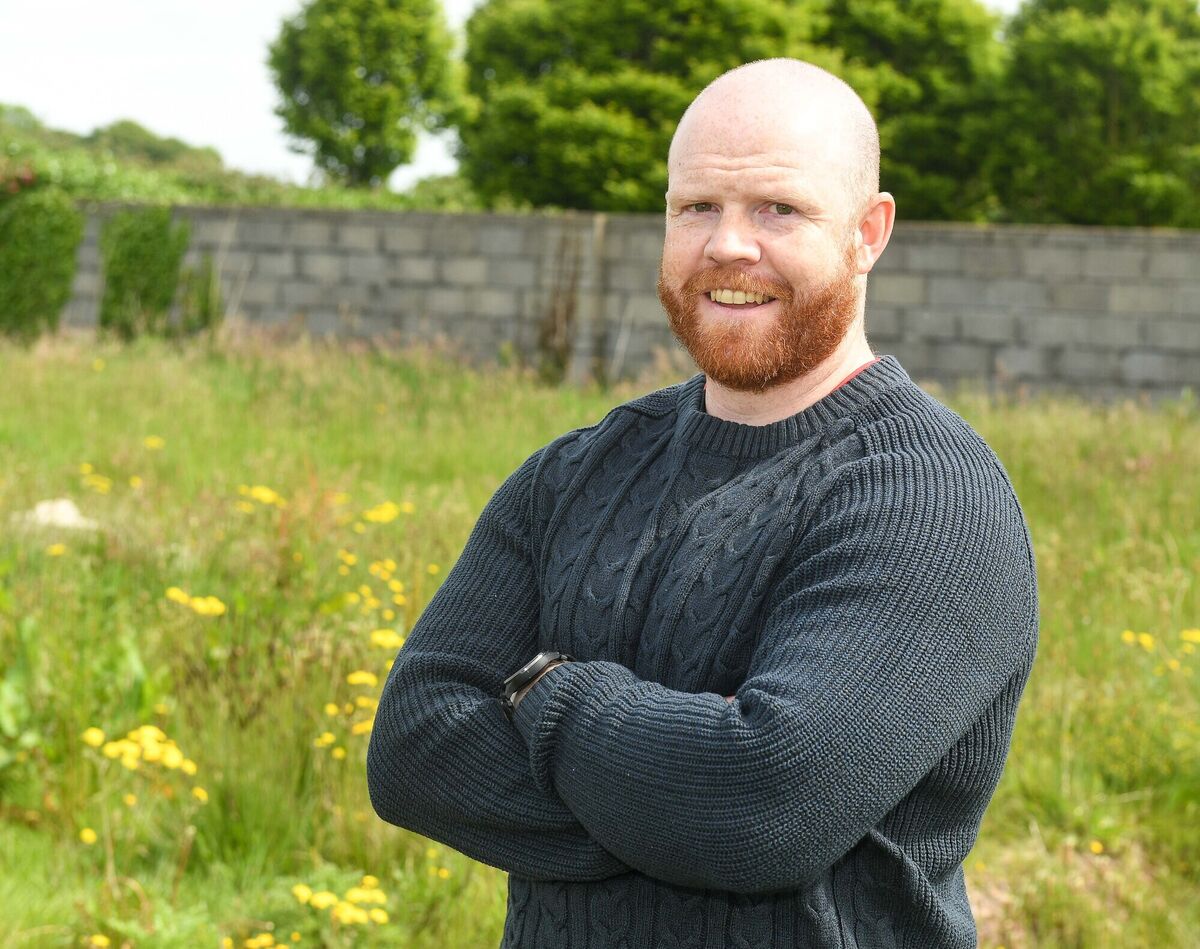
Dr. Hugh Doran, Carrigtwohill and East Cork Rapid Response, at the critical care response vehicle. Picture Denis Minihane.

“IT’S all about putting order on what’s a chaotic clinical scene,” says Carrigtwohill-based GP Dr Hugh Doran, who has been volunteering as a pre-hospital critical care doctor since 1995.

East Cork Rapid Response (ECRR) was set up in 2007 in recognition of the impact of Dr Doran’s work. Last year the voluntary response group received the RSA’s Leading Lights award in the ‘emergency services’ category. It powered ahead of 80 nominations, recognised as a service that was the ‘difference between life and death’ for many.

“Dr Doran responds on average to nine calls a month, all voluntarily and around the clock. These calls range from cardiac arrests to falls from a height, attempted suicide or overdose to road traffic accidents,” says ECRR PRO Jean Marsh.

In 2022, the service got 108 callouts including 34 cardiac arrests, 30 serious road traffic accidents, 21 cases of unconsciousness/seizure and 10 serious trauma (burns/near drowning).

For as long as he can remember, Dr Doran has been looking at emergency medical cases. His father, Dr Jim Doran, began answering public and emergency service calls for assistance in 1971. In 1980 he bought the first out-of-hospital defibrillator and subsequently performed the first pre-hospital defibrillation in Ireland.

Dr Doran recalls his dad responding to many trauma cases from his home-based surgery. “Agricultural, domestic and road traffic accidents – people getting knocked down in Carrigtwohill village, which at that time was on the main Cork-Waterford road. “At any stage, day or night, you never knew what would come through the door – a chainsaw injury, someone having a heart attack, a woman in labour. We six children grew up with it, watched him deal with it,” says Dr Doran, who learned to drive transporting his dad to house calls.

Dr. Hugh Doran, Carrigtwohill and East Cork Rapid Response, at the critical care response vehicle. Picture Denis Minihane.

Under pressure

Working also on a weekly basis in CUH emergency department, Dr Doran is alerted via NEOC (National Emergency Operations Centre) by text/phone/radio to an emergency within a 50-mile radius. “It’s not confined to that,” he says. “I’ve gone as far as Cashel and Waterford. Recently I retrieved a patient in Killarney, a pedestrian, who’d been in a serious road traffic accident.”

Arriving at an emergency, Dr Doran’s first concern is safety. “First parking in a safe place, ensuring the scene is safe, attending to personal safety, particularly on a motorway. Then it’s identifying the relevant people: who made the 999 call, the ambulance, Gardaí, emergency officers. What number of people are involved, what injuries sustained.”

It’s about working methodically, he says. “We’re not in a nice, air-conditioned hospital with adequate lighting. It’s often cold, wet, muddy. But the principle of treatment is the same whether inside or outside hospital – managing the environment, working under pressure, attention to detail.”

He sees himself as very much part of a team. “Communication with other members of the team, no matter their skill set, is vital. Over the years, we can almost second guess each other.”

A big aim is to minimise the on-scene time. “I often work on people in the back of the ambulance or — not infrequently — in a helicopter. Some weeks ago I was in a helicopter with a young girl who’d fallen out a second-storey window.”

Depending on what’s needed, Dr Doran might need to do any of a number of procedures. “One of the most common is putting someone on life-support, giving them anaesthetic, taking over their breathing by intubating them,” he says.

Or he might have to open a patient’s chest in cases of traumatic cardiac arrest, use specialised nerve blocks to manipulate someone’s limbs when extracting them from a crashed car, or assess internal injuries via ultrasound.

Approaching any emergency, Dr Doran – trained in forensic medicine – says: “You must keep your bandwidth as open and wide as possible. You need to keep in mind it could turn from a medical call into a forensic crime scene.” Does he remember particular callouts? “A couple stand out. Undoubtedly the most difficult cases are those involving children, particularly when there’s a bad outcome.”

 Martin Enright at his home in Ballinascartha near Midleton, Co Cork. Picture: David Keane.
Martin Enright at his home in Ballinascartha near Midleton, Co Cork. Picture: David Keane.

Forever grateful

Martin Enright, 34 and married to Trudy, will forever be grateful to Dr Doran. Enright had just finished his Leaving Cert in 2006 when he got pulled into an industrial grain auger at his East Cork-based job. “My right foot got caught in the machine. It broke down my right leg and took in my left leg too. The call went to Hugh Doran – I knew of him, he was my grandmother’s GP.

“He set to work behind me. I couldn’t see my right leg, which had gone down into the silo. Dr Hugh gave me some of the best pain relief I ever got in my life.

“He did as much as he could to keep me alive — I’d lost a ferocious amount of blood — I was in the machine for two hours. Dr Hugh and Midleton Fire Brigade saved me. One of the firefighters used to build those machines. Dr Doran said to him ‘I’ll give you an hour’ – he’d been talking about having to do an amputation – and [the firefighter] broke the machine down and got me out.”

Martin subsequently had 26 operations, so extensive were his injuries. “The surgeon told me it was one of the worst leg injuries he’d seen arriving in hospital, where the person was conscious and their legs intact. Hugh kept me alive in that grain silo. I wouldn’t have made it out but for him. I basically got pre-hospital care in an industrial work site,” says Martin, who works as a personal trainer.

Dr Doran sees his emergency care as part of his primary care brief. “I just have the skills and training to bring something additional to the situation.” With almost 30 years behind him in pre-hospital critical care, he naturally looks ahead. “I [now] prioritise high-acuity calls. As I draw near to my bus pass, I hope I’ll be able to hand over to someone younger.”

As we head into the summer months, when most of us will be out and about more, does Dr Doran have any message for readers?

“If there’s any opportunity to prepare for an emergency, it’s basic first aid. And take care. You don’t have to wrap yourself in cotton wool, but use your common sense.”

More in this section

Lifestyle

Newsletter

Eat better, live well and stay inspired with the Irish Examiner’s food, health, entertainment, travel and lifestyle coverage. Delivered to your inbox every Friday morning.

Cookie Policy Privacy Policy Brand Safety FAQ Help Contact Us Terms and Conditions

© Examiner Echo Group Limited