The Edible Flower: Grow your flowers, and eat them too
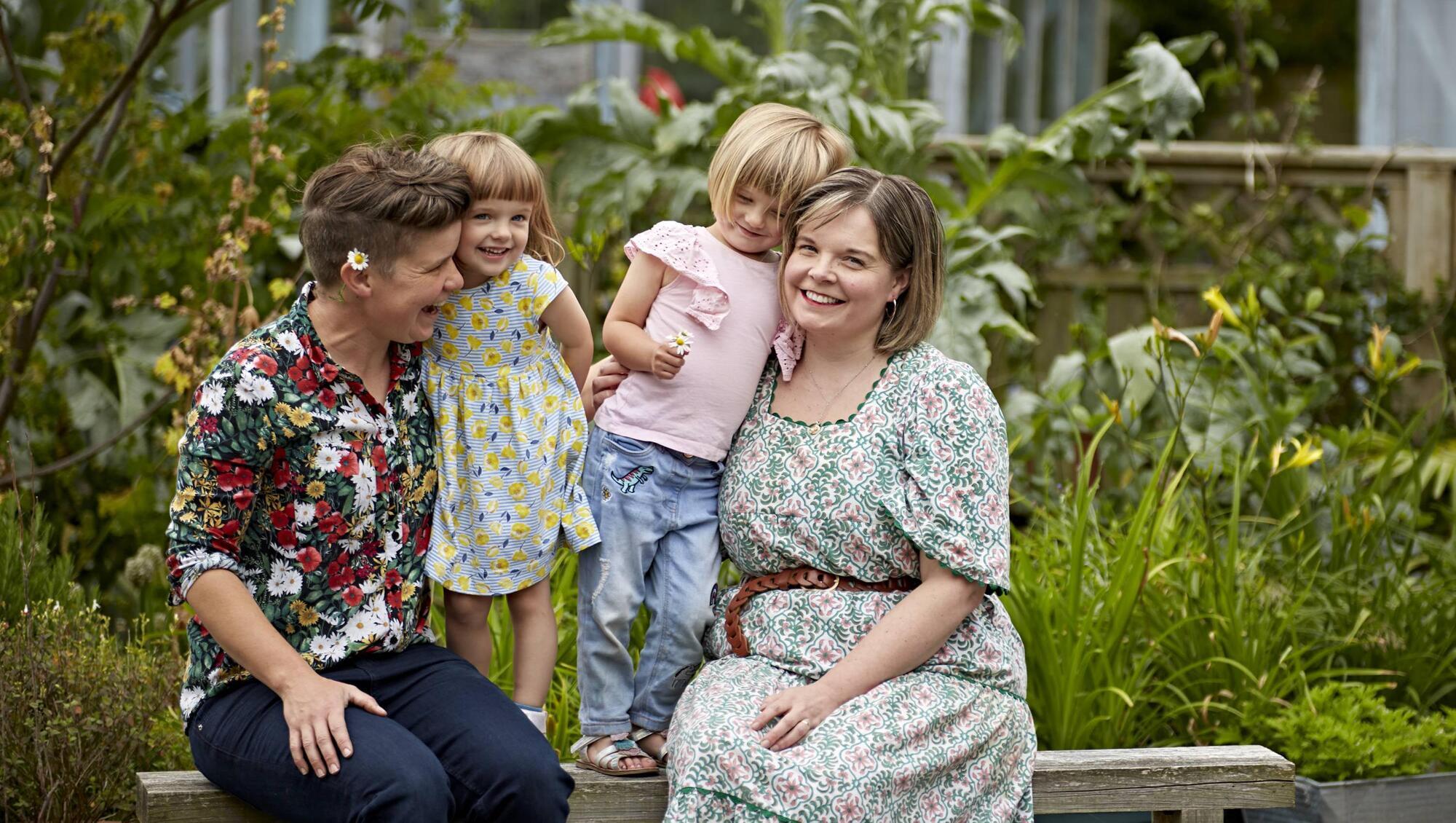
Jo Facer and Erin Bunting with their twin girls, Frida and Forrest. Picture: Sharon Cosgrove.
“...growing your own food — flowers or veg — and getting your hands into the soil is good for your well-being and gut biome. Just being outside is good for your mental and physical health.”
Borage in the bean stew, parsnip cake strewn with primroses, spicy Thai beef served on tulip petals... is a cornucopia of sustainably homegrown colours and flavours.
“We were thinking of how flowers are very accessible to grow and eat,” says Erin Bunting who, together with her wife Jo Facer, is the author of this cookbook.
“If you don’t have time and space to be growing those bigger, hungrier vegetables like potatoes or carrots but have a small urban garden or patio with pots, you can still put in a few annuals — some calendula, cornflowers, nasturtiums — and you can make that space beautiful and joyful. It gives you a connection to nature, improves your well-being and you can also pick a few of the flowers and use them in dishes.”
Packed with information for gardeners of any level, the book works its way through spring sowings of annuals such as carnation, courgette and garden pansy, on to herbaceous perennials that can form edible borders (dahlia, daisy and wild garlic), and ends with trees or shrubs that form the woody backbone of a garden, the likes of elder, hawthorn, and saucer magnolia. It also showcases the couple’s complementary skill sets — Facer is an organic gardener and Bunting is the cook — so that Bunting’s recipes and kitchen tips go hand in hand with Facer’s gardening advice. “We wrote it together in 2021 between January and the end of August and we did all the food styling and photographs [with photographer Sharon Cosgrove] in that time as well.”
The Edible Flower is also the name of their business. This multi-pronged enterprise includes catering — Bunting did the Ballymaloe cookery course in 2015 — growing organic vegetables, under Facer’s able direction, workshops and their Farm & Feast CSA scheme. CSA, or community-supported agriculture, is a growing system that involves members paying a fee to share the rewards — together with the responsibilities and risks — of growing food. As Bunting describes it, “members buy into the farm for the season. They get a veg box every week, come to the farm every month for a farm and feast day and then there’s a big meal at the end".
It’s their way of building community and connecting people to food. Bunting is passionate about how “growing your own food — flowers or veg — and getting your hands into the soil is good for your well-being and gut biome. Just being outside is good for your mental and physical health.”
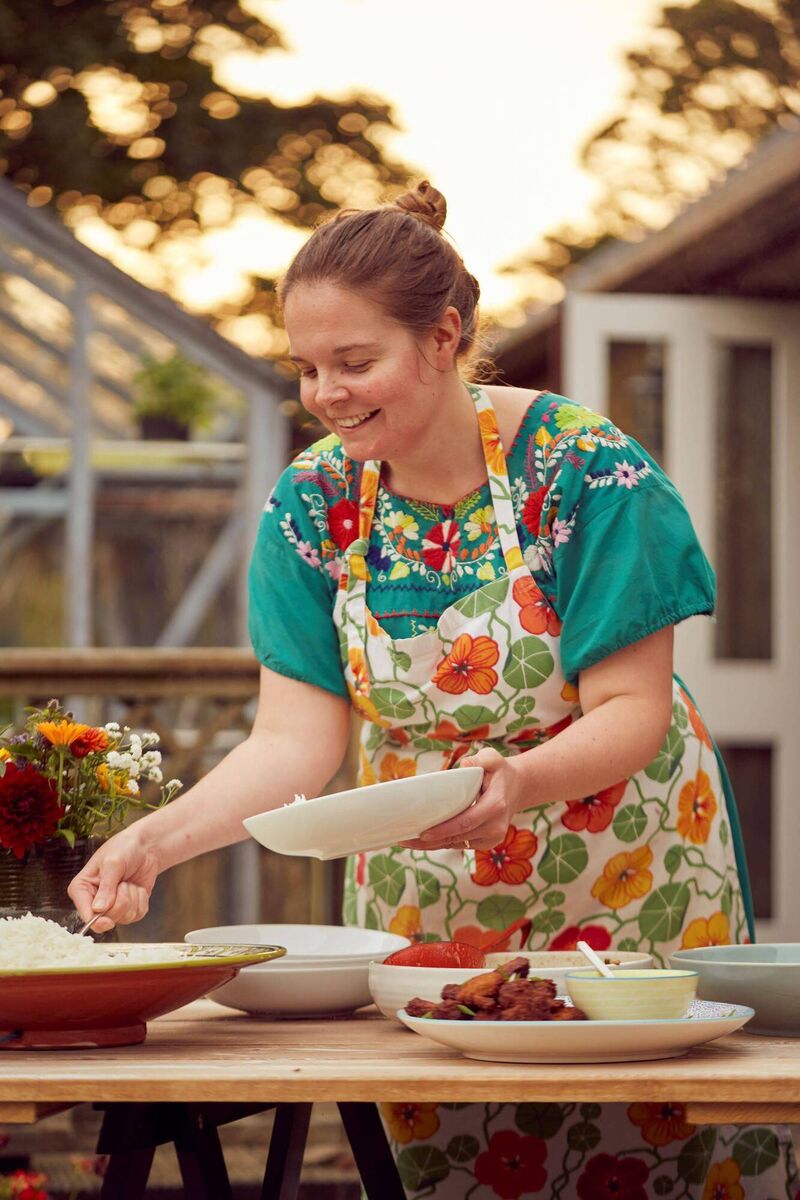
Londoner Facer and Bunting, who grew up in Northern Ireland, met at university in Cambridge in 2002. In 2016, the couple took the decision to change their lives, exchanging regular jobs and a terraced house in East London to buy and renovate a seven-acre smallholding in the drumlins of County Down. This is where they grow food, host their fork-to-fork supper clubs and hold workshops on growing, cooking and brewing. They now have four-year-old twin girls, which was a challenge when they were writing the book two years ago. “I had to be very adept at writing when they were asleep,” laughs Bunting. “We’d put the kids to bed in the evenings and I’d just get back to work.”
Their complementary skill sets are what make this book and business work so well. Bunting was an enthusiastic home cook before embarking on formal training in Ballymaloe. It’s her job to turn the produce that Facer grows into something delicious. With simple — and beautifully photographed — recipes for dishes like courgette flower tacos, German cookies with daisies and pot marigold soda bread, Bunting delivers in style. Her cooking is firmly rooted in the land and the produce, based on Facer’s practical template for creating an edible flower garden.
“Jo has always been interested in growing stuff and when we moved back [to NI] in 2016, she threw herself into that side of things,” says Bunting. Facer studied organic growing at the SERC (South Eastern Regional College) campus in Holywood and is now teaching there, delivering their L2 Organic Fruit and Vegetable course.
“Jo has good tips for people who are new to growing,” says Bunting. “Her approach is really gentle. It’s about being in the garden and observing and understanding the site. Grow some annuals that year. The following year, look at what else you can do. That applies to edible flowers but is also the stepping stone into a lot of different types of growing. The process is slow,” she acknowledges, “but we’re so action-driven that taking a moment to stand back and appreciate the seasons can be very good.”
While growing nourishes the body, the flowers feed the soul: “We’re so attracted to flowers but often people just think of them as something you put in a vase,” points out Bunting. “I feel like there are lots of things that people don’t know are edible and that you can use their flavours in different ways. By making food look beautiful, it brings joy and encourages people to eat it.”
Importantly, Bunting also notes that if “you’re growing your own flowers you won’t be using sprays and they will be fresh and you will have control over that.”
“I hope the book brings beauty and joy to people,” says Bunting as our conversation winds up. “I hope that people go away inspired to grow something, plant a seed in the garden, something that’s beautiful and use it in their food. For me, seeing that process from beginning to end is inspiring and life-affirming.”
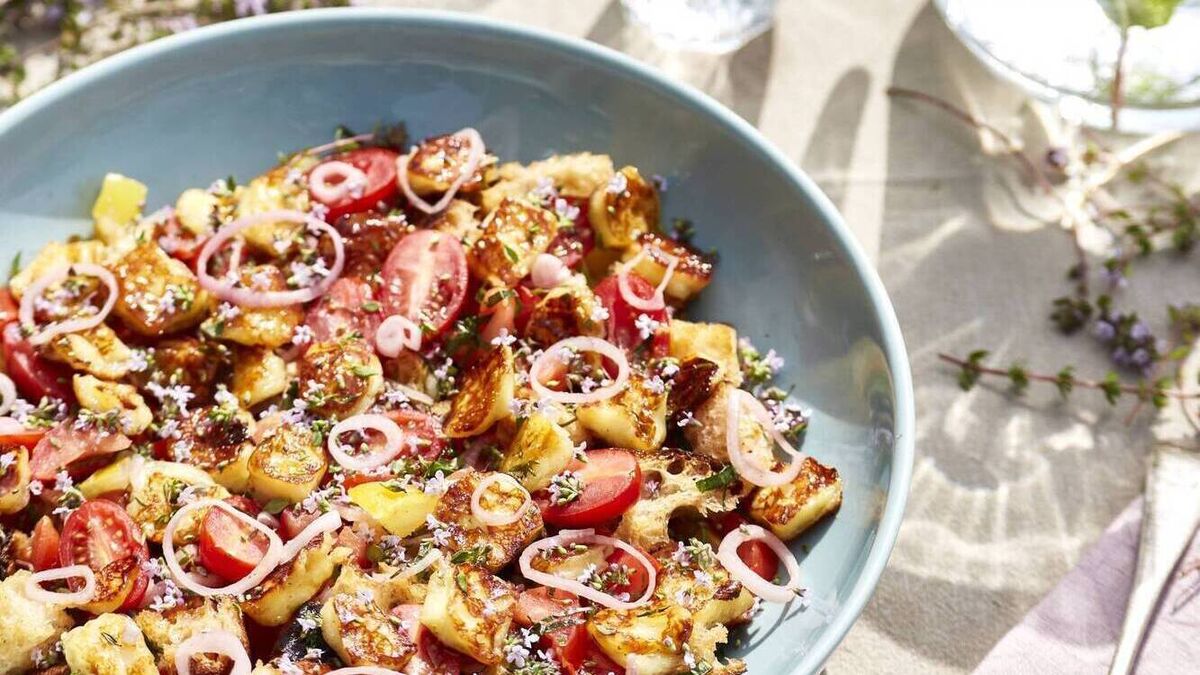
Erin Bunting's Honey-Glazed Halloumi Panzanella with Thyme
Tomatoes, halloumi, good bread – what’s not to like? The honey-and-thyme-glazed halloumi is very special, and the purple-pink thyme flowers add beauty and flavour.
Servings
4Preparation Time
25 minsCooking Time
15 minsTotal Time
40 minsCourse
MainCuisine
Middle-EasternIngredients
500 g (1 lb 2 oz) ripe tomatoes, cut into chunks if large, halved or quartered if small
1 large shallot or ¼ small red onion, finely sliced
1 tbsp red wine vinegar
100 g (3½ oz) ciabatta or sourdough bread (a couple of days old is best), cut or torn into 2 cm (1 in) chunks
4 tbsp olive oil
1 small garlic clove, crushed to a paste or finely grated
15 g (1/2 oz) basil or anise hyssop leaves, torn or finely shredded
1 tbsp honey
2 tsp lemon juice
leaves from a couple of small sprigs of thyme
250 g (9 oz) halloumi, cubed
sea salt and freshly ground black pepper
1 tbsp thyme flowers, to garnish
Method
1. Preheat the oven to 180°C/350ºF/Gas 4. Put the tomatoes in a bowl, toss with a couple of generous pinches of sea salt and leave for 15 minutes to release their juices.
2. Put the shallot or red onion and vinegar in a small bowl to pickle lightly. This will make the onion taste a little milder.
3. Put the bread on a baking sheet, add 1 tbsp of the olive oil and a pinch of salt, stir to combine and cook in the oven for 10 minutes, until just turning golden.
4. Add the warm bread to the bowl with the tomatoes. Add 2 tbsp of the olive oil, the shallot/onion and vinegar mixture, the garlic and the basil or anise hyssop. Mix gently, then set aside.
5. Mix the honey, lemon juice and thyme leaves in a small bowl. Heat a large non-stick frying pan (skillet) over a medium heat, add the remaining 1 tbsp olive oil and fry the halloumi for a minute on each side, until golden brown. Add the honey and lemon mixture; it should bubble up and reduce. Turn the halloumi in the honey mixture until coated.
6. Put the tomato and bread salad in a bowl, arrange the halloumi on top and sprinkle with the thyme flowers. Serve immediately, while the halloumi is still hot and crispy.
- by Erin Bunting and Jo Facer is published by Laurence King Publishing. Find out more at www.theedibleflower.com

CONNECT WITH US TODAY



Be the first to know the latest news and updates