Overseas doctors on rewards and challenges of studying and working in Ireland
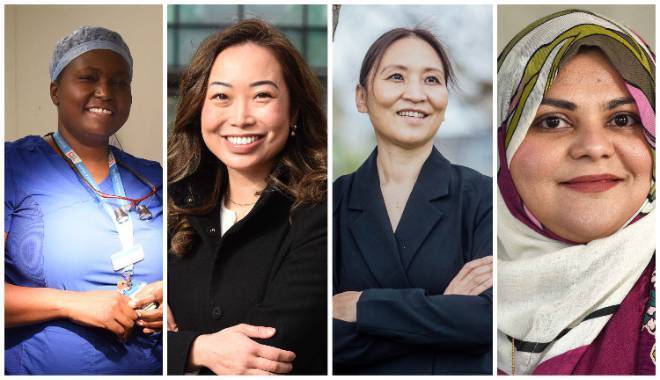
Some of the healthcare workers and students that make a world of difference to their patients and our system.
AHEAD of International Women’s Day next Wednesday, we talk to four women — all from overseas — who are doing valuable medical work in Ireland.
We ask why they came to Ireland. What were their first impressions? We invite them to compare the Irish women’s health system with their home country’s. And we ask them about the changes they’d make in our health system to support women.
Irish people curious and welcoming
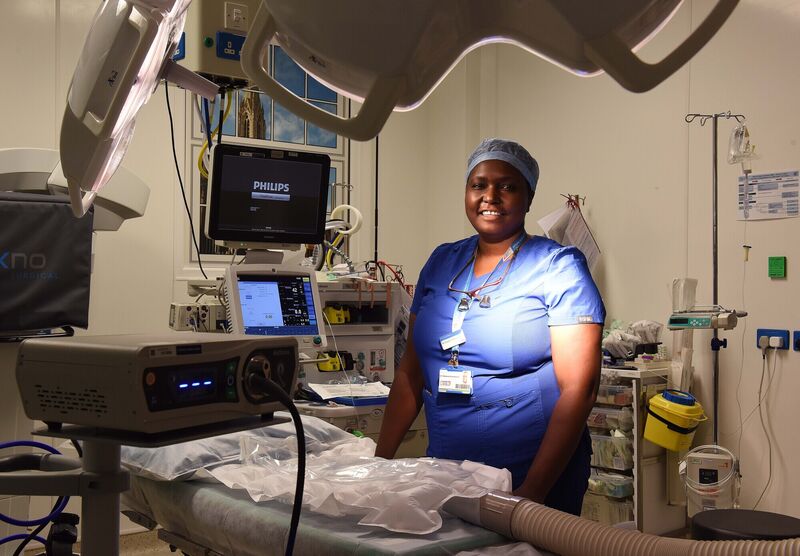
When Dr Tafadzwa (Taffy) Mandiwanza says she’s a paediatric neurosurgeon, people’s response is: ‘Oh my goodness! How do you manage, operating on children with brain and spinal injuries?’
But Mandiwanza — from Zimbabwe and Ireland’s first female paediatric neurosurgeon — says the work is inspiring. She’s amazed by the resilience of children. “I find it fascinating. A child can go through a massive brain operation and within a few weeks they’ll have bounced back or be making huge gains in rehabilitation. An adult, going through the same procedure, would be slow to regain meaningful function.”
A consultant at Children’s Health Ireland, Temple Street Hospital, Mandiwanza arrived in Ireland aged 19, in 2000, to attend medical school at University College Cork. “My father had friends working in Cork, so he felt some level of comfort letting me travel abroad by myself for school.”
She found people curious and interested. “There weren’t too many immigrants at that time, so people were very curious about where I came from, how I spoke such good English — that was a common question. I got loads of invitations to people’s houses for dinner.”
Her mother was a nurse and from a young age Mandiwanza had found hospitals “intriguing”.
“I look up to my mum a lot. Hospitals and healthcare were always part of my life — we’d go to collect her from work.”
While she acknowledges the Irish health system has problems (“and things we can do better”), she says women in Ireland here have more health rights than do women in Zimbabwe. “It’s a basic right for any pregnant Irish woman to get good maternity care, whereas in rural areas in Zimbabwe you mightn’t even see a nurse when you’re pregnant.”
She also sees a “vast gap” in screening services for women in her home country. “Cervical and breast screening are offered free to women in Ireland. There’s no national screening programme for these cancers in Zimbabwe.”
She doesn’t want to say Zimbabwe offers little or no support to women. “It basically boils down to what resources a country has, and, unfortunately, Zimbabwe doesn’t have the resources to do screening.
“Women there are restricted by lack of resources. You have little girls in rural areas or in high-density urban areas where families have to decide between schooling their child and paying the rent.”
Married to Rebabonye, a cardiologist from Botswana, they have three children, aged 14, 12, and 10. Childcare supports “definitely could be improved” in Ireland, she says. She herself has grappled with the question: ‘Do I take time off to mind my child at home?’ or ‘Do I go for career?’
Her husband and sister-in-law help out hugely. “We’ve had au pairs, crèches and in-house childcare. For immigrant women it’s harder — you don’t have the inbuilt village/extended family around you.”
Indian, Irish cultures similar
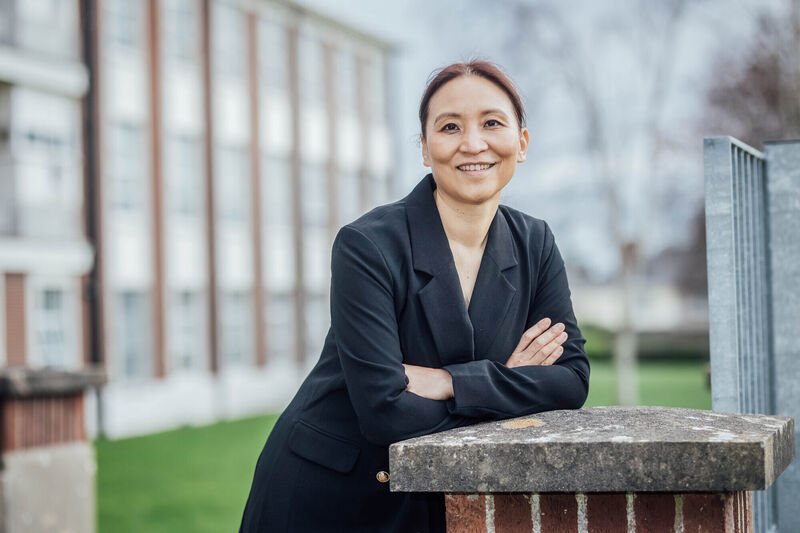
Consultant obstetrician and gynaecologist at University Maternity Hospital Limerick (UMHL), Dr Mendinaro (Naro) Imcha has special interest in maternal and foetal medicine, focusing on high-risk pregnancies.
Born in Nagaland, a remote North-eastern state of India bordering Myanmar, she had just moved to London for training when her husband, an IT professional in the US, came to Ireland for a project. “So, I moved to Dublin. We both fell in love with Ireland, and I decided to continue here.”
But sometimes, she says the challenges in a system — or the opportunities for enhancement — can require a move elsewhere. “After working for a few years in Ireland, I moved to the UK, where I completed my specialist training. I began my consultant career at Queen Charlotte’s and Chelsea Hospital of Imperial College Healthcare NHS Trust, London.”
While in Ireland, Imcha worked in UMHL and when a consultant position opened up, she was invited for interview. “We had enjoyed life here. When in the UK, we regularly visited Ireland – it always felt like homecoming. In general, the Irish are warm, friendly, welcoming.
“We found the Irish culture quite similar to the culture of my home state in India: Societal ties, family bonds, faith in God, passion for sports. The friends we made here was the start of our love for this country.”
In Ireland now since 2015, she compares our health system favourably to that of India. “In Ireland, women are screened at the appropriate age for cervical or breast cancer. There’s a strong record on maternal morbidity and mortality. Pre- and postnatal care for pregnant women is comprehensive and universal.
“[Whereas] the health system in India is fragmented and inequitable. The Irish health system is proactive; evolving intelligently to be better.”
Imcha believes Ireland has made rapid progress around female representation in medical professions. “For the first time in its 360-year existence, the Royal College of Physicians of Ireland has a woman as its president.”
But she also believes healthcare professionals need to ensure women feel their concerns are being heard. “Women have unique healthcare needs that are more understood now, whether it be perinatal mental health or menopause. Therefore, medical education/research/training/practice should all be designed to listen/hear/address/manage women’s expectations. It’s a shift in orientation that can lead to greater equity of care.”
A dentist and a doctor
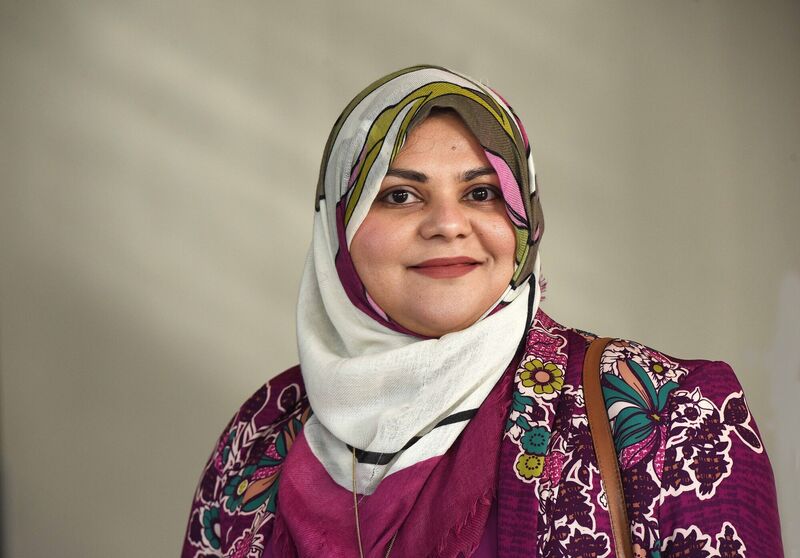
Raised in an extended family of about 30 doctors — spanning a range of specialities, including gynaecology, psychiatry, and paediatrics — Dr Syeda Amna Azim is dual qualified in dentistry and medicine. She’s the first female Pakistani to achieve both qualifications.
“To pursue a career in head and neck surgery, you have to be dual qualified: A graduate dentist and graduate doctor. It’s a long pathway, a huge financial commitment, which is why not many commit to it.”
Amna Azim moved to Ireland in 2016, having already graduated in Pakistan as a dentist and having completed a master’s degree in oral and maxillofacial surgery from University College London.
“I moved to Ireland for career progression. I stepped up as a registrar in oral maxillofacial surgery,” says Amna Azim, who graduated in medicine from Trinity College Dublin in 2020 and also completed her postgraduate and fellowship exams with RCSI.
Her first impression of Ireland was “quite pleasant”. She made good friends. “They’ve been my rocks of support since. I feel Irish people generally quite welcoming and friendly.
“But, unfortunately, I’ve encountered a few professional situations where I was made to believe I’m an outsider and I’m not welcomed here. I was very disappointed, but you can’t change the perception and mentality of those unwilling to change. But you give your best.”
Overall, she finds Ireland a beautiful country.
“Mostly people are willing to help. If you share your problem, they tend to stand with you.”
Looking to Pakistan, Amna Azim says the 2021 Women, Peace and Society (WPS) Index ranks the country at 167 (out of 170), citing: low levels of financial inclusion for women, just under four years of schooling for females, and an employment rate for women of just over 21%.
“Part of the WPS low ranking for Pakistan is due to discrepancies between women’s rights at the province level. The lowest-ranking provinces in the country performed almost four times as poorly as the highest-ranking provinces,” says Amna Azim, who says WPS links extreme poverty in Pakistan to gender inequality.
In March 2022, the Irish government announced major changes for non-EEA (European Economic Area) doctors. This meant most non-EEA doctors already in Ireland for between two to five years with a general employment permit could now apply for permission granting them the right to work without a permit.
Up to then, these doctors had to be present and working here for five years to qualify. An estimated 1,800 non-EEA doctors were expected to benefit from the new arrangement. Amna Azim, an active member of the IMO, had begun spearheading a campaign to highlight the plight of these doctors in 2016 — the campaign gained momentum during the pandemic.
Working as a non-consultant hospital doctor — in ENT — in University Hospital Limerick, Amna Azim would like to see all women in Ireland, including women from the Travelling community, having “equal access to the best healthcare services”.
Excellent training in Ireland
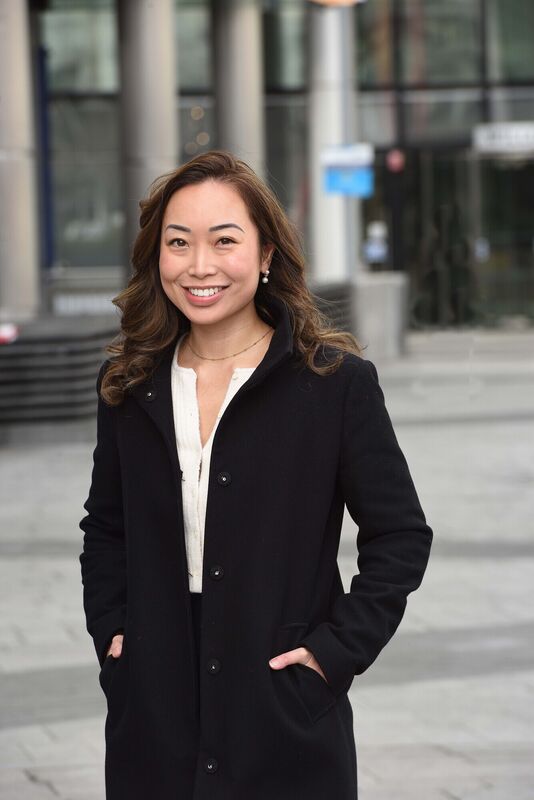
For Kathryn Hong, from Toronto, opting for medical school in Ireland was a relatively easy decision.
“I was at a junction point, trying to decide where I’d go to medical school,” says Hong, who had completed an undergraduate degree and a master’s in Kingston, Ontario.
“I was aware of the excellent level of education and medical training in Ireland. Many Canadians have taken this path, so I knew what the journey would look like.”
Due to graduate from UCD School of Medicine this year (where she started in 2019), Kathryn has always wanted to be a cardiologist. “That interest solidified through medical school,” she says, while admitting her initial fascination with the specialty got a bit “blurred by the gender disparity”. Fewer than 15% of cardiologists worldwide are women, she says.
“The gender disparity made me feel a lot of self-doubt. I realised mentorship is critical in building women’s confidence and trainee doctors’ confidence.”
Her Canada-based mentor is a cardiologist who’s also a mother. “I witnessed her carrying out the roles of cardiologist and mother very seamlessly, very gracefully. She was a woman of colour, so with that came a whole other set of biases to be overcome.”
Her mentor’s example taught Kathryn that women medics need to be true to themselves. “You have to be extremely sure of yourself and act authentically.”
Arriving in Ireland four years ago, Kathryn was “blown away” by the beauty of the country. “I find Irish and Canadian cultures quite similar — everybody’s very welcoming. At UCD, I saw classmates from all different parts of North America blending seamlessly with Irish students. And in the undergraduate class we mix with, students are from all over Europe, as well as from Singapore and Saudi Arabia.”
From a gender equity standpoint, she thinks life’s similar for women in Ireland and Canada. One possible area of disparity is that Canadian women feel very safe and encouraged to talk about and promote reproductive rights. “Canada’s one of the few countries without a law restricting abortion — until recently a huge area of contention in Ireland.”
She also believes Irish women would benefit from a universal healthcare system like Canada’s. “It would alleviate the barrier difference in economic circumstances can carve, rather than giving some an advantage to access healthcare services faster.”
She’d also like to see dedicated women’s heart-health centres in Ireland, such as exist in Canada. “There are several, including in Ottawa, Vancouver, Toronto and Nova Scotia.”
Such dedicated centres are important, she says, because heart attack symptoms can present differently in women and as a result be attributed by physicians to other conditions, for example, anxiety. “Men typically present with chest pain. Women experience chest pain too, but they’re more likely to also report nausea, sweating, vomiting, pain in the neck, jaw, throat, abdomen or back. And they’re more likely than men to suffer from diseases that mimic a heart attack.”
Will she practice medicine in Ireland after medical school? “It’s a bit up in the air. I don’t have family here — family’s very important to me —but I’ll always see Ireland as a second home.”

CONNECT WITH US TODAY



Be the first to know the latest news and updates