Runner's high: Everything you need to know if running is your New Year's resolution

While the cold weather may not seem the best time to put on your trainers, there is no better time to start. Running stock generic
Running is right up there in the race to become our favourite fitness activity.
Research conducted by Ipsos MRBI on behalf of Sport Ireland showed that 680,000 people in Ireland run regularly to get in shape.
Yet more evidence that we are committed to running came in the form of a survey into the state of global running by World Athletics and the website RunRepeat.com which found that the most dedicated runners came from Ireland where a larger proportion of the population – about 24,500 people – regularly participated in organised running events than in any other nation.
And while the cold weather may not seem the best time to put on your trainers, there is no better time to start.
“Winter is a good time to start running as it means you can get fit enough to enjoy covering a few miles by the time spring arrives,” says Patrick McGrath, a former Ireland international runner who is now coach to elite Irish athletes and recreational runners.
“Set yourself a goal of a spring or summer event, even if it is a free parkrun, to motivate yourself to get out on cold dark days.”
For those with loftier ambitions, the 15th Cork City Marathon, which takes place Sunday, June 4, 2023, is only six months away.
If you are inspired to start running, here is our guide to everything you need to know:
What’s the best diet for runners?
Researchers at St Louis University found that switching to the kind of Mediterranean-style diet lauded for its health benefits – plenty of fish, vegetables, olive oil, wholegrains and nuts – improved endurance performance. Their findings, published in the Journal of the American College of Nutrition in 2021, led to runners performing a 5K time trial 6% faster, four days after eating a Mediterranean diet over a typical western diet containing processed meats, dairy and refined sugars, despite the runners reaching similar heart rates and ratings of perceived exertion.
Last year, a comprehensive review of the science of sports nutrition by experts at the Australian Institute of Sport reached similar conclusions.
Only if you have Olympic aspirations should you trouble yourself with the minutiae of performance nutrition. Carbs are essential and you generally need 30 to 60 grams (about the amount in a sports gel or banana) of carbohydrates per hour during long-distance running events.
Beyond that, the best advice is to eat a nutrient-loaded diet to fuel your running.
Female runners should invest in a good sports bra

For women, a good sports bra is as important as a good pair of trainers. Yet upper support is often overlooked.
Research carried out in 2017 by the breast health group at the University of Portsmouth revealed 32% of 1,397 female entrants to the London marathon had experienced pain in the breasts when training, some to the point that they needed to take painkillers.
Joanna Wakefield-Scurr, a professor in biomechanics who led the research, says the pain is often the result of excessive movement of the breasts due to inadequate support from a bra.
Using infra-red cameras, her team found the trajectory of breasts moves through a complicated figure-of-eight pattern when a woman runs.
You need a sports bra even if you are an A-cup, Wakefield-Scurr says.
“Get properly fitted for a high-impact sports bra if you are a runner,” she says. “Make sure it provides the support you need and is not a crop top.”
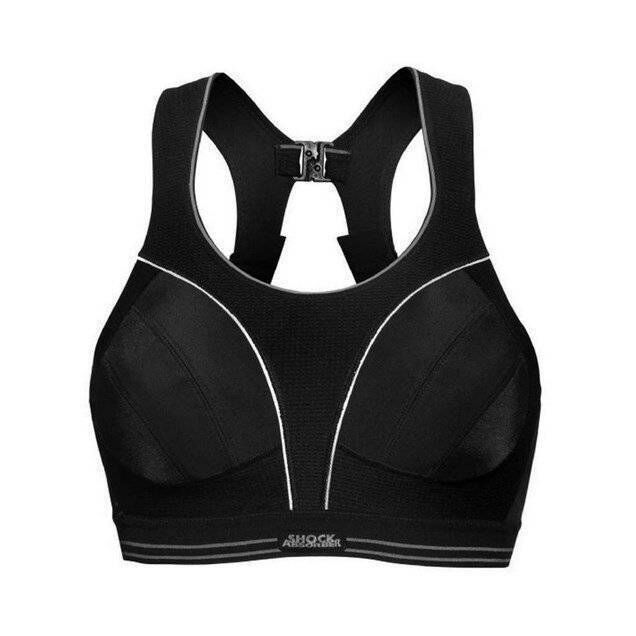
My favourite is the Shock Absorber Run bra (€55, elverys.ie).
It is never too late to start running
Running is an activity that can be taken up at any age, and the fastest rise in race participation is among those in their 40s and older. Even in your sixth and seventh decades, starting running will benefit your health according to a study in the British Journal of Sports Medicine.
The researchers found that, people in their 60s who are aerobically fit through exercise such as running, age more healthily, even if beginning exercise for the first time in their 60s.
“I coach people who didn’t start running until they were in their 30s or 40s but who have won age group category titles on the world stage even in their 60s,” says McGrath, who is 64 and still runs daily.
“Whatever your level, it’s never too late to start, and there is a strong argument that because the bodies of people who start running later have fewer miles on the clock, they are less prone to injury in later life.”
While running will not halt the ageing process, there’s plenty of evidence to suggest it will slow it.
“With regular running at any age, you will improve your body’s oxygen uptake and prevent muscle loss which will bring vast improvements in your health and fitness,” says McGrath.
Warm up and cool down
It’s not a good idea to head out at top speed for a run, and you should always incorporate an element of warm-up activity.
“This should be a gradual increase of intensity and pace so that you start with a walk, build to a power walk, then some light skipping or high knee lifts before progressing to a jog and then a run. Make this warm-up last for five to eight minutes – it will prepare your entire body for action,” says McGrath.
“There is no need for static stretching before a run, but if it makes you feel better, try marching and jogging on the spot with stretches indoors.
“Just as important as a warm-up is the cool down. On a run, repeat the intensity change in reverse for the last two to five minutes, gradually slowing from a good pace to a jog, power walk and gentle walk. It ensures your heart rate returns to normal. Do some stretches when you finish if you like – and then you are done.”
Vary your running surfaces
Varying the terrain on which you run challenges your body in different ways and means that muscles you may not use as much on one surface are recruited when you try another. Softer surfaces (grass, mud and trails) reduce impact force when your feet hit the ground, but there is surprisingly little evidence that running on harder surfaces (concrete and tarmac) leave you more prone to injury.
A 2019 study in the British Journal of Sports Medicine looked at the training programmes of 844 runners preparing for a 10km and found zero correlation between running surface and their injury rate.
Another study in the journal, Foot and Ankle International, looked at whether running surfaces affected the risk of 291 elite runners getting Achilles tendon problems. Those who mainly ran on asphalt (a surface similar to tarmac) had fewer injuries than those who ran on soft, sandy ground. Of course, make sure you wear shoes that are fit for purpose – a minimalist trainer (with very little cushioning) on a long road run is probably not a good idea if you are not used to wearing them.
Use treadmills - but sparingly

There are two types of runners: those who like running on treadmills and those who don’t.
I find them dull, but I can also see their appeal on cold dark winter nights. Any running is better than none if you are training for an event, but the general advice is to use treadmills sparingly. What you won’t get on a treadmill are the changes in gradient, scenery and terrain that come with outdoor running.
“People tend to run slightly differently on a treadmill, often shortening their stride or dragging their leading leg beneath their body,” McGrath says.
“Over many miles, these unconscious adjustments in technique might begin to cause problems when you run outdoors again.”
How do I avoid a stitch?
Nobody knows what causes a stitch, but there are plenty of theories. Irregular breathing is one and Dr Juliet McGrattan, a former GP and author of several running books, advises trying to swallow and breathe more deeply as you run.
Others suggest a cause is friction of the parietal peritoneum, the layers of membrane inside the abdominal cavity, which is exacerbated if your stomach is full. Leaving two to three hours between eating and running might help.
Dehydration can trigger a stitch but so can drinking too much liquid. A 2012 study found drinking large amounts of fluid immediately before running was linked to a side stitch in some people.
Fruit juice and cordial were the most likely triggers – they empty more slowly from the stomach than water and sports drinks, leaving the stomach distended for longer.
What’s the best way to protect against blisters?

Blisters result from moisture and friction around the feet, and they are the most common problem among long-distance runners and can be painful enough to stop you in your tracks.
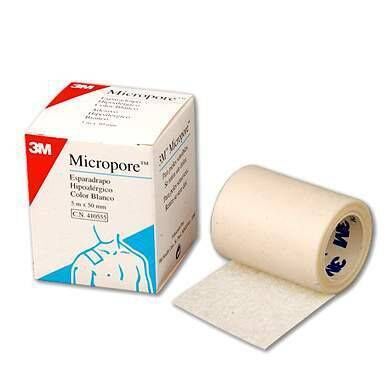
Wearing lightweight, seamless socks is a must if you are prone to them, but the best strategy could be to apply a light tape such as micropore — the cheap medical type you can buy at any pharmacy — to your feet before you run.
A study of ultramarathon runners by researchers at Stanford University showed how such tape reduced the incidence of blisters by at least 40%.
How do I get faster?
Many runners mistakenly fall into the trap of thinking the more miles they run, the fitter – and faster – they will become. But if all you do is run long distances slowly, then you will become good at just that – running a long way at a slow pace.
It seems counterintuitive that shorter, faster-paced training will help you improve at longer distances, but it works. By adding shorter, higher intensity running in the form of fartlek – a Swedish word for speed play that involves changing the pace of your runs – your body will adapt and be able to cope with faster speeds.
“By gradually increasing the overload on your body from intense or faster sessions, the better your maximum running capacity and the easier your long, slow runs will eventually feel,” says McGrath.
“Adding bodyweight circuits or weight training to the mix will help with injury prevention and preserving good technique, especially as you get older.”
Don’t worry about your knees
Non-runners will always use the card that running is bad for joints. I’m living proof that it isn’t. As a runner for four decades, I have yet to experience as much as a joint twinge.
But scientists have also struggled to find a conclusive link between running and knee osteoarthritis, the degenerative joint condition that causes pain.
Indeed, some believe that running offers the best protection for joints. A 21-year study at Stamford University, California, which tracked nearly 1,000 running club members and non-runners, found no difference in the state of their knees at the end of the research and even comprehensive studies by Arthritis Research UK confirm running is not bad for the joints.
“What seems to matter is that running is consistent,” says Sammy Margo, a physiotherapist.
“People who launch themselves into a marathon after doing very little will not be immune from joint problems, but long-term runners seem to have some protection against joint pain.”
How important are running shoes?
Of all the equipment you need to run (and there isn’t much), your trainers are the most significant purchase you will make.
It can be a minefield trying to choose a pair, but the rules are simple. Studies have shown that despite all the scientific claims made by manufacturers, comfort should remain your number one consideration. Avoid any costly extras unless they make your feet feel better and your running experience smoother.
There are a few simple rules you should follow.
Purchase shoes from a specialist running shop where staff can advise about a model to suit your running style, and always try to run in them wearing the socks you usually run in before you buy. Not every brand suits all feet, so avoid buying a pair just because they are trendy.
“The golden rule is that if a shoe fits well and is comfortable to run in, it’s a keeper,” McGrath says.

Cancel anytime
CONNECT WITH US TODAY
Be the first to know the latest news and updates