Could this Mental Health First Aid course be for you?
The course 'genuinely saves lives'
They do this by creating what they call “a consistent space in the national cultural calendar where citizens can be inspired through arts and cultural events to talk about mental health issues”.
As part of this year’s programme, Mental Health First Aid Ireland (MHFA Ireland) is running both an adult and a youth mental health first aid workshop over the course of two days.
The workshops are free full day online sessions, funded by Dublin-based St John of God Hospital, and are open to anyone who can fulfil one criteria - commitment to attend.
“Essentially, Mental Health First Aid is a training course for people who want to learn how to support somebody who might be experiencing a mental health difficulty,” says Donal Scanlan, Manager of MHFA Ireland.
“It might be the worsening of an existing mental health problem or somebody who might be in crisis with their mental health and they’re learning how to help and support that person in a compassionate and empathetic way. Most importantly they are learning how to sign post people towards the right kind of help.”
The idea of Mental Health First Aid started in 2000 in Australia. It follows the principles of physical first aid: recognising when someone is in difficulty, holding them safely in that space and signposting them onto the right kind of help.
The MHFA model has been used in twenty-four countries around the world and has resulted in over five million people being trained in Mental Health First Aid. In Ireland that figure is now at almost sixteen thousand.
The founding Melbourne-based body still has an oversight role through MHFA International and they pride themselves on a strong commitment to quality research.
This research-intensive approach has been recognised globally through numerous international studies published in peer-reviewed academic journals that have demonstrated the effectiveness of Mental Health First Aid training.
Though that core evidence-based material in their workshops stays the same, it is of course adapted to suit the country.
“We take the international material and we localise it, with Irish and European references, Irish and European data and critically Irish and European support services,” says Donal.
“So we repurpose that manual to give it that locally relevant context.”
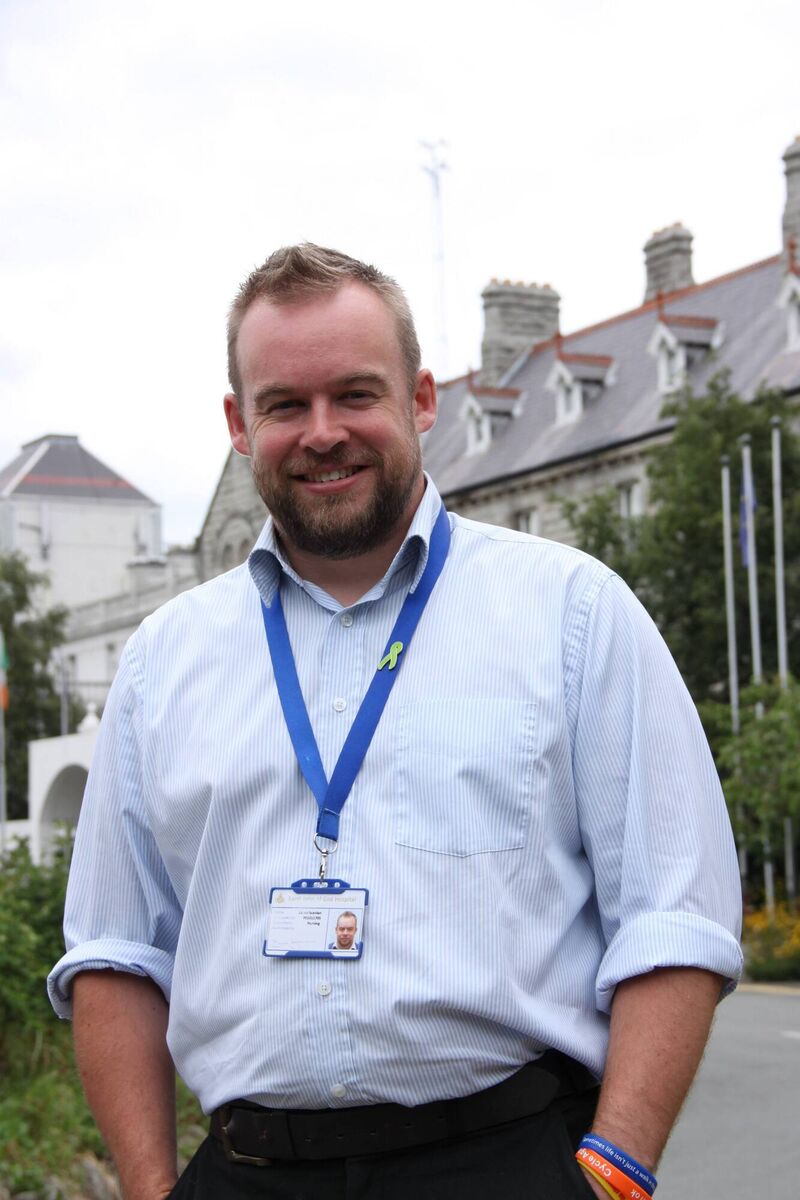
The 47-year-old has been working in the mental health space for over twenty years and has had roles as a mental health nurse, an addiction specialist and a health promotion nurse specialist.
As the manager of MHFA Ireland since it started in 2014, he has overseen the delivery of training to entities as diverse as the ESB and an Garda Siochána as well as the European Parliament and European Commission.
Those that sign up for the free online event can expect an intensive but rewarding fourteen hour session run over two successive days.
“During that time, participants learn how to recognise the signs of different emerging mental health difficulties,” says Donal.
“We will teach them how to recognise signs of depression, anxiety, eating disorders, psychosis and substance abuse and some of the associated mental health crises like suicidal thoughts, self harm, panic attacks or severe psychotic states. The objective of the training is about raising awareness of the signs and symptoms of mental health challenges, improving people’s attitudes towards it and reducing the stigma around it.”
Interest in mental health issues has been growing over the last number of years. Fuelled, in part at least, by celebrity openness and concerns around the effects of the pandemic, private companies have become increasingly aware of their responsibilities to their employees and as a result have been keen to develop their mental health and well-being culture. This has been a positive development, says Donal.
“We get clients who come to us saying that they don’t know enough about mental health issues and asking for help in improving their knowledge on this topic.
"They want to create a supportive environment and culture and want to talk more openly about mental health. They know stigma leads to silence and silence leads to people not reaching out for help.” And there is no denying there are plenty of us that need that help."
Research published in June of this year by a team of academics from Maynooth University, National College of Ireland, and Trinity College Dublin found that 42% of Irish adults have a mental health disorder and more than one in ten have attempted suicide.
The disorders ranged from Insomnia Disorder (15%), and Major Depression Disorder at 12% to Alcohol Use Disorder at 9%, and Generalised Anxiety Disorder at 7% and were more likely among younger people, those working in a job requiring shift work and those who had experienced a traumatic life event.
People with a mental health disorder were five times more likely than those without to have attempted suicide.
Donal is keen to stress that MHFA Ireland “is not about creating experts in mental health problems”, but he believes that “people who do the training have an increased confidence and willingness to offer support earlier”. And that can really make a difference.
The programme has been assessed extensively across the world and quite recently in Ireland.
Clinical Psychologist, Dr. Janine O’Gorman, who published her doctoral thesis at the University of Limerick on an evaluation of MHFA in Ireland found that “participants described how changes to their knowledge of mental health problems and helping behaviours had improved their confidence to provide help.”
She went to describe how “specific tools to address suicide and other crisis situations were cited as particularly useful.” There is anecdotal evidence too.
“I have heard on more than one occasion about cases where this training has made a huge difference,” says Donal. “It has genuinely saved lives. If I only heard one of those stories I’d keep doing it.”
MHFA Ireland wants to give people the tools to be able to address mental health problems earlier and enable recovery. The goal of this early intervention approach is to allow people with the right training to help a person to help themselves rather than trying to come up with all the answers.
“MHFA is not the panacea for mental health issues,” says Donal, “but people are more likely to offer help having done this training. It is incredibly effective at improving mental health literacy, increasing healthy behaviours and it has been shown to be as effective at reducing stigma as a national awareness campaign.”
MHFA Ireland are running two courses during First Fortnight. Places are severely limited.
Please note that the second of the two courses, Youth Mental Health First Aid training, is for adults who live with, work with or support young people between the ages of 12 - 18.
All participants must be over 18 and all of those who sign up are asked to be sure they can commit to both days.
CONNECT WITH US TODAY



Be the first to know the latest news and updates