Workplace Wellbeing: We are not going back to the old ways 
Hybrid working is a change for the better but it can lead to disengagement, particularly among young employees, says a leading social entrepreneur 
Workplace Wellbeing: We are not going back to the old ways 

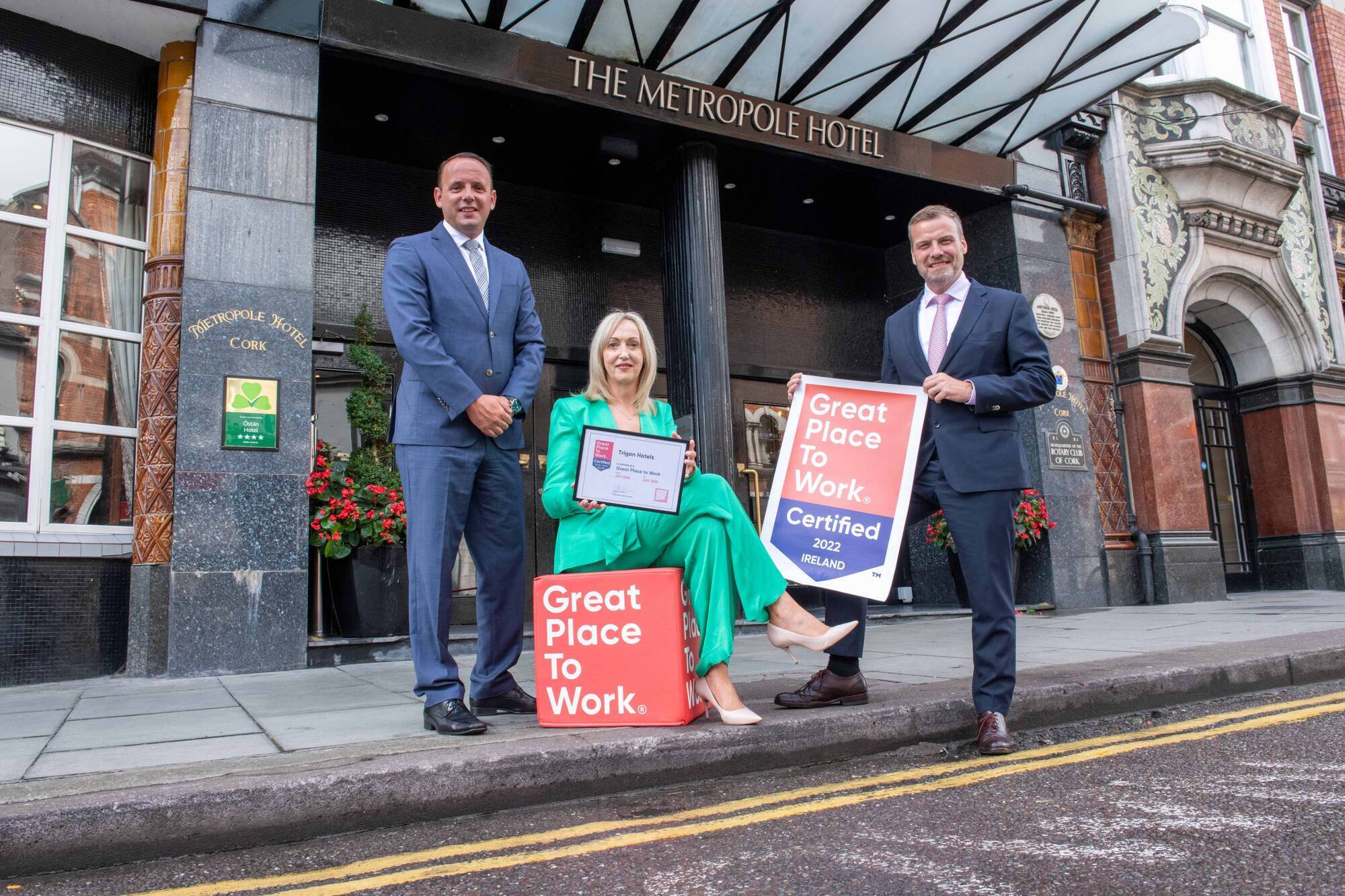
Cork's Trigon Hotel Group has been accredited as a 'Great Place To Work' after applying for the first time. Picture: Brian Lougheed


"We're in the middle of a revolution,” says Jo Owen, a social entrepreneur and award-winning author. “In March 2020, working from home suddenly became the new normal.”

According to Ireland’s largest study of employees and employers in the workplace, the Laya Wellbeing Index 2022, two in five continue to work from home some of the time. “We’re not going back to the old ways,” says Owen. “That’s because hybrid working is a change for the better.”

The Laya Index reveals that 63% of hybrid workers report a better work-life balance. This flexible approach to work is now so important to them that 60% rank it as one of their top considerations when choosing a new role, almost as many as the 61% who rank salary.

Yet there is a flip side. “This workplace revolution is accelerating pre-existing trends, one of which is disengagement,” says Owen who is based in Britain.

Disengagement was also a problem pre-pandemic. “The days when you joined a company as a junior and left with a carriage clock after 50 years are long gone,” says Owen.

“Employees spend increasingly short spans of time with any one employer.”

But work mobility doesn’t encourage loyalty. Nor does the globalised outlook of many employers.

“Employers insist on total commitment from their employees but that’s only until the next round of downsizing or offshoring or whatever it is you want to call firing employees,” says Owen.

“Employees know they can’t trust their employers so of course they are disengaged. Work used to be a relationship that was sustained over time between the employer and employee, but it’s become more transactional. Hybrid working has only accelerated that.”

A poll by the Robert Walters recruitment agency found that 63% of Irish employees now feel disengaged from their work, with younger employees the most disengaged of all.

These findings don’t surprise Owen. “Workers lost the sense of community that comes from working in an office and this loss was particularly acute for younger workers,” he says. “Older people were more likely to have a nice place to work from home and had already established networks of trust and influence that allowed them to get things done.”

Compare this with their younger colleagues. “Many worked from their bedrooms in shared apartments, without those networks of trust and influence. They didn’t know how to get things done, and it’s no wonder work became little more than a transaction.”

Jo Owen, author, keynote speaker and social entrepreneur

Shared experience builds trust

Owen believes the solution lies in employees returning to the office for some of the time. He gives an example to explain why.

“I recently spoke to a British senior executive of a global firm. Previously, she and her French-based colleagues had communicated virtually but they didn’t really connect. They had wonderful technology but didn’t communicate well. Because of an air traffic controllers’ strike, she had to travel from Paris to London with the French team for a meeting. She said they knew and liked each other better by the time they got off. Trust had been built, so the quality of communication improved. Technology is great but it’s lousy for trust building.

“The point of getting people together is those social interactions and shared experiences that build trust.”

Statistics show that employees miss those interactions. The Laya Index found that 60% were lonely and isolated, and they socialised less with colleagues and found it difficult to connect with senior staff.

“Bringing people back to the office for some of the time will allow them to start interacting with each other and levels of trust and engagement will build from there,” says Owen.

However, he warns that this can’t be achieved by ordering staff back to the office. “Apple employees told their managers to get stuffed when they were mandated back to the office,” he says. “They didn’t want to lose the flexibility of remote working.”

But having everyone make up their own minds won’t work either. “You’ll end up with the wrong people in the office at the wrong times,” says Owen. “Office work should be about collaboration. The right people need to be together to make this happen.”

He recommends that employees set parameters and then trust the teams to figure it out for themselves. “Employers might stipulate that everyone must be in for at least two days a week,” he says. “IT teams might decide that they only need to be in for two days, but more creative teams might realise that they need to be in almost all the time.”

Trusting teams like this can be challenging for some employers. “Offices are a paradise for control freaks,” says Owen. “Managers can walk across the office to check on people at will. When working remotely, you have to trust your team to do the right thing when you’re not watching them.”

Building this trust requires these managers to learn new skills.

“We no longer need the 20th century command and control skills,” says Owen.

“We need the new skills of trust, influence and persuasion.”

Employers and managers who learn these skills are more likely to crack the problem of disengagement, says Owen.

“By creating an environment where employees feel trusted and are given opportunities to get to know and trust each other as well as their managers and employers, they can expect to have a far more engaged workforce.”

Kathleen Linehan, Strategic Director of Human Resources, Trigon Hotels. Picture: Miki Barlok

Improving staff engagement

Kathleen Linehan understands the importance of trust in the workplace. As the strategic director of HR with Trigon Hotels, she has spent three years working with the 250 employees of this four-star hotel group that includes the Cork International Hotel, Cork Airport Hotel, and the Metropole Hotel Cork.

“Improving staff engagement and retention was one of the reasons I was hired in 2019,” she says.

The group has recently won several awards for excellence in recruiting, retaining, and developing staff.

“During lockdown, we had regular correspondence with the team about their jobs and our business through a hotline that we set up to answer employees’ questions and the engagement app Workvivo,” she says. “We also had events like bingo and cookery classes on Zoom.”

That communication continues today. “Workvivo is like our own internal Facebook,” she says. “It’s where we wish each other happy birthday and introduce new employees.”

Other steps to boost engagement include introducing onboarding ambassadors to help new employees settle in and establishing a wellbeing committee.

“They hold regular events,” says Linehan. “They’ve invited MABS in soon to discuss finances and we’ve recently had a visit from Dogs for the Disabled and everyone is asking when the puppies will be back for more cuddles.”

Linehan also carries out surveys twice a year. “They cover everything from training to wellbeing,” she says. “We present the results of each survey to the teams, take their feedback and then act on it. It’s all part of showing our teams that we value them as people, not just for their contribution to the workplace.”

Because of the nature of the hospitality business, most Trigon staff work on-site.

“But we accommodate hybrid working where we can,” says Linehan. “For example, our sales and marketing team works on a hybrid basis, and they have a busy workload ahead with the Cork Jazz Festival, conferences, and Christmas parties.

“We leave it up to them to decide how they do it. That approach has worked for us. If people feel trusted, we find they are motivated to do a good job for us. It’s all built on trust.”

More in this section

Lifestyle

Newsletter

The best food, health, entertainment and lifestyle content from the Irish Examiner, direct to your inbox.

Cookie Policy Privacy Policy Brand Safety FAQ Help Contact Us Terms and Conditions

© Examiner Echo Group Limited