Pete the Vet: The fuss-free approach to taking your pets on holiday
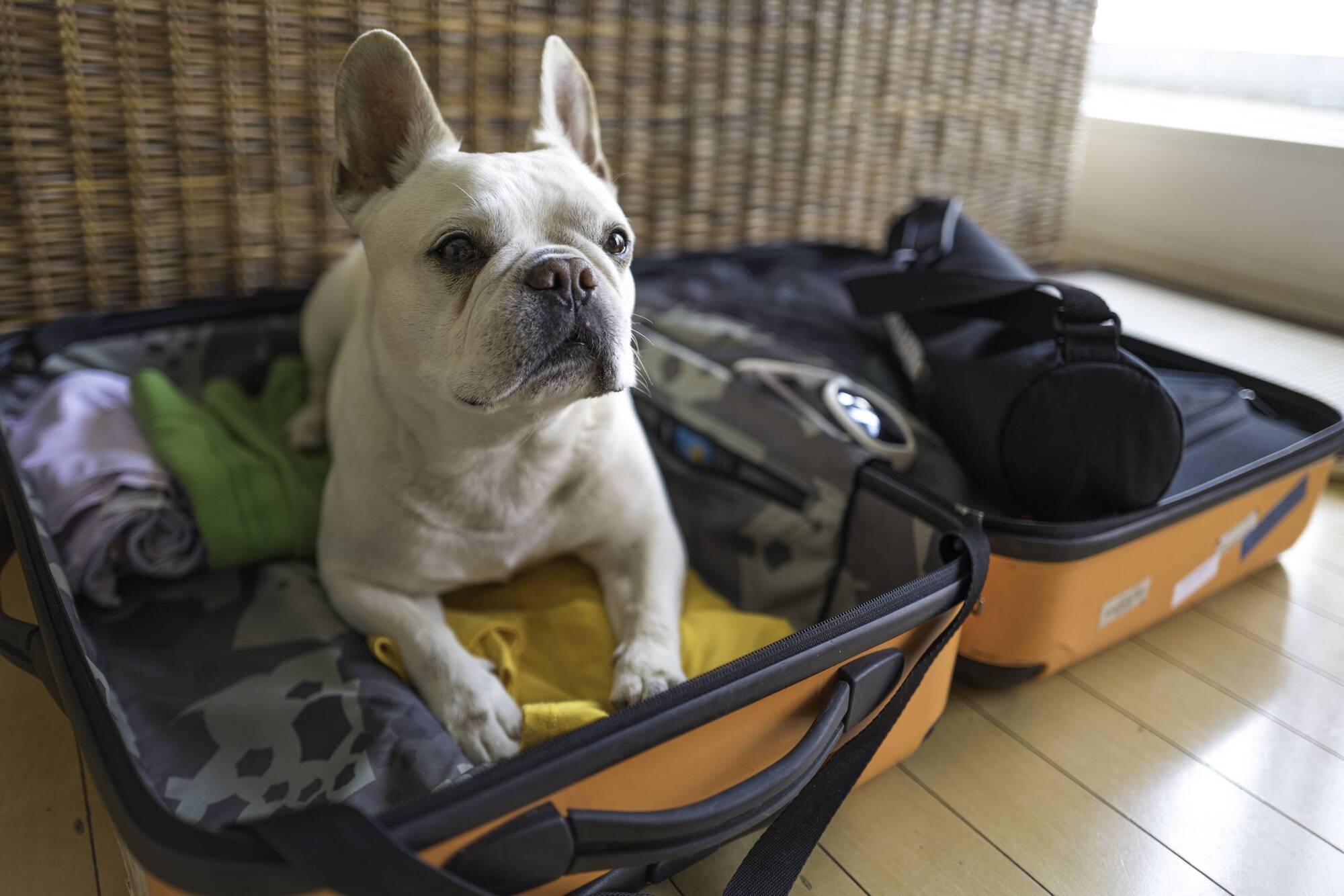
Pete the Vet: As the summer approaches, many people in Ireland have travel plans and if they are staycationing in Ireland, pets are often included.
As the summer approaches, many people in Ireland have travel plans and if they are staycationing in Ireland, pets are often included. While most pets are happy travellers, some can become restless and agitated during journeys, and a minority develop significant problems when travelling in the car. From vocalising to salivating to outright motion sickness, there’s no fun in car journeys for these animals. So what can be done to help?
Kittens and puppies have a natural ability to learn how to be comfortable with a range of different situations: this is known as “habituation”. Once animals grow older than three or four months, their brains are less adaptable, and they are less able to accept new experiences. For this reason, it makes sense to deliberately set out to familiarise young animals with car journeys. Make short, smooth trips a part of the day’s routine, and keep the animal in the place that you plan to have them when they are older (e.g. in a carrier cage, on the back seat with a seatbelt-attached harness, or in the luggage area). Ensure that journeys have happy endings (e.g. playing on the beach) rather than always having stressful destinations (e.g. visits to the vet). If animals learn from a young age that car travel is a normal, stress-free activity, they are far more likely to be happy travellers as they grow older.
Forget the appealing videos with dogs sticking their heads out of car windows or sun roofs, their ears blowing in the wind. Apart from the risks posed (to dogs and to people) from an unrestrained animal, most pets prefer a calm, safe environment. Use a carrier cage strapped into the seat by a seat belt, a specially-designed harness also linked to the seat belt, or get your dogs to travel in the luggage area. You need to imagine a car crash: a loose animal could hurtle around the cabin of a car like a furry missile. A stressed dog or cat can scrabble around the car, and potentially interfere with the driver. If a pet is not properly restrained, they can express their anxiety with agitated movement. And a correctly-controlled animal may have a better sense of being secure, leading to less adrenaline release, and less likelihood of their automatic nervous system being agitated into anxiety and nausea.
If your pet visibly reacts badly to car travel, you may notice excessive salivation, vocalising and general restlessness, followed sometimes by vomiting. If this happens, you need to rewind back to the beginning, and try to introduce your dog or cat to the car in gentler ways. Place them in the stationary car with the engine switched off - perhaps while you are cleaning the car in the driveway. Feed them tasty treats, and give your dog something to do, such as chewing a food-stuffed toy. Only when they are very relaxed with this routine, move on to the next stage of starting the car and leaving the engine idling. Then once they are fine with this, take them for ultra-short spins on the road (e.g. around the block). Ensure there is some sort of pleasant car experience every day, and gradually increase the intensity and duration, as long as your pet continues to seem comfortable. This process is known as “desensitisation” (getting the pet used to the experience) and counter-conditioning (rewarding them for staying calm, so that they learn that being calm during car journeys is the preferable way to behave). Over weeks and months, a nervous, sickly traveller can be transformed into a calm, relaxed passenger.
Individual animals vary on the best way to make them feel comfortable during car journeys. Some pets like to watch the passing scenery, so putting them in a position where they can do this can help. Others do better if they cannot see outside at all, so blocking their vision (e.g. with brown paper obscuring the view through the car windows) may be effective. Some pets travel better towards the front of the car, while others prefer to be in the luggage area. Music playing on the radio can be helpful for some pets while others prefer to hear your voice talking to them. It can be a case of trial and error, gradually working out what suits your pet.
Feed your pet at least 6 hours before the journey, so that they do not have a full stomach. Take dogs for an energetic walk in the hour before you leave, so that the bladder and the bowels are emptied, and they naturally feel like lying down and having a snooze. And make sure that you have a leash, poo bags and a water bowl handy, so that you can have regular short breaks (e.g. hourly) during longer journeys. Be aware of the danger of pets overheating on sunny days: keep the car well ventilated, and consider a cooling mat for your dog to lie on.
For mildly-affected pets, sprays and collars containing synthetic pheromones can induce a sense of calm and comfort. For more severe cases, prescription-only medications from your vet can have potent anti-nausea and relaxation-inducing effects. If you need to take a long journey with an animal that actively becomes upset during travel, then a discussion with your vet about pharmaceutical assistance is definitely the best idea.

CONNECT WITH US TODAY



Be the first to know the latest news and updates