Ray Goggins: It's not about being big or strong, it's about your mindset
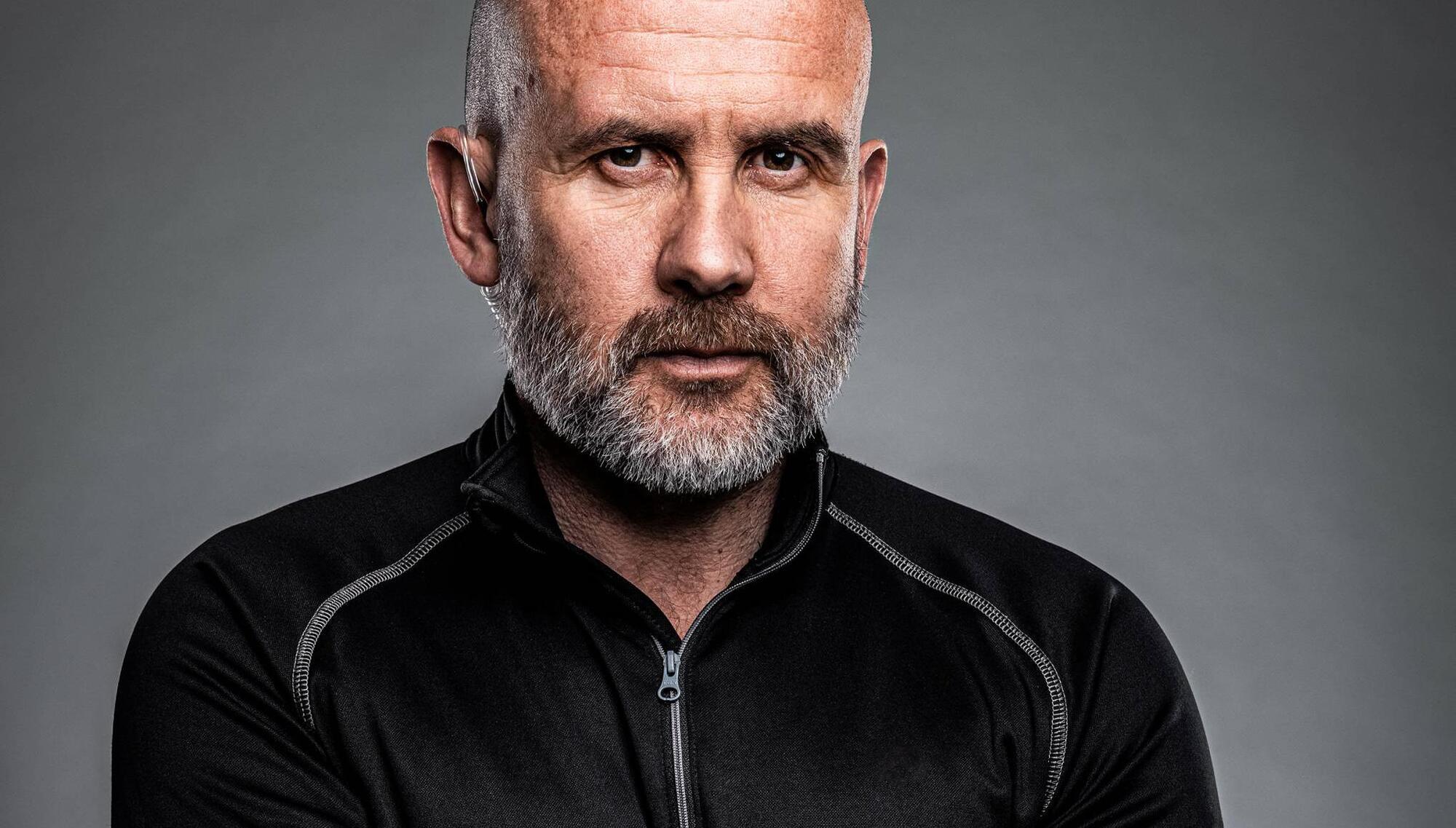
Ray Goggins of Ultimate Hell Week: "funny, egoless, incredibly interesting"
For the uninitiated, RTÉ's is when 28 extremely fit civilians spend a week undergoing a version of Special Forces military training where they are smashed to pieces physically, psychologically, and emotionally, so that they coalesce as a team while accessing an inner core of resilience they didn’t know they had. There’s a lot of crying, shaking, puking, and a 90% failure rate.
You can see why. Contestants are subjected to extreme sleep deprivation, hunger, cold water immersion, relentless physical exertion, and psychological pressure by Ray Goggins and his team. “Cross-fit wankers!” yells one of the trainers as he orders the new recruits to do press-ups on gravel as he kicks mud in their faces minutes after they arrive. Humiliation is used to further destabilise their sense of self, some of it funny: “You’re 48 and you’re wearing skinny jeans?”

In person – that is, on Zoom – Ray Goggins is funny, egoless, incredibly interesting. His book, , published last year, became a bestseller. Today, he talks about the psychology of what he does, and how the mind leads the body rather than the other way around.
“When people start to watch the show, initially it looks like these four gorillas in black trying to kill people – if you just glance at it, that’s what it looks like – and I do get that,” he says. “But if you actually watch it, you see how all the physicality, making them tired and cold and hungry, is to get into that emotional and psychological aspect.
“It’s not about being big and strong or how many push-ups you can do or how fast you can run – it’s about your mindset. It doesn’t matter if you’re a 9st female or an 18st male covered in muscle.”

He namechecks former participant, dancer Laura Nolan, “who people might think was a little pink creature, but she was hard as coffin nails. In her head, she had that belief, that commitment, that resilience.”
These are the traits needed to get through it, he says, rather than just muscle: “Resilience is a huge part - people who are able to keep going - and self-belief, which are core values that take time to change, whereas confidence is up and down on a daily basis - people get confused between the two. Self-belief is that strong voice inside you that says, ‘I’m not good at this but I can keep going and I’ll get better at it.’
“What combines these two things is commitment. You really have to open up and do it. I remember telling the celebrities who were doing the show that they would be exposing their soul – people think that’s just a tag line, but it really isn’t.
“You have to open up, and go to places you haven’t been before in your head and your soul – it is quite deep. You can’t control what comes out. It’s quite emotional as well, people are in tears on a regular basis. When you dig that deep, it’s all going to come out. It’s good – it’s all part of it.”
Ray Goggins knows all about going deep. Until 2016 the former Special Forces leader was deployed in conflict zones in Africa, Asia, and the Middle East. After serving nine years in the regular army, he spent a further 17 as an Army Ranger. “There’s a lot less red tape in Special Forces,” he says. “Less ‘yes sir ,no sir’ - it’s not so much about your rank as your abilities as a person.”
Born into an army family in Cork’s Fair Hill in 1971, he spent the early part of his military career at Collins Barracks. “I was an army brat,” he says. Since then, he has worked on attachment with the UK and US Special Forces (the SAS / SBS and Navy Seals – “It’s all the same training process. We just have better accents”), as a combat diver.
Hang on. A what?
“It’s not ,” he says. “People say, ‘oh you’re a diver’, and they’re thinking about their holidays in Mexico, but it’s usually in the North Atlantic around an oil rig in the dark. It’s pretty miserable,” he laughs.
“It’s very hard to train for, but once you get into it it’s a great experience. I loved all the... I won’t say the hardship of it, I’m not a nutjob, but you had to get through all of that to get to the reward of it.”

Despite being retired from the Special Forces – he went into high-level private security in places like Kabul before getting involved in UHW – Ray still trains like a demon.
“Never underestimate the power of physical activity,” he says. “Even a walk. If I have something in my head that I’m not good with, I’ll go for a run or I go training and I always figure it out. It’s a great process. I try to make my training programme as robust as I can - at least five sessions a week. Three around aerobics, so maybe a couple of 10k runs, and one hard session a week.”
This involves Ray going to a forest near where he lives in Kildare. “I have this log that I run around with on my shoulders. Not just for the physicality, but so that I get to hear that ‘no’ voice in my head telling me to stop, so I know what it sounds like.”
He pauses. “I do gym stuff too, TRX bands, stuff like that.”
I wonder, a bit warily, if he ever just lies around watching Netflix and eating biscuits like the rest of us.
“Absolutely,” he says. “It’s good to have days where you’re watching movies with a litre of ice cream on your lap. I’m not a machine. I enjoy my downtime, I enjoy a beer, having craic. But I try and earn it, to balance it off. I’m not one of these people who just eats cardboard and rejuvenated water or whatever.”
The trick, he says, is balance and challenge, so that you remain focused: “If you keep challenging yourself a little bit every day, you are in a much better place. You have purpose, you have belief, you have commitment, and you’re just a happier person. I find that people who have purpose don’t do drama. If you don’t put good stuff in your head, pretty soon it will fill up with bad stuff – you need to have focus.”
In more recent years, his focus has profoundly shifted again, after he and his wife became parents to a son and daughter, now aged 14 and 10. He was still on active duty when they were very young.
“It made me feel a lot more mortal,” he says. “Dare I say more emotional? More aware of emotion? It changes you inside a lot. I’d be off on operations, and beforehand – although not during – I’d be thinking of the knock-on effect if anything happened. It wasn’t just about me anymore.”
You’d wonder what it must feel like for them, seeing Dad making people cry and shake on the telly. Quite excited, I imagine, and not just a tiny bit proud.