Here's how this Cork school got teens to give up their phones
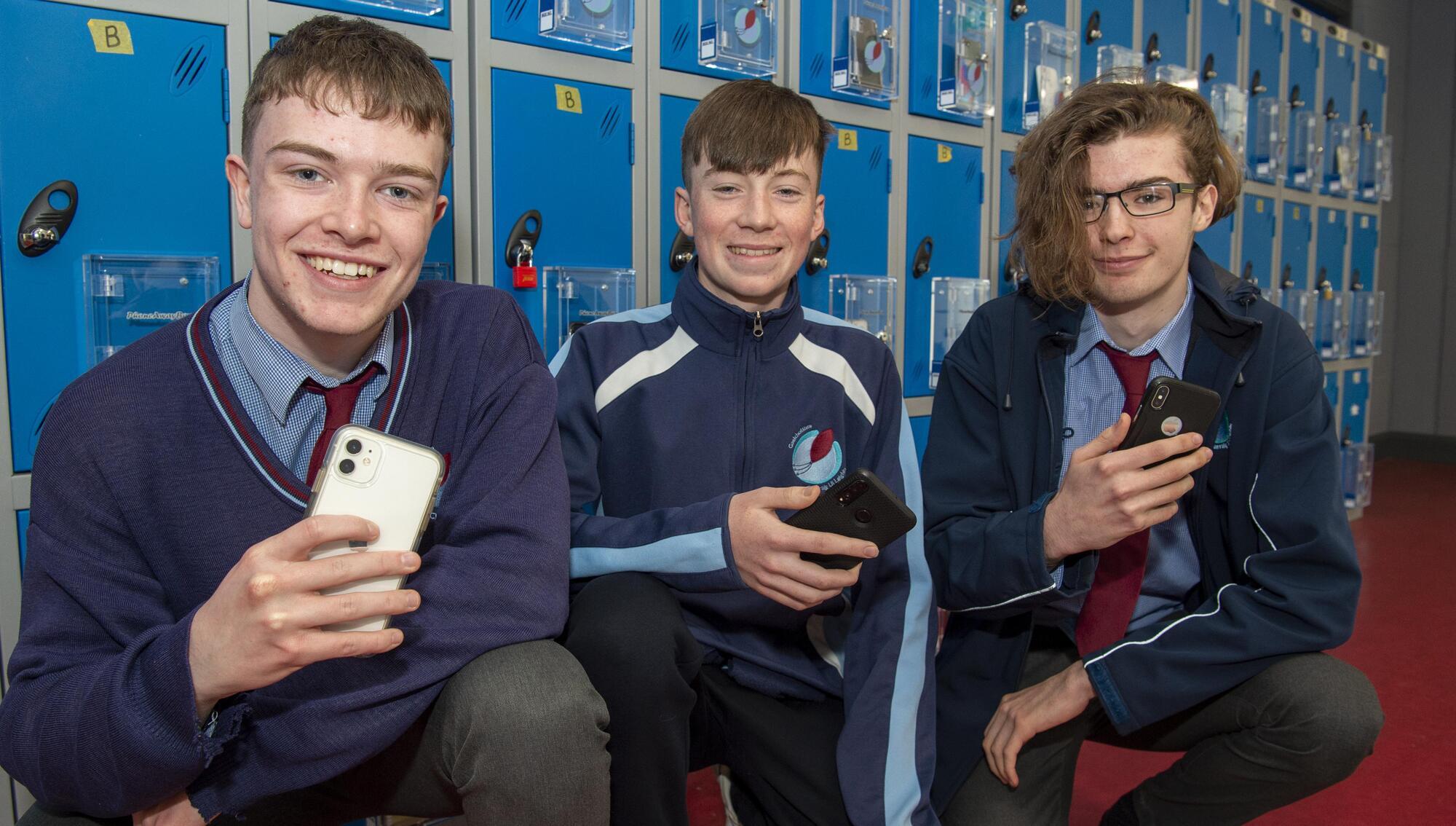
Transition year pupils Aaron Ó hAinlí , Adam Ó Floinn and Ewan Mac Madáin using the new PhoneAwayBox for pupils at Gaelcholáiste Charraig Uí Leighin. Pictures: Dan Linehan
A typical child of the Eighties, I happily rolled around the back of my father’s car with my three siblings, not one seatbelt between us. It seems mad now, but my children will probably review my own parenting style with similar horror.
That future horror might relate to their (far too open) access to technology.
According to author Johann Hari, our ability to think deeply is a superpower; he believes that this human superpower is under attack. For Hari, technology but specifically our mismanagement of technology, is to blame. There’s evidence to support him – plenty of it. Nowadays, the average college student can only focus on one task for 65 seconds. A 2019 ERSI study suggests that children who have phones by the age of 9 (40 % of Irish children) do less well in academic tests.
To stop damaging our faculties and our mental health any further, Hari believes in the need to ‘pre-commit.’ It sounds a little daunting, a little futuristic perhaps, but that’s where technology has taken us. This ‘Pre-committing’ involves putting something in place to prevent us from making bad choices with technology.
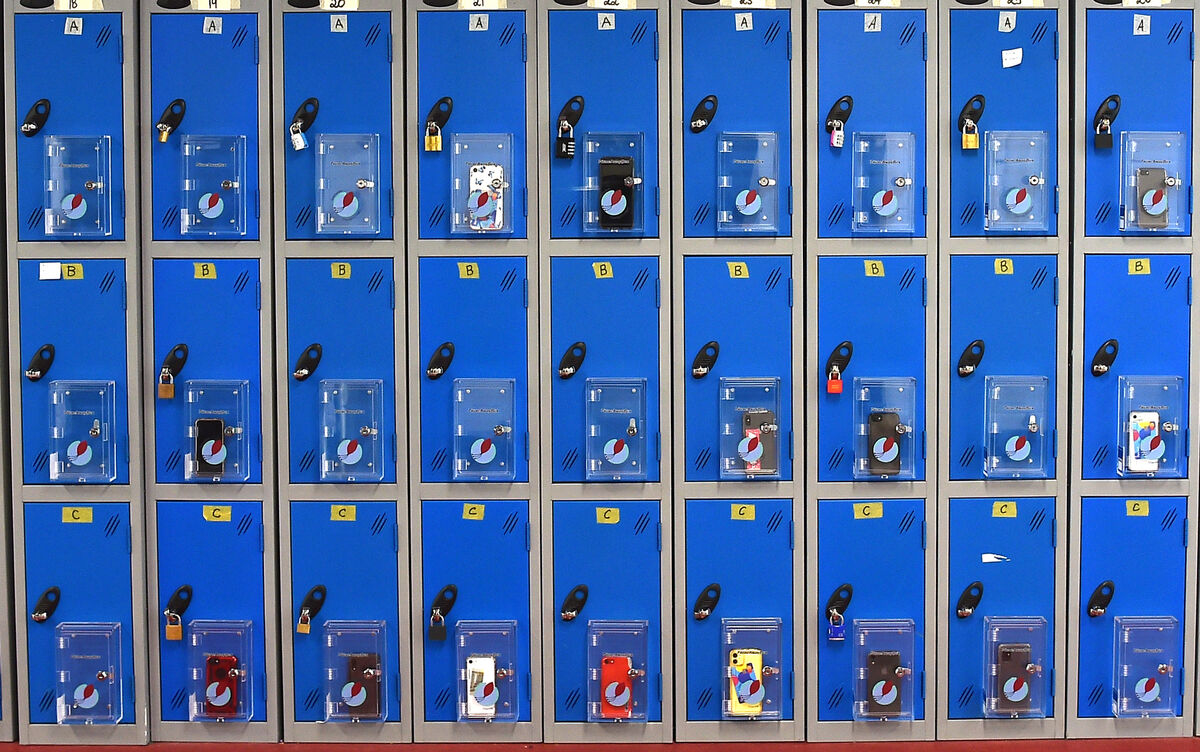
A principal in Ireland is helping his students to pre-commit on a daily basis.
When Karl Hegarty took up his post as Principal of Leinster Senior College in 2017, he quickly identified the impact of mobile phones on his students’ concentration levels.
“The school policy was that students should have their phones in their lockers, but not a lot of students were buying into it. It’s impossible to monitor because teachers can’t go around searching pockets and bags. The evidence was clear though, after the fact. Phones were beeping in classes, disrupting learning, and students were making excuses to go the toilet three or four times a day so they could check messages. Again, we couldn’t follow them in there, so we had to think of something else.”
National research supports Hegarty’s initial observations of his students. In a 2017 study carried out by StudyClix 54% of students said they checked their phones in the classroom in the last seven days while the teacher was not looking. This might be one reason why a nationwide poll of over 1000 second level teachers found 80% in favour of a phone ban in schools.
Hegarty had little interest in banning anything. As he puts it himself, he wanted a ‘plan not a ban.’ So, he consulted his study supervisor Gerry Ryan and between them, they developed an innovative solution to their problem, quickly improving the overall culture and atmosphere in their school.
He understands that technology is now a constant part of his students’ lives so he’s keen to put simple strategies in place to help them manage it.
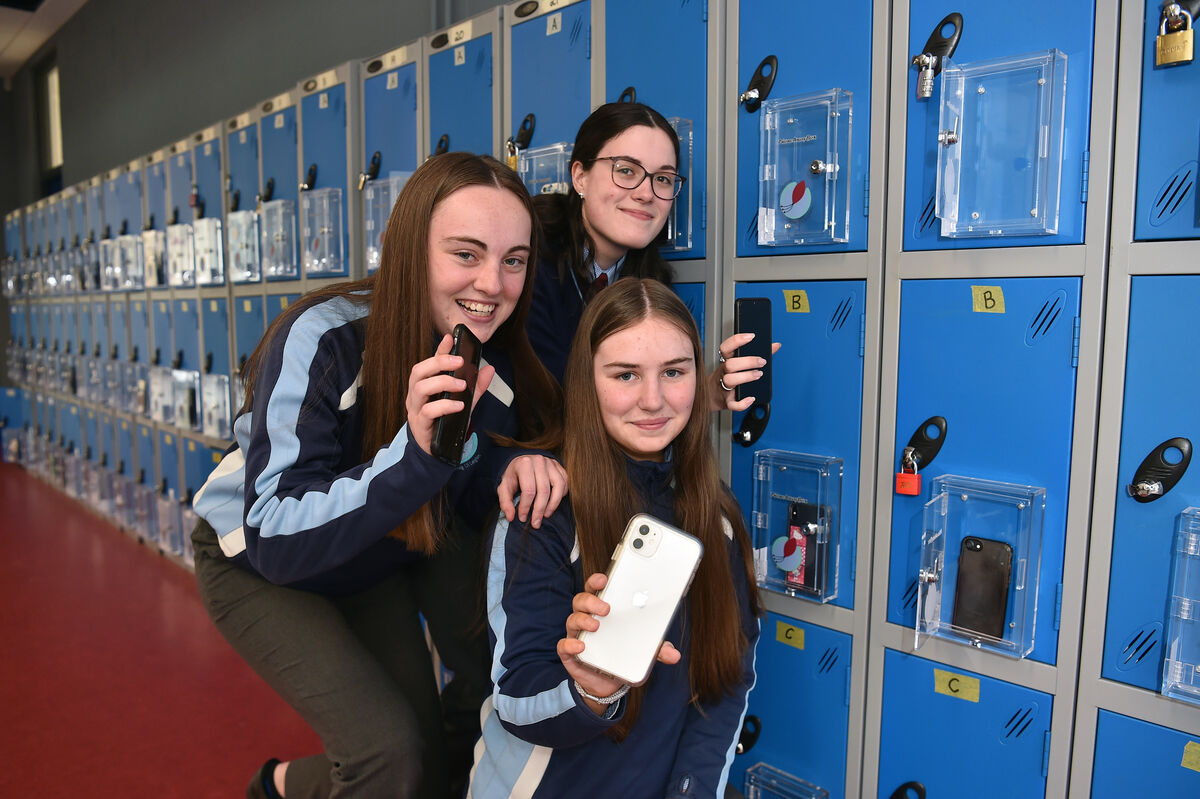
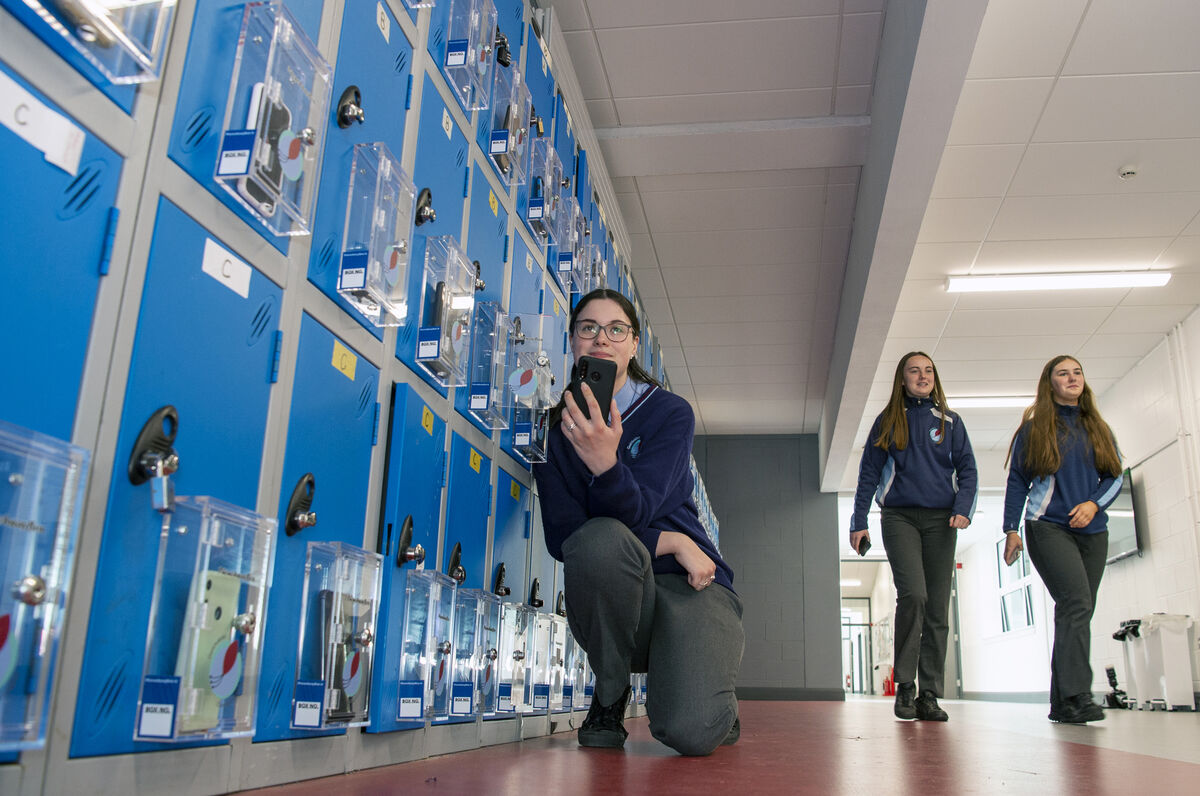
The PhoneawayBox is certainly simple in design. It’s a clear box with a lock and key that goes on the outside of a student’s locker. It has the school crest on front so little attention is drawn to the contents. If a child wishes to bring a phone to school, they sign a form agreeing to keep their phone locked in the box during class time. The child can opt out but must then leave their phone at home.
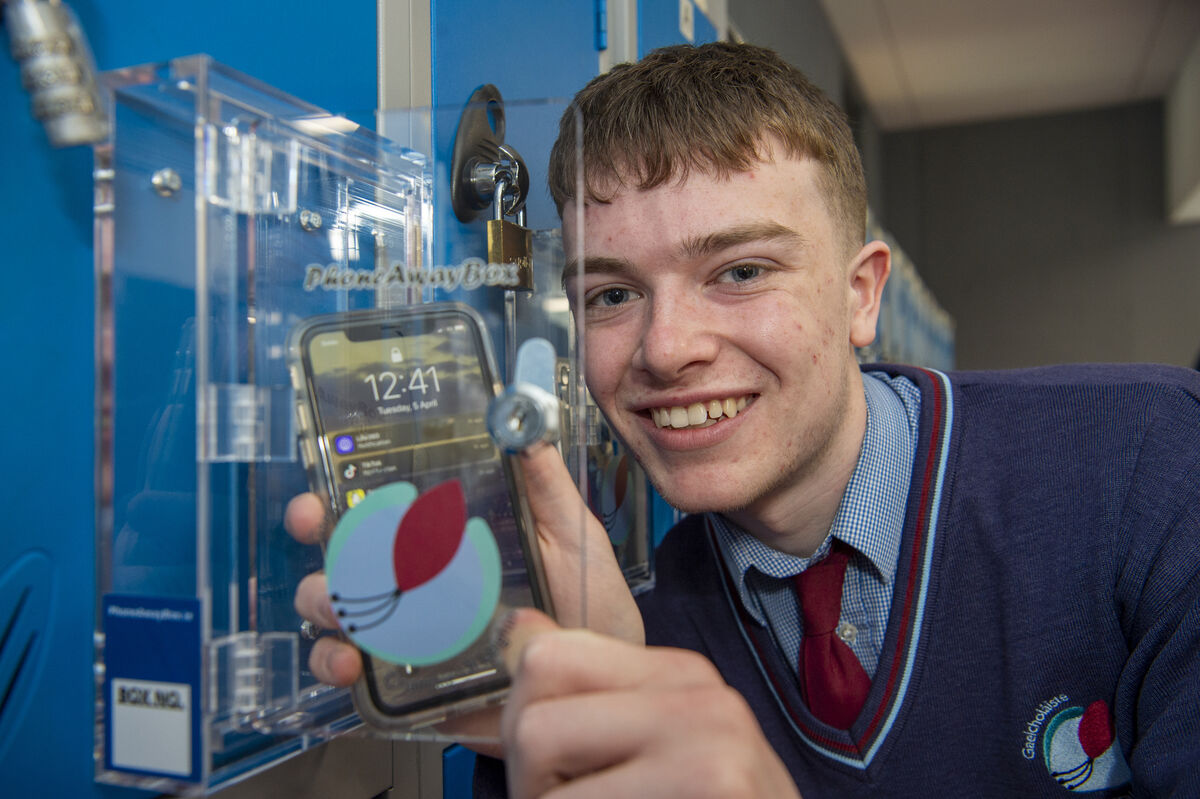
“This isn’t a punitive measure,’ Hegarty explains. “We respect the rights of our students to have phones; we also respect their need to learn, pay attention and do their best. This way we’re helping them to manage their phones so that they can learn in the best possible environment. It also respects the teachers in the school and their right to teach uninterrupted lessons.”
PhoneAwayBox works off mutual respect for both teachers and students.
The principal’s parents ran a local shop when he was a child. He recalls seeing them work from 8am to midnight.
“I believe in hard work, and when you get older, getting honest money for honest work too. That involves focus and paying attention. I grew up in a very loving, hard-working environment. I think we all need to work hard for what we want. When it comes to the Leaving Cert, a single point could make the difference. I always say a grain of rice can tip the scale. I’m trying to facilitate my students to achieve their best outcomes here.”
Hegarty doesn’t see their PhoneawayBox as belonging solely in schools.
‘Myself and my wife were watching Operation Transformation a while back and there was a girl on there who was really struggling with her dependency on her phone. She admitted to spending half of her work shift on the thing, but she wasn’t happy about it. She wasn’t in control. So, I sent her the box and sure enough they featured it on the show. The product is all about helping people; it’s about facilitating a healthy life.’
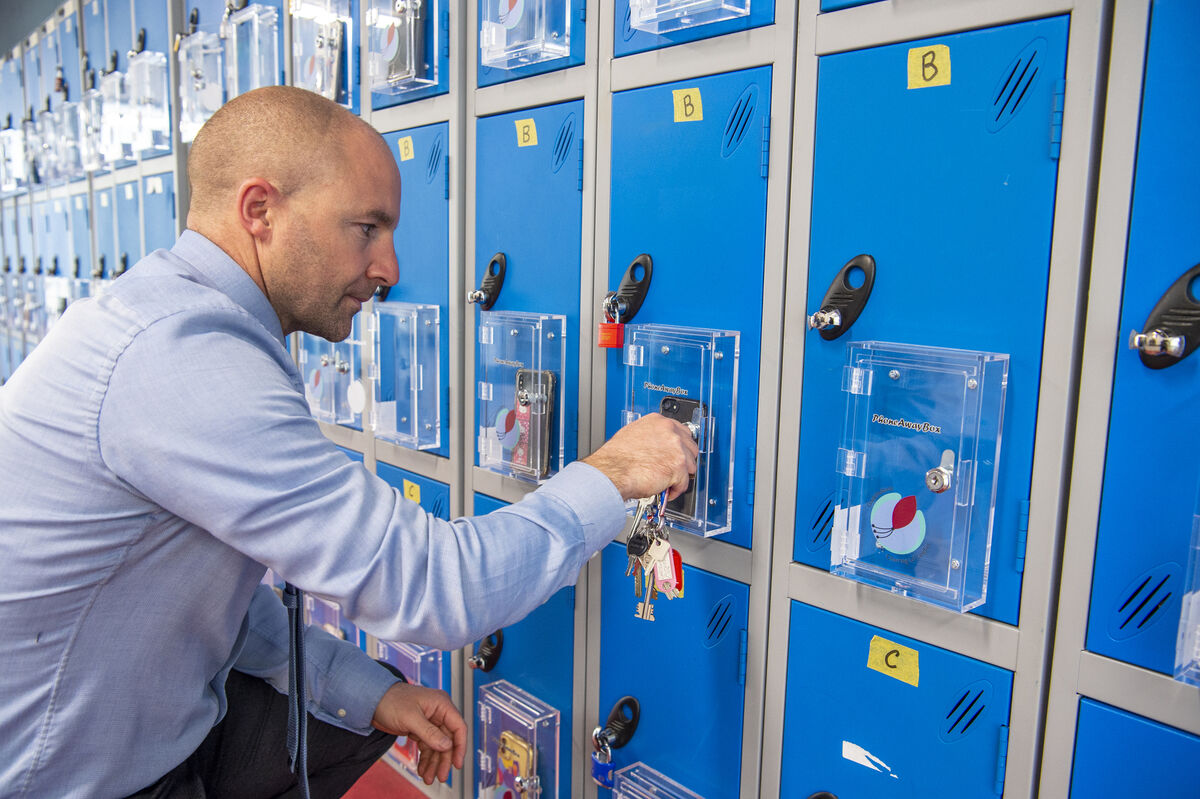
The PhoneawayBox is attracting the attention of other schools in the country. They’re in use in Wilsons Hospital Secondary school in Westmeath and have most recently arrived in Gaelcoláiste Carrigaline, Cork.
The principal there, Donnchadh Ó Cróinín is already seeing benefits.
“They’re up now for a few months and it’s going very well. A few have opted out and that’s fine too. It’s about student responsibility. We have some students who might need their phone for a specific reason, so that’s taken into account. There will always be exceptions to every policy, and this is all about facilitating student learning.”
“Parents are happy too because the system is so transparent. Everyone is settling down in their lessons and it means we’re avoiding unnecessary conflict with students which takes up a lot of time and takes time away from learning. Nobody enjoys confiscating phones or disrupting lessons over them. We’re an iPAD school so we’ve embraced technology, but we also believe it’s important to use technology in a healthy way.”
When it comes to the health of our children, it's possible that Karl Hegarty’s PhoneawayBox and the schools using them are setting an important example for us all, parents especially.
Psychotherapist Richard Hogan is a vocal advocate of more active parenting when it comes to our children’s relationship with technology.
“You can’t outsource your parenting to devices or games. In 2018, the WHO classified gaming as a new mental health condition and research shows the more involved you are in your child’s online activity, the less likely they are to get involved in risky behaviour.”
He reminds us: “the moment you bring a smartphone into your child’s life you are bringing the world into their fingertips. Children consuming pornography is a serious issue in schools.”
Who knows, in twenty years’ time we might all put our phones away in boxes, not just at work or in class but when we arrive home too. Everyone might receive strictly designated technology time. We might all pre-commit as Hari suggests, limiting technology’s hold over our time and imagination. We might reclaim that superpower.
Karl and Gerry may have invented tomorrow’s seatbelt. It’s a good thing schools and students are leading the way by buckling up.
It’s yet to be seen if the rest of us can manage the move as easily.

CONNECT WITH US TODAY



Be the first to know the latest news and updates