Edel Coffey: Some women may not enjoy motherhood and it's one of the last taboos
The Lost Daughter and best-seller Breaking Point have opened up a conversation - you might even call it a wound - about the realities of having children. How sometimes you feel smothered, how you might not enjoy every minute - and what that means for us as women. 
Edel Coffey: Some women may not enjoy motherhood and it's one of the last taboos

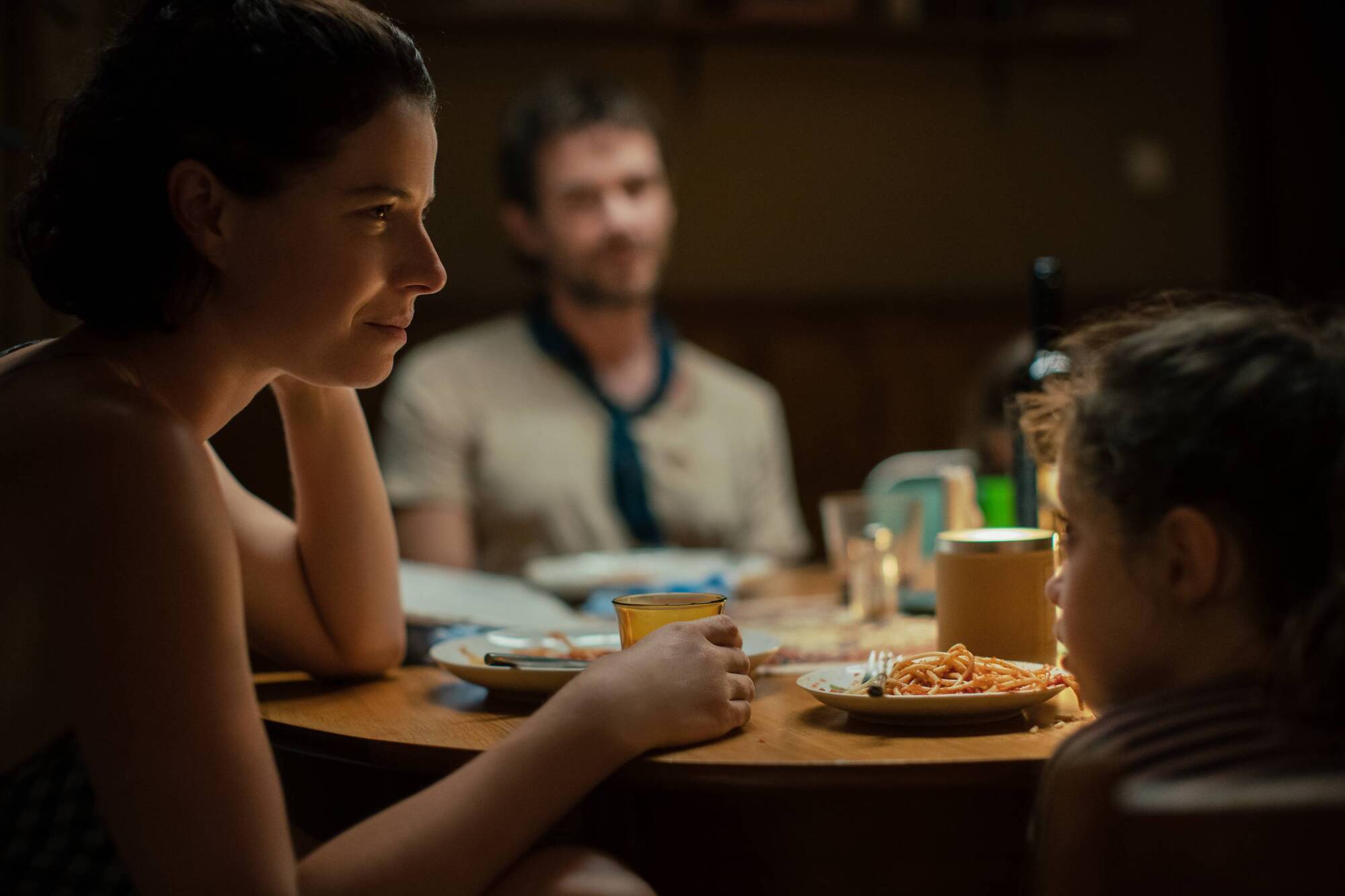
Jessie Buckley starring in The Lost Daughter

There is a scene in the film The Lost Daughter, where a mother is lying on a sunbed on the beach. Her young daughter is bored, and wants her mother’s attention. She keeps pushing her face hard into her mother’s, kissing her aggressively, nuzzling her forcefully until it hurts.

The scene travels the uncomfortable fault line between a mother’s desperation for some personal autonomy, and a child’s complete entitlement to that autonomy.

The scene in The Lost Daughter is just one of many that has started a conversation about the realities of motherhood in 2022 that is addressing the secret shames that exist within motherhood, the unspoken frustrations and irritations that are silently endured under the expectation of perfection.

Dakota Johnson as Nina and Athena Martina s her daughter Elena in The Lost Daughter. 

In the film, which is based on the book by Elena Ferrante, the Irish actress Jessie Buckley plays a brilliant academic. She loves her children, but she is frustrated with how motherhood has encroached on her work, her relationship, and her life. We see her wearing noise-cancelling headphones in an effort to concentrate on her research. We see her distractedly attempting to masturbate only to be discovered by her young daughters. We see her dismay at the disarray her life has been thrown into and her relief when she takes a trip alone to an academic conference, where she reconnects with her former self, if only briefly.

It’s one of the last taboos in our society, the idea that women might not enjoy being mothers one hundred per cent of the time. It’s a topic I explore in my debut novel Breaking Point (Sphere), which was published last month. It looks at the subject of the unrealistic expectations we have of mothers, and the pressures they put on parents. 

Edel Coffey. Picture: Bríd O'Donovan

My own transition to parenthood was a culture shock, and the identity adjustment from independent woman to one of the most idealised roles in our culture – that of mother – was a rocky one. I was shocked by the expectations to keep up the pace with your former life, to keep all of the current balls in the air whilst also incorporating some new and very delicate balls into the whole circus act. Squid Game has nothing on motherhood. I was intrigued enough by the gap between the representation of the role and the actual reality of the role as I experienced it to start writing about it.

A host of Irish writers have been stoicly untangling the knotty complexities of motherhood over the past few decades, from Anne Enright’s Making Babies to Doireann Ní Ghríofa’s A Ghost In The Throat, while last week saw the publication of a much-anticipated debut novel, The School For Good Mothers, which sees a woman sent to a reform programme for bad mothers after she leaves her baby by itself.

And it’s not just a modern phenomenon or a case of Millennials complaining either. In an extraordinary interview from 1965, Edna O’Brien discussed the conflict she felt.

Half of the time I felt I ought to be buying bones and scraping the marrow out of bones, you know, and putting Gye on bread and really being a mother and the other half I want not to know that they’re alive. And this is why women find it so hard to write because it’s not their talent – they can suffer the talent – but being a writer is being a writer constantly, it isn’t just when you’re upstairs or wherever one works, it is the most exacting occupation. And at our peril, or at a woman’s peril, she takes this on and that’s why women’s books and writing, modern women read as screams… Finally the woman almost hates her children because they are the thing that tear her away from what she’s committed to.

Psychotherapist Coleman Noctor says we need to adjust our expectations around parenthood. "The higher the expectation, the greater the disappointment. The narrative around ‘you can have it all’ has gone steroidal in recent years. You should be baking scones in the evenings, making bird feeders, taking long walks, and then be employee of the month in your company as well. We’re only exposed to the highlights reel of other people’s lives. Lockdown was the perfect example where we saw all the banana bread but we didn’t see people curled up in the foetal position in their hot press hiding from their children.’ 

Sophie White. Picture: Brian McEvoy 

But are we any closer to accepting that mothers can be good mothers whilst also being imperfect? Often, those who express any ambivalence about motherhood, are judged harshly for it. Sophie White, author of Corpsing: My Body And Other Horror Shows (Tramp Press), says, "that whole sentiment of 'you’re so lucky, it’s such a privilege to have children'” is sometimes weaponised against women who express that ambivalence."

The fear of being misinterpreted as anything other than grateful to have children can have a stifling effect, and that in turn can be isolating. When women don’t feel able to speak openly of their own experiences of motherhood and how they might diverge from the ‘norm’, it has the effect of silencing them and simultaneously re-enforcing that unrealistic norm. In an interview with The Atlantic, Maggie Gyllenhaal, the director of The Lost Daughter said when she first read Elena Ferrante’s book ‘“I felt comforted by knowing that these sort of … darker elements of my experience, I wasn’t alone in feeling.”  

Olivia Coleman in The Lost Daughter. Picture: Netflix

Even though more and more women are speaking about their imperfect experiences, the standard messaging of perfect parenting is still quite powerful says Coleman Noctor. ‘It’s okay to say “it’s hard” now, but I still think the pressure to be sorted as parents is still there. That counter-message is still so strong, and competitive parenting is still strong and that drives parental guilt.’

Expressing the fact that there is more than one experience of motherhood can only help and reassure women who are not having that one perfect experience. When my first child was born, I was told there would be a love bomb, an explosion of emotion so transformative and powerful that I would become a new, better person. I loved my daughter but I remember waiting and waiting for this idealised moment when I would suddenly be transformed into a mother. It reminded me of the time in my childhood where I used to watch the priest at mass every Sunday to see if I could catch that elusive moment of transubstantiation. I never saw it. And likewise, I gradually realised that I was a mother, without the momentous thunder-clap shift of personhood.

The greatest fallacy around motherhood I think, is the idea that a woman’s personality is wiped and restored to factory settings when she becomes a mother; that her own desires, ambitions and goals are deleted and replaced with only goals for her child, and that her entire satisfaction and contentment will now be found in her role as a mother. The fact that this myth remains unbusted forces women into hiding, forces them to mask as perfect mothers, forces them to suppress their true multifaceted identities until they don’t know who they are anymore.

And what’s the big deal about mothers being people anyway? Couldn’t the individual and the carer be mutually beneficial aspects of a whole person? The Lost Daughter is provoking a lot of uncomfortable responses but if the issues raised make us feel uncomfortable perhaps it’s time to ask ourselves why?

x

More in this section

Lifestyle

Newsletter

The best food, health, entertainment and lifestyle content from the Irish Examiner, direct to your inbox.

Cookie Policy Privacy Policy Brand Safety FAQ Help Contact Us Terms and Conditions

© Examiner Echo Group Limited