Want to take up running? Here are Sonia O'Sullivan and Jessie Barr's top tips for beginners
The new year is an ideal time to put on your runners and hit the road. We talk to Olympians Sonia O'Sullivan and Jessie Barr about avoiding injuries and staying motivated 
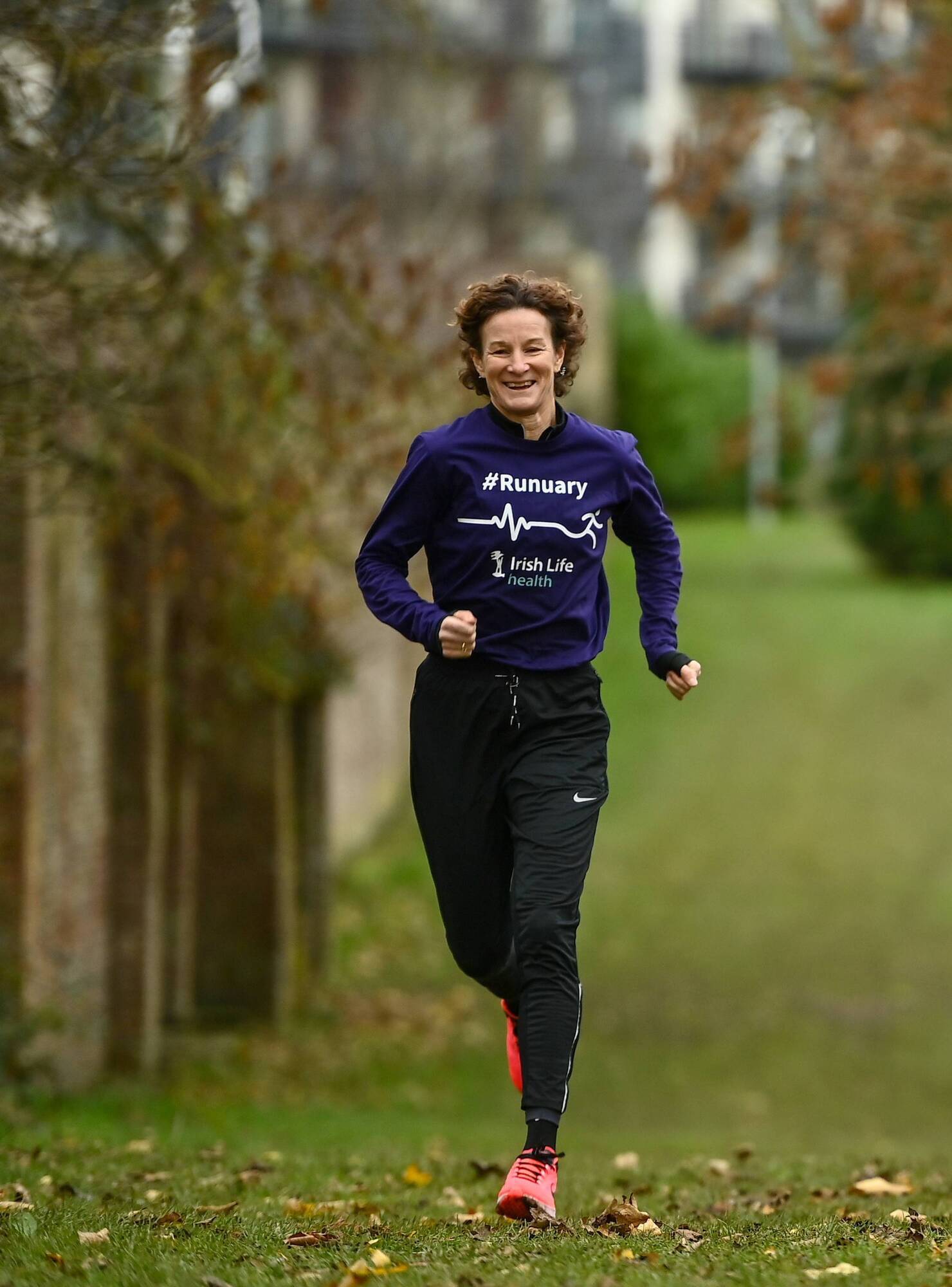
Sonia O'Sullivan: "Netflix will be there when you get back. It is not going anywhere." Picture: David Fitzgerald/Sportsfile

Sonia O'Sullivan: "Netflix will be there when you get back. It is not going anywhere." Picture: David Fitzgerald/Sportsfile

THERE weren’t many positives to come out of the pandemic but one was the surge in the number of people taking up exercise, especially during the first lockdown. According to the Irish Sports Monitor report, conducted on behalf of Sport Ireland, activities such as walking, cycling and running increased substantially between March and May 2020. However, as restrictions eased and society reopened, people began to fall out of their healthy habits. 

While running is one of the easiest sports to take up, it is also one of the toughest when it comes to maintaining motivation. If anyone knows about the dedication and commitment needed to keep running, it’s legendary Irish athlete Sonia O’Sullivan. The Cobh woman has signed on for the Irish Life Runuary initiative to encourage runners to lace up their trainers again this January. After decades of top-level training, the Olympic silver medallist has now become accustomed to running for pleasure and fitness.

“I enjoy it more now than I ever have before, probably because I value it a lot more for the benefits it gives me. You feel good after you have been out and you have gone for a run. You feel energised. Mentally and physically, if you can get out in the morning, it sets you up for the day.” 

She says all runners, from beginners to advanced, need to plan ahead.

“You need to consider where your fitness is at when you start. It is very easy to get excited about signing up to do something, and then you go out and do too much too soon, you get injured and it is all over. It is really important to plan what you are going to do, and with the Runuary programme, there is plenty of advice available from experts,” she says.

O’Sullivan is in Ireland when we speak but will be spending Christmas at her home in Australia. She has also been helping to coach athletes in Portland, Oregon, and will return to the US in the lead-up to the World Championships next year.

“For me, coaching has been a learning experience. It is a way for me to share some of my experiences with some of the up-and-coming athletes and help them so they don’t make the same mistakes I made. The key with training at a high level is to be consistent and to avoid injury is one of the biggest things that athletes need to do. To help out in that way, sharing some of my experiences, you get great satisfaction when you see the athlete achieve results.” 

O’Sullivan still feels the after-effects of some of her own injuries.

“I would always have a few lingering aches and pains. I’m always trying to manage them — I try not to do too much that I will have to stop running if I get injured and enough that it is satisfying.” 

Like mother, like daughter 

O’Sullivan has two daughters, Ciara and Sophie, with husband Nic Bideau. Sophie is on a sports scholarship at the University of Washington in the US and has also competed for Ireland. When it comes to giving advice, however, O’Sullivan says she is careful not to blur the lines between professional athlete and mum.

“It is always good to keep the channels of communication open, not to be always harping on about stuff, just talk about things in general. I try to keep the roles of mother and runner separate because I want to maintain that good family relationship. The running is always there but there are a lot of people out there who can help out with advice on that.” 

It’s evident that the determination which underpinned O’Sullivan’s stellar career is as strong as ever. I ask her if she ever has times when she would rather sit in and watch Netflix than go for a run?

“No, I’d rather go for the run first. I try not to get sucked into that. Occasionally I might get involved in a show and I get too comfortable and it is hard to get up and get going. Netflix will be there when you get back. It is not going anywhere.” 

When it comes to her goals for the New Year, she only has one.

“Just to keep on running and enjoying it. I will do everything I can to run for as long as I can.” 

Don't wait for motivation to strike

Jessie Barr: “Make sure you are building up slowly, doing a good warm-up so your body is prepared, and injury is less likely.” Picture: Sam Barnes/Sportsfile

Someone who has it all covered when it comes to understanding the motivation necessary to keep running is Jessie Barr, performance sports psychologist with Team Ireland and a former Olympic hurdler. She is part of the specialist team of advisors on the Runuary programme, and says it is only natural that a lot of people are struggling to engage in exercise again.

“At the start of the pandemic, there was that feeling that we were all in it together, we were going out of our way to find new ways to occupy ourselves. But now we have returned to a more ‘normal’ pace of life with work or else people have fallen into a routine with working from home, and the new things were the first to get pushed out. I was doing Zoom workouts and yoga at home, and the novelty wore off after a while,” she says.

Barr’s main piece of advice is not to wait for motivation to strike before taking up running again.

“If we were all to wait until we were motivated to start something, we would never get anything done. Sometimes the motivation comes after the act, not before. Having extrinsic motivation like the Runuary programme takes the thinking out of it. Also, if you have someone else who is going to do it with you, having that accountability to another person can be really important. Have a goal — the sense of achieving something ‘for me’. This is something a lot of people lose as they get older. 

"Also, getting new gear can help — so perhaps get new runners or a nice jacket. Go and find somewhere nice to go for a run, rather than just going around your estate. Find a trail or a park. Have a nice coffee at the end of it, try and create those little rewards, and hopefully the motivation to get faster, to do it more often, will follow.” 

Banish negative thoughts 

 Barr also has tricks to help banish the negative thoughts that can make running difficult.

“Make sure there is variety. Doing the same 5K route three times a week can become monotonous. Change it up, maybe do 3K but do it faster, maybe the next day go slower and longer on a new route. Not always knowing what to expect can be good from a motivational point of view.” 

For those who don’t have the option to change their route, particularly women who may only feel safe running in well-lit areas at night, Barr says breaking the run down can help avoid boredom.

“Don’t think of it as a 5K, pick a particular point and see what time you can do to there, maybe do intervals, a fast 1K and go slower for 500m, there are ways of changing it up, rather than feeling, ‘oh, I’m only a kilometre in, and I feel terrible already’. Shift your focus to what you can do for the next 500m. 

"Distractions also help — having a really good playlist, audiobook or podcast to listen to. Also, having someone with you, there is no better distraction than having a chat.” It is also important not to get disheartened if you do get injured, says Barr.

“If you have a goal and an injury is stopping you reaching it, it is really frustrating. Make sure you are building up slowly, doing a good warm-up so your body is prepared, and injury is less likely. But no matter how well-prepared you are, injuries still happen, you could just roll your ankle on a kerb. Seek the advice of a professional, go to a physio, get the support you need around that to continue and not reinjure yourself. 

"Figure out other things you can do when you are injured — maybe core work, strength work, yoga or pilates that will then benefit your running when you go back. Go on a static bike in the gym or go for a swim, that will take the weight off. You are still moving towards your fitness goal, just taking a different route.” 

 Ultimately, Barr says the positive impact of running cannot be underestimated.

“There is so much research now to show the benefits for your mental health — it also staves off cognitive decline which is important as we get older. From a mood-boosting point of view, it releases endorphins, and there is a huge stress release. There is also research showing that the mood-boosting benefits are even greater if you can do your exercise in a green or blue space — somewhere in nature, basically. 

"Also, your self-confidence and self-worth grow as you get faster, stronger or feel physically better. The benefits are endless but it doesn’t always feel like that in the moment, it can feel uncomfortable, hard and painful. But there are very few people who don’t feel better after exercise, even if it is only for ten minutes.”

Step it out with Runuary

Irish Life Health has teamed up with Athletics Ireland to help runners get back into the routine of running again. 

Starting on January 1, Runuary encourages runners, from beginners to the more experienced, to commit to a challenging but realistic running programme, with a target distance of 5km, five miles or 10 miles to be completed on January 31. 

Runners can select a ‘First Timer’ or a ‘Run a Faster’ programme across all the distances. Entry is free of charge and runners can sign up at irishlifehealth.ie/runuary. A specialist team, including a physiotherapist, nutritionist and running coach will support runners when they sign up.

More in this section

Lifestyle

Newsletter

Eat better, live well and stay inspired with the Irish Examiner’s food, health, entertainment, travel and lifestyle coverage. Delivered to your inbox every Friday morning.

Cookie Policy Privacy Policy Brand Safety FAQ Help Contact Us Terms and Conditions

© Examiner Echo Group Limited