Tips and products to help you get the best night's sleep possible
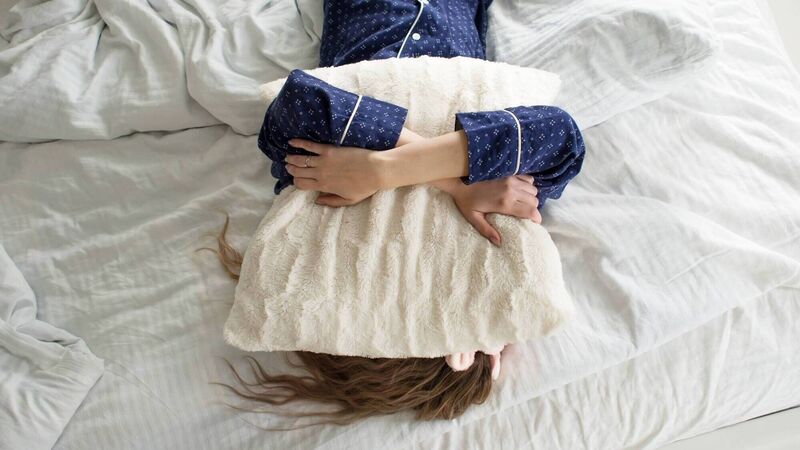
Sleep, it seems, is no longer a necessity: It is a luxury we’re willing to pay for.
Last year, US company Eight Sleep announced that it had raised $70m (€60m) from financial backers. The company’s smart mattresses contain sensors that measure humidity and local weather conditions, and contain trackers that measure respiratory rate and sleep quality. They even wake you in the morning with a gentle nudge of vibrations.
An Eight Sleep mattress ($3,395; €2,925) is just one of the growing range of products that promise a good night’s sleep. Closer to home, Des Kelly Interiors recently employed sleep coach Tom Coleman to help staff and customers understand the importance of good-quality sleep.
From the sleep tracker on your Fitbit to customisable pillows, melatonin tablets to prescribed medication, the market for sleep products in the US alone is worth $37bn (€32bn) annually, according to a report in Forbes magazine. A cursory Google search for ‘sleep products Ireland’ returns almost 77m results; and the wellness app Calm (with sleep stories read by celebrities, including Idris Elba) is worth around $1bn (€870m).
Since the pandemic began, a myriad of products have been created by Irish companies responding to demand to calm frayed nerves and soothe frazzled minds. There are oil blends and sprays, heat-regulating bamboo pyjamas, silk pillowcases and eye masks, teas and sparkling drinks — all with the promise of a night in the arms of Morpheus. Sleep, it seems, is no longer a necessity: It is a luxury we’re willing to pay for.

Motty Varghese is a sleep physiologist and founder of the Sleep Therapy Clinic ( www.sleeptherapy.ie). Mr Varghese says that while there was already a rising societal focus on wellbeing, at both individual, employer, and organisational level, the pandemic has further emphasised health, wellness, and self-care and it’s no surprise we are seeking products to achieve these goals.
Mr Varghese’s patients typically present with insomnia and circadian rhythm sleep disorders and the Sleep Therapy Clinic offers treatment that is not medication-driven. If we’re familiar with the old adage that ‘sleep is the best medicine’, then, increasingly, science is providing the evidence.
“Sleep is very important, since it has a protective effect on our physical and mental health,” Mr Varghese says. “As an immediate benefit, sleep improves alertness, safety, task effectiveness, and productivity. Sleep also plays a significant role in memory formation, decision-making, and maintaining ideal body weight. It enhances our energy levels while we are awake and preserves our quality of life.
“Traditionally, we may have looked at diet and exercise as the major components of wellness, but there is more information now available on how sleep can affect our physical and mental health, dietary patterns, and exercise habits,” Mr Varghese says. “With the pandemic, there has been elevated anxiety levels and sleep is proven to suffer when anxiety rises. So, we have good enough reasons to protect and nurture our sleep.”

Hannah Murphy, founder of Amurelle luxury bed linen, says consumers are starting to value rest and quality of sleep as part of their commitment to self-care. “I think the events of the last 18 months have changed the way people live,” says Ms Murphy. “Sleep and relaxation have become more important and many of us have had fewer distractions outside of the home, which has left more time to prioritise sleep.”
Keira Kennedy, co-founder of accessories label KDK, says that the brand’s sleep products are popular gifts for people “going through a hard time when their sleep is affected”. “We started trialling silk eye-masks and pillows ourselves and asked friends and family for their feedback. It was incredible how much the blackout eye-mask was helping people stay in a deep sleep for longer, particularly nowadays, when the circadian rhythm (the natural sleep cycle) is being disrupted by screen time.”

Anne Marie Boyhan founded The Sleep Care Company during the pandemic: It is an online destination store for all things sleep-related.
Having previously worked as a digital marketer in financial services, while also looking after two children, she was “sleep-deprived and juggling it all”: “I realised, at the expense of my health and near burn-out, that something had to give. I wanted to create a place for people to come for all things ‘sleep’.”

Ms Boyhan has also published a sleep journal — a “step-by-step, science-backed wellness guide to sleep” — and offers her customers advice via her blog, newsletters, and social media.
“The pandemic was a time of little sleep for many, with the blur between work and home life, and people literally not getting out and about in the daylight before it was bedtime again. We stayed up late watching Netflix or scrolling on phones: It’s no wonder Netflix CEO, Reed Hastings, has said that the biggest competitor for its streaming service is sleep,” she says.

Peigín Crowley has created award-winning spa experiences at five-star venues such as Adare Manor and the Cliff House Hotel. She recently launched a range of wellness products, entitled Ground, which includes the ‘Codladh’ range to “invite sleep in” by “resetting the body and promoting rest and relaxation”. Ground products are available in Brown Thomas, the K Club, and Fota Island Resort. “Sleep is the most important cornerstone of wellbeing, mental health, and resilience, therefore it lies at the heart of my brand,” says Ms Crowley.
AT Voya, co-founder Mark Walton says that the company launched its new, natural Pillow Heaven spray to help customers relax and prepare for a better night’s sleep: “Voya is a lifestyle brand, offering luxury products that promote wellness — and good sleep is essential for optimum wellbeing,” Mr Walton says.

Motty Varghese says that the popularity of such sleep-related products may indicate a rise in sleep problems. He says that journaling and meditation can induce a calm mood before bedtime.
“While many products can certainly aid relaxation, especially those containing lavender, which has some anxiolytic (anxiety-reducing) properties, it is important to realise that sleep is a very natural physiological process that comes to us, like feeling hungry for food or feeling thirsty for water,” Mr Varghese says.
“The focus should be to optimise the sleep drive by adhering to consistently good sleep habits and to reduce alertness closer to bedtime. More important is the acceptance that sleep is a natural process and will happen by itself. It is vital to discuss sleep problems with your health professional to identify and address your specific sleep problem.”

You cannot force sleep, but you can nurture it by adopting good habits. It may go against your preferences, but prioritising sleep will pay dividends.
Maintain a consistent bedtime and wake time. This ensures you have been awake long enough to have sufficient ‘sleep drive’ at bedtime. Avoid accumulating a ‘sleep debt’, so that you don’t have to pay it off at the weekend.
Focusing on getting light exposure during the day and reducing light exposure closer to bedtime indicates the day-night cycle to our bodies and prepares them for sleep.
Preoccupying yourself with thoughts of what is happening around you can lead to cognitive or mental arousal. Avoid consumption of news too close to bedtime. Put your day ‘to bed’ by journaling in the late afternoon or early evening.
Every night brings a new opportunity to sleep, irrespective of how you slept the previous night or decade. If you trust your body, and keep your sleep-related worries at bay, sleep will embrace you