Michelle Darmody: A midwife told me post-birth care is poor because women don't complain
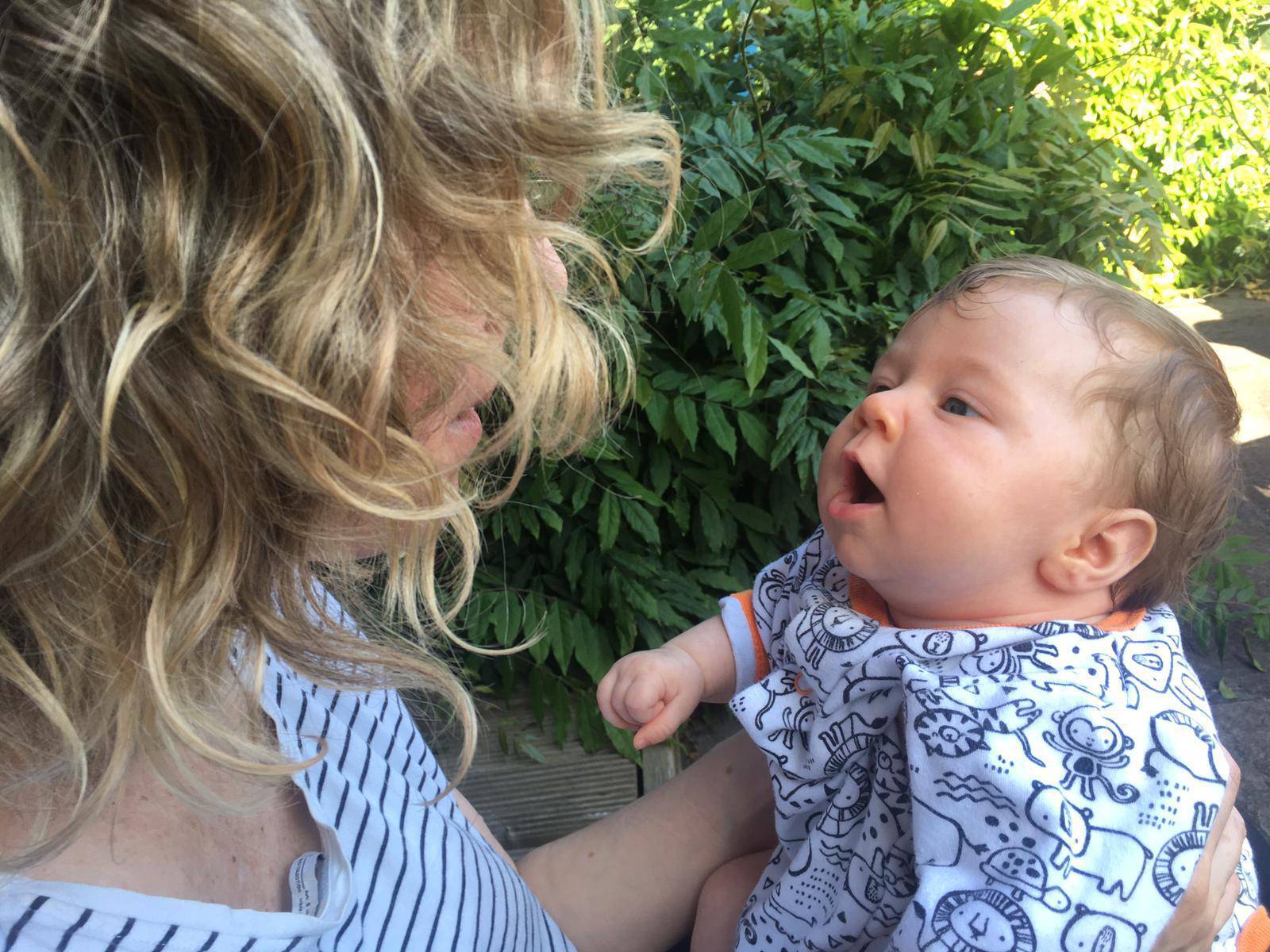
Following a difficult delivery and surgery, Michelle Darmody finally got the help she needed in a postpartum clinic, the only one of its kind in the country. We need to prioritise women's health after childbirth, she says 
Michelle Darmody: A midwife told me post-birth care is poor because women don't complain

Michelle Darmody with her daughter Della who was born in May.

Bringing human life into the world has never been an easy task, and no one expects it to be. Over generations, the process has been helped by advancements in medical care, advancements that have eased the path for countless women and their babies.

In Ireland antenatal care is generally very thorough, appointments are held on a regular basis, there is no charge unless you choose a private option, your health is monitored, your urine examined, and your blood pressure taken with increasing regularity as your pregnancy progresses. 

Ultrasounds give expectant parents a glimpse into what was once a mysterious internal world, you get to see your baby grow and expand as the weeks pass and the belly swells. But then a curious thing happens, after a woman gives birth, no matter what the circumstances, there is very little care given to her.

During labour a women’s body is stretched and contorted and often sliced, leaving it battered for weeks and months, but there are no weekly appointments anymore, just one visit to a doctor at six weeks post birth and a visit from a public health nurse.

Women attend the six-week appointment alongside their baby. In my case, when visiting the GP after the baby was stripped, weighed and tested, she was howling. My examination consisted of a quick glance at the healing stitches and an even quicker 'are you coping ok?'. At which point all I could think of was getting the baby relaxed and feed.

In the weeks after this appointment, I had to return to a GP numerous times with repeated infections and complications and was given a referral letter for a gynaecologist and round after round of antibiotics. Hospital waiting lists were considerable so I began to search for a gynaecologist online. I called numerous friends looking for recommendations, but everywhere I called was booked up. 

At a time when day blurs into night and you are subsumed with caring for a newborn and trying to heal, it is draining and exasperating to be left scrambling for care. Only after further enquiries at The National Maternity Hospital, Holles Street, where I gave birth to my daughter in May, was I admitted to the Poppy Clinic. It was here that I first felt listened to and this simple fact made all the difference in my recovery.

While there I was treated for a build-up of scar tissue due to an episiotomy, a simple laser procedure removed the tissue and stopped the repeated infection from returning. I have since been given a series of exercises to aid prolapse and received follow-up phone consultations as well as hospital appointments.

Debrief following a traumatic birth 

While at the clinic I also received a ‘debrief’, or what hospitals in Britain often call a birth-reflection service for those who experienced a traumatic birth. In my case the instrumental delivery was difficult, and it led to complications and further surgery immediately after the birth. I found the ‘debrief’ cathartic. 

The midwife sat with me for over an hour and had all my records to hand. I was able to ask why decisions were made, when they were made, and why things unfolded as they did. It all made much more sense and gave me a clearer perspective of what had happened in the labour ward. I came away reassured, with less lingering doubt about choices or events on the day.

I have since learned that this is the only hospital clinic in Ireland that deals with post-birth care for women. According to Holles Street advanced nurse practitioner Caroline Brophy the clinic was set up after the hospital identified that there was nowhere specific to send women who experienced complications during childbirth or in the days and weeks after giving birth.

A recent report has stated that clinics of this kind are an essential element of maternity care.  However, Dr Laoise O’Brien, who practises in the Poppy Clinic is the only doctor in the country specialising in post-birth care for women. This is shocking when you realise that more than 50,000 women give birth each year, many suffering trauma, physical and mental. 

"The value of the service for women at such a vulnerable time in their lives cannot be underestimated," says Dr O'Brien. "Prior to the clinic, these women presented to A&E, GPs or gynaecological services, whereas the clinic offers a dedicated service where women can access compassionate care.”

In my experience the clinic was invaluable, However, according to Brophy, there is very little research in the area or very little appetite among doctors to enter the space. There is also a lack of knowledge of the clinic’s existence among GPs who refer women to gynaecology departments, where waiting lists are considerable, or to the physiotherapy department where they are longer.

 Michelle Darmody  Picture: Moya Nolan
Michelle Darmody  Picture: Moya Nolan

Dark history of not listening to women

When I asked why the care of women post-birth is so poor, I was told by midwives in the clinic it is because women do not complain.

Ireland has a dark history of not listening to women and diminishing their health problems. Dr Gabriel Scally annotated this in his 2018 scoping inquiry into CervicalCheck, documenting the silencing of the women who had been affected and the heartbreak that ensued. 

There is a similar feeling of despair when you read about the treatment of those who were taken to mother and baby homes, or the use of symphysiotomy in Irish hospitals for longer and more often than in any other European country. All of these seem like points on a continuum, aspects of the same devastating story repeated again and again. In the past year, we have also witnessed women in distress pleading over and over for their partners to be allowed to accompany them to maternity appointments.

We have managed to make improvements in our antenatal system and in follow-on care for newborn babies. However, the thousands of women who following childbirth have trouble defecating, endure urinary incontinence, suffer damage to their perineum, or experience pain when having sex, often go unchecked. In the absence of postpartum care, many women suffer these conditions in silence and suffer for years, which can lead to more severe gynaecological complications or difficulty returning to the workforce. 

Postpartum depression and trauma can worsen when a woman does not know where to turn for help or does not feel listened to when she does find an outlet. The lack of funding or the dire lack of specific clinics means that GPs hands are often tied.

Fourth trimester of care

Brophy suggests establishing a universal community midwife system, one where specialised midwives visit women’s homes for postpartum care. This is mentioned in our National Maternity Strategy but is not yet available to the majority of new mothers in Ireland. 

Staff in the Poppy Clinic also advocate for a fourth trimester of care. This is a term used to describe the 12 weeks post-birth, a period when women could receive support, helping them transition into motherhood. As Brophy says, it is also a time when many health issues that later plague women could be caught and treated.

If you have been affected by lack of post-birth care or would like to see the situation improve, for any reason you could send a submission to the National Women and Infants Health Programme (nwihp.corporate@hse.ie), calling for the implementation of a national community midwives’ system and for increased funds for clinics to support the care for women in the weeks and months after they have a child.

It is time that Irish women started to complain, in fact, to shout out and demand that the care they receive is as consistent after their child’s birth as it was before, mother and baby need to be well for both to thrive.

Celebrating 25 years of health and wellbeing

More in this section

Lifestyle

Newsletter

The best food, health, entertainment and lifestyle content from the Irish Examiner, direct to your inbox.

Cookie Policy Privacy Policy Brand Safety FAQ Help Contact Us Terms and Conditions

© Examiner Echo Group Limited